

















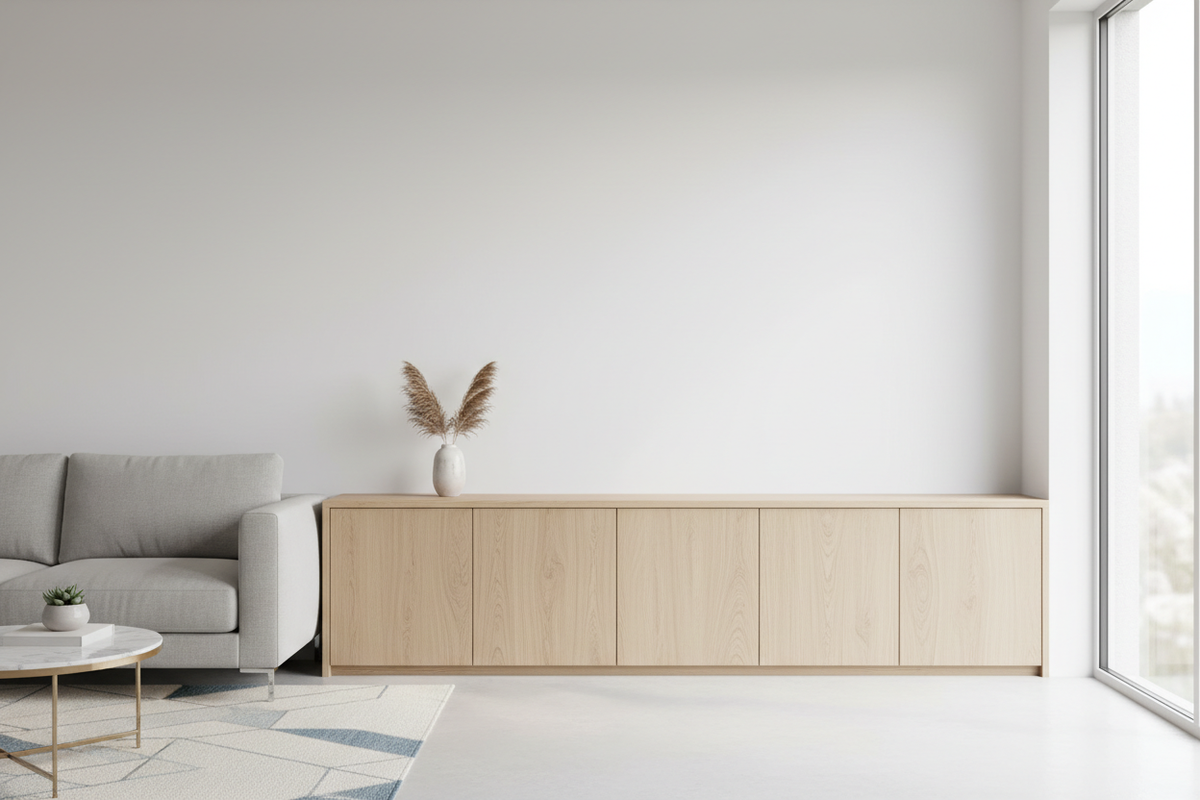
Open shelving often feels like a trap. You buy a bookcase with the intention of creating a curated, Pinterest-worthy display, but six months later, it becomes a catch-all for loose papers, tangled charging cables, and dust bunnies. If you are trying to maximize storage in a compact footprint while maintaining visual calm, a small bookshelf with doors is often the superior choice. It offers the utility of a bookcase combined with the concealment of a cupboard, effectively hiding the chaos of daily life while providing a usable surface on top.
I learned this lesson the hard way in my first studio apartment. I had limited floor space and tried to rely on tall, open metal shelving. While it held a lot of items, the room constantly felt busy and disorganized because every single spine, trinket, and paper stack was visible. The moment I swapped that towering unit for a short bookshelf cabinet with doors, the entire energy of the room changed. The visual noise vanished behind the cabinet front, and the room actually felt larger because the furniture profile was lower, allowing light to travel more freely across the space.
The Strategic Advantage of Going Low
Vertical storage is usually the standard advice for small rooms, but there is a compelling case for keeping things close to the ground. A short bookshelf cabinet with doors serves a dual purpose that tall units cannot match: it provides storage inside and a functional surface on top. In a living room, this piece transitions effortlessly into a media console or a sideboard. In a home office, it becomes an extension of your desk—a place for your printer or a coffee station.
Low shelves with doors also utilize dead space that taller furniture cannot access. The area directly under a window is frequently wasted in bedroom and living room layouts. By sliding a low-profile cabinet into this spot, you gain significant storage volume for heavy hardcovers or photo albums without blocking natural light or obstructing the view. This layout trick anchors the room and draws the eye horizontally, making narrow rooms appear wider.
Choosing the Right Material for Your Aesthetic
The material you choose dictates not just the look, but the longevity of the piece. While particle board is common and affordable, a small wood bookcase with doors brings a warmth and durability that veneers often lack. Solid wood or high-quality plywood withstands the weight of dense book collections without the shelves bowing over time—a common issue with cheaper composite materials.
If you prefer a modern or industrial look, metal cabinets offer distinct advantages. They are generally lighter to move and often come with magnetic closures that are satisfying to use. However, wood remains the most versatile. A stained oak or walnut finish can warm up a sterile white room, while painted wood can blend the cabinet into the wall, further reducing visual clutter. If you are worried about the unit looking too heavy or blocky, look for designs with legs that elevate the cabinet off the floor. Seeing the floor continue underneath the furniture tricks the brain into perceiving more floor space.
The "Mini" Solution for Tight Corners
Sometimes you don't even have the space for a standard two-door cabinet. This is where a mini bookshelf with doors comes into play. These units are typically single-door width or exceptionally shallow, designed for hallways, bathroom niches, or that awkward gap between a sofa and the wall.
These miniature organizers are perfect for category-specific storage. Instead of a general "stuff" drawer, a mini cabinet can serve as a dedicated home for board games, a liquor cabinet, or a craft supply station. Because they are small, they are easy to relocate. I have used the same small cabinet as a nightstand in one apartment and later as a printer stand in another. Their versatility makes them a safer investment than massive wall units that might not fit your next home.
Glass vs. Solid Doors: The Visibility Dilemma
The primary reason to buy these units is to hide mess, which suggests solid doors are the way to go. However, glass doors have their place. They protect valuable books and collectibles from dust and humidity while still allowing you to enjoy looking at them. If you have rare first editions or sentimental items, a glass-fronted cabinet is ideal.
For everything else—textbooks, binders, electronics, and toys—solid doors are undefeated. They allow you to utilize the interior space fully without worrying about organization. You can stack books horizontally, use mismatched bins, or cram in loose items, and once you close the doors, the room looks pristine. Some designs offer a hybrid approach, featuring a small wood bookcase with doors on the bottom half and open shelving or glass on top, giving you the best of both worlds.
Installation and Hinge Adjustments
Buying the furniture is the easy part; making it look good requires a little mechanical effort. The difference between a piece that looks expensive and one that looks cheap often comes down to the hinges. When you assemble a cabinet, the doors rarely sit perfectly straight immediately. They might rub against each other or hang slightly crooked.
Almost all modern cabinet hinges have three adjustment screws. One moves the door up and down, one moves it left and right, and the third moves it in and out (closer to or further from the frame). Taking ten minutes with a screwdriver to align the gaps ensures your low shelves with doors look like a custom built-in rather than a quick flat-pack assembly. If you load the shelves with heavy books, re-check these screws after a few weeks, as the weight can sometimes cause the casing to settle and shift the door alignment.
Styling the Top Surface
Once your storage is sorted, the top of the cabinet becomes a prime design opportunity. Since the unit is low, you have plenty of vertical wall space above it. This is the perfect location for a gallery wall, a large mirror, or oversized artwork. The artwork draws the eye up, balancing the low profile of the furniture.
On the surface itself, apply the rule of three. Group items in odd numbers—perhaps a lamp, a small plant, and a decorative tray. Leave some negative space; covering the entire top surface with knick-knacks defeats the purpose of buying closed storage to reduce clutter. The goal is to create a calm vignette that sits atop the hidden utility of your shelves.
Frequently Asked Questions
Can I stack two small bookshelves on top of each other?
Generally, you should not stack units unless they are part of a modular system designed for that purpose. Most standalone low cabinets lack the structural integrity to support the weight of a second unit, and stacking them creates a tipping hazard. Always check the manufacturer's guidelines for modularity.
How do I childproof a bookshelf with doors?
To secure the contents, magnetic locks that mount inside the doors are invisible from the outside and highly effective. Crucially, even low cabinets can tip over if a child climbs on open doors or pulls out drawers, so you must anchor the unit to the wall using L-brackets or furniture straps.
What is the typical weight capacity for the top of a low cabinet?
This varies significantly by material, but a sturdy wood unit can usually support between 50 to 100 pounds on the top surface. Always verify the load rating if you plan to place a heavy item like a television or a large aquarium on top to prevent bowing or collapse.


Leave a comment
This site is protected by hCaptcha and the hCaptcha Privacy Policy and Terms of Service apply.