

















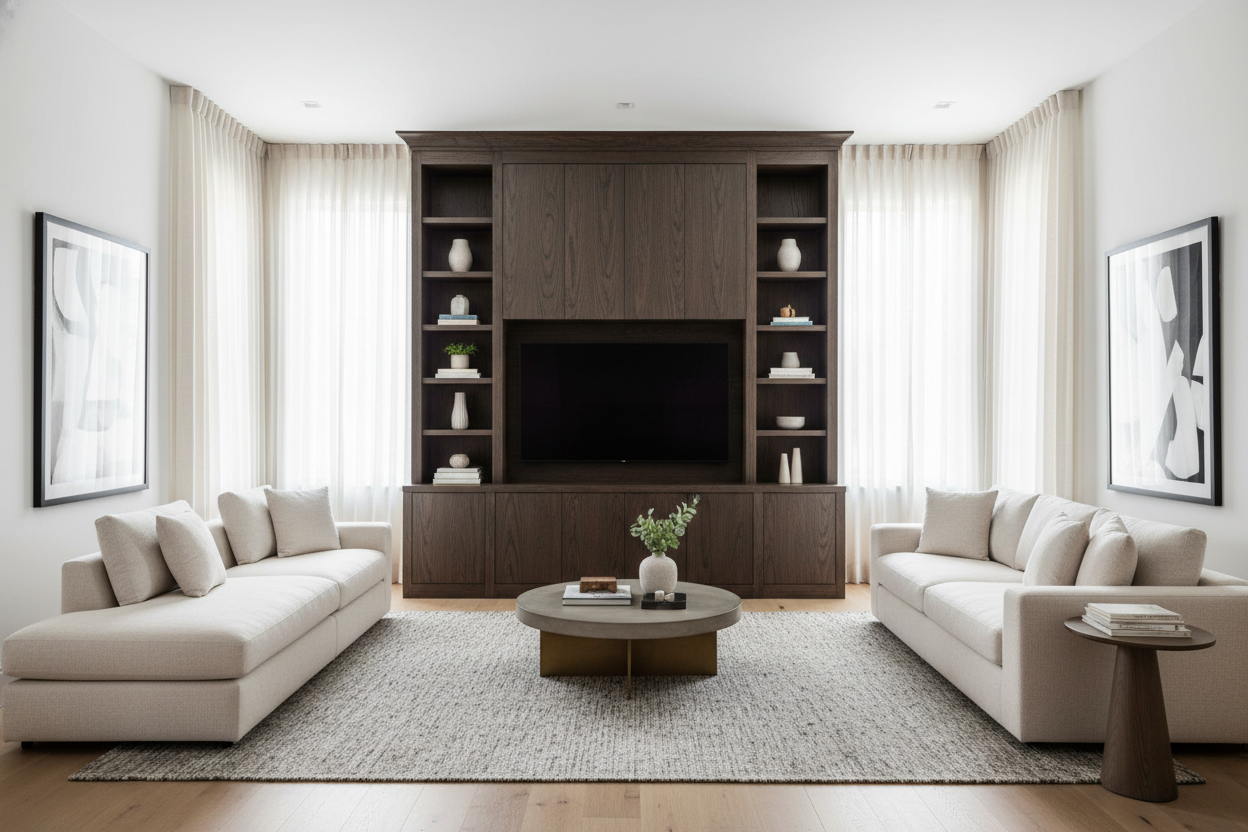
We have all seen it: a beautiful, sprawling living room with a tiny, low-slung TV stand floating sadly in the middle of a massive blank wall. Or worse, a bedroom where you have to prop yourself up on three pillows just to see the screen over the footboard. If you are wrestling with awkward room proportions or high beds, a tall media cabinet is the unsung hero of residential floor plans.
Unlike the standard low-profile units that dominate showrooms, a taller piece grounds the room, provides much-needed hidden storage, and fixes terrible viewing angles. In this guide, I will walk you through exactly how to size, style, and select the right piece so you do not end up with something that looks like a repurposed kitchen pantry.
Quick Decision Guide
- Viewing Angle is Everything: Measure your eye level while seated; the middle of your TV screen should sit at or slightly below this line.
- Rule of Proportions: Your cabinet should be at least 4 to 6 inches wider than your TV on both sides to prevent a top-heavy, unbalanced look.
- Anchor for Safety: Any media unit over 30 inches tall must be secured to a wall stud, especially if you have pets or toddlers.
- Mix Storage Types: Look for a tall tv console cabinet that offers closed doors at the bottom for messy cables and open shelving up top for styled decor.
Space Planning & Layout Rules
Nailing the Ergonomics
In standard North American family rooms, seating tends to be deep and plush. If your sofa has a high back, a low stand forces you to look down, straining your neck. A high tv console, typically ranging from 32 to 42 inches in height, brings the screen up to a natural sightline. This is even more critical in bedrooms, where a tall tv table allows you to watch comfortably from a lying position without the mattress blocking the bottom of the screen.
Balancing Visual Weight
A common mistake I see is placing a massive, dark wood tall entertainment console on a narrow wall. Taller furniture carries more visual weight. If your room is small or lacks natural light, opt for a piece with tapered legs or floating construction. Seeing the floor underneath the unit tricks the eye into perceiving more square footage. Conversely, in an open-concept suburban home with vaulted ceilings, a substantial, floor-to-ceiling unit prevents the room from feeling cavernous.
Style & Coordination
Modern vs. Transitional Finishes
If you are aiming for a clean, contemporary aesthetic, a tall media cabinet modern design usually features flat-front doors, push-to-open hardware, and materials like ribbed oak or matte powder-coated steel. For transitional spaces, look for subtle details like chamfered edges, brass pulls, or a mix of painted wood and natural cane. The goal is to complement your coffee table and shelving, not match them perfectly.
Integrating a Tall Media Shelf
Sometimes you need display space just as much as you need a place for the router. Incorporating a tall media shelf into your layout allows you to break up the heavy electronics with coffee table books, trailing plants, and sculptural ceramics. Just remember to utilize negative space; packing every shelf full will make the entire wall look cluttered.
Designer's Honest Take
Over the last 15 years, I have specified dozens of tall media consoles for clients, and I will be honest about a recurring frustration: cord management is notoriously difficult with these pieces. Because the unit sits higher on the wall, the distance from the TV down to the standard baseboard outlet is longer.
I learned the hard way on a project in Chicago. We sourced a stunning mid-century tall media console, but once we set the TV on top, the thick black power cords dangled visibly down the back, ruining the sleek silhouette. Now, I always insist on having an electrician move the outlet up to sit directly behind the cabinet, or I specifically source units with a built-in wire management channel that runs down the interior spine. Also, keep in mind that a tall piece with solid doors will block infrared signals for older cable boxes, so you may need an IR repeater if you prefer keeping your electronics completely hidden.
Frequently Asked Questions
What is the ideal height for a tall media console?
For living rooms, look for a height between 28 and 36 inches. For bedrooms, you usually need something taller, ranging from 36 to 42 inches, so the screen clears the foot of your bed and your feet while lying down.
Can I put a 65-inch TV on a tall tv table?
Yes, but the width of the table matters. A 65-inch TV is roughly 57 inches wide. Your tall tv table should be at least 65 to 70 inches wide to provide a stable, visually balanced base. Never let the TV overhang the edges of the furniture.
How do I stop a tall tv console cabinet from looking bulky?
Choose a cabinet that features glass doors, open shelving, or stands on legs rather than a solid plinth base. Lighter finishes, like white oak or soft gray paint, also reduce the visual heaviness of the piece.

Leave a comment
This site is protected by hCaptcha and the hCaptcha Privacy Policy and Terms of Service apply.