

















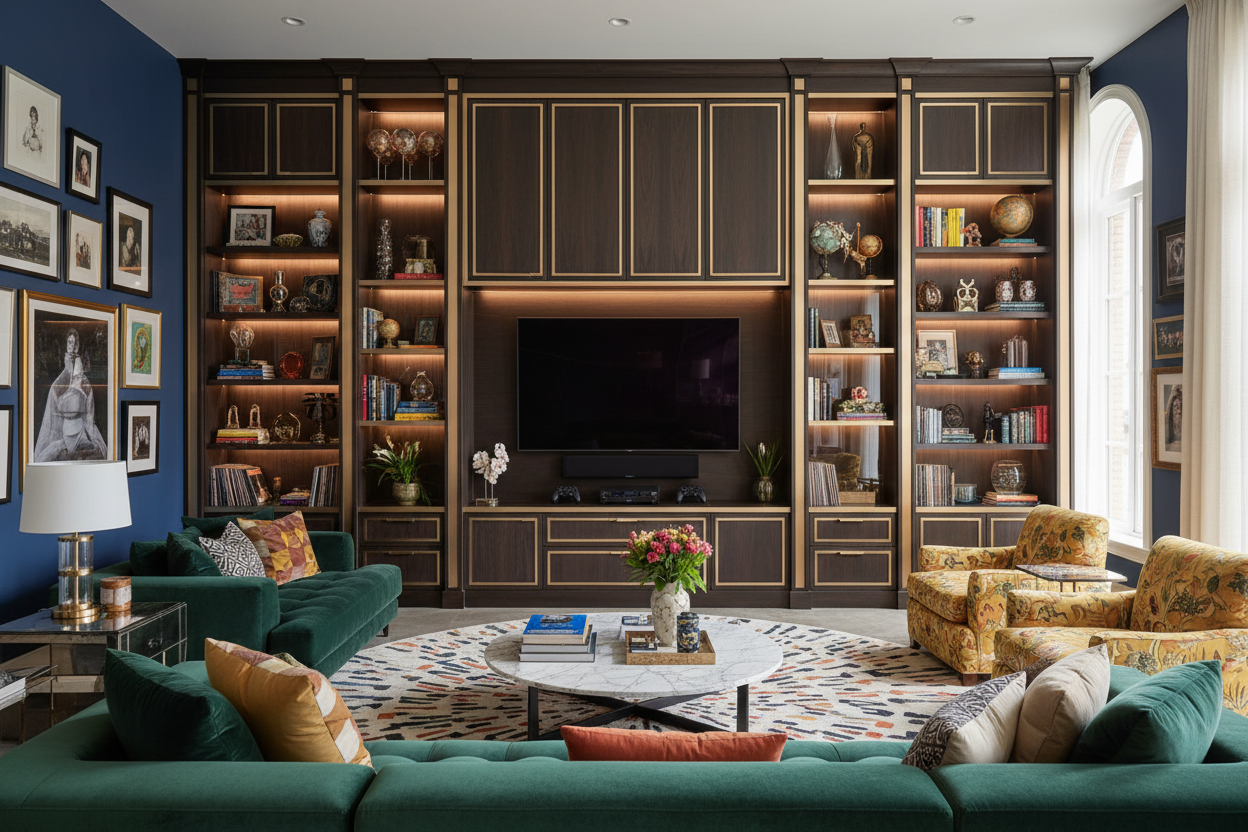
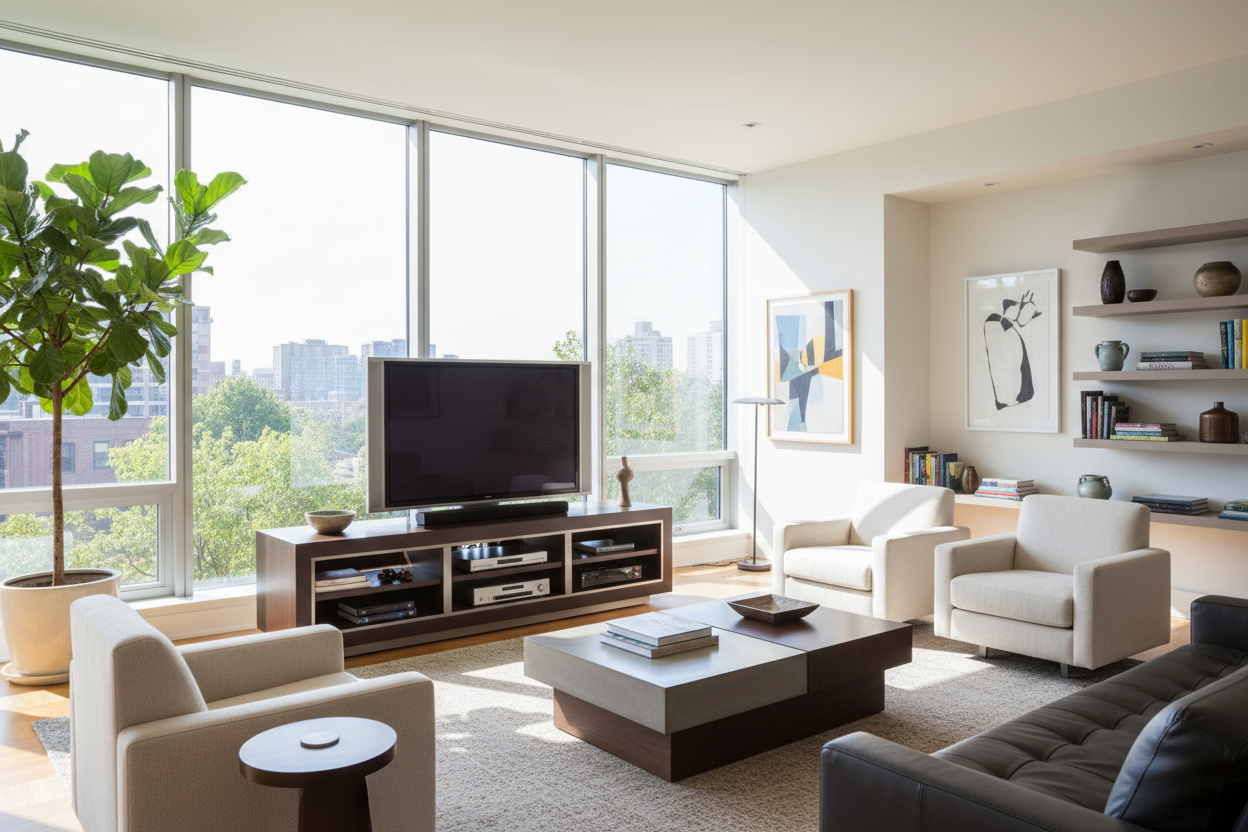
I remember staring at my living room three years ago, convinced I was a minimalist. I had a mid-century modern peg-leg TV stand that barely held the soundbar and three different 'floating' shelves that were actually sagging under the weight of my hardcovers. It looked like a college dorm that had inherited a small paycheck. The floor was a minefield of baskets meant to 'hide' the clutter, but they just looked like laundry day that never ended. I was terrified of entertainment centers and wall units because I thought they were too 'heavy' for my 12x15 living room.
I was wrong. I finally traded the scattered bits for one massive, floor-to-ceiling wall entertainment center, and the room actually felt bigger. It sounds counterintuitive, but replacing five small pieces of furniture with one large entertainment wall unit stopped the visual stuttering. My room finally had a spine.
Quick Takeaways
- One large wall unit entertainment center creates less visual clutter than five small mismatched pieces.
- Vertical storage utilizes 'dead' wall space, freeing up actual floor area for walking.
- An entertainment center wall unit with doors is the only way to truly hide the cable-box-and-wire bird's nest.
- Solid wood options last decades, while cheap particle board will bow under a modern 65-inch TV within a year.
The 'Tiny Furniture' Mistake We All Make
We’ve all done it. We buy a 'starter' TV stand because it’s cheap and fits in the back of a hatchback. Then we realize we have nowhere for the PlayStation, the router, or the three dozen books we aren't ready to Kindle-ize. So we buy a small bookshelf. Then a basket for the throw blankets. Then another little cabinet for the board games. Before you know it, your living room entertainment centers wall units are actually just a chaotic collection of tv wall furniture that doesn't match and creates a dozen little 'clutter islands.'
This 'tiny furniture' approach is a trap. Every time your eye hits the edge of a piece of furniture, it pauses. When you have five small pieces, your brain processes five separate objects and all the gaps in between. It makes a room feel frantic. I spent way too much money on small entertainment center wall unit options trying to save space, only to realize I was making my home feel like a storage unit. A full wall tv stand sounds intimidating, but it provides a singular, clean lines that let your eyes actually rest.
Why Massive Entertainment Centers and Wall Units Actually Work
The design secret I learned the hard way is 'architectural anchoring.' When you install a whole wall entertainment centers, you aren't just adding a piece of furniture; you're changing the architecture of the room. It becomes a media wall units system that feels built-in. This massive presence actually pushes the walls 'out' visually because it draws the eye upward toward the ceiling. Instead of looking at a tv entertainment wall units that stops at waist height, you’re looking at a large wall entertainment center that commands the entire vertical plane.
Taking the plunge on a new entertainment center was the best decision I made for my sanity. It acted as the missing piece for living rooms that I didn't know I needed. Suddenly, the entertainment wall center wasn't just a place for the TV; it was the focal point that made the rest of my mismatched chairs feel intentional. If you have a large wall unit, you don't need a gallery wall or extra decor. The unit is the decor. In my experience, a tv wall unit entertainment center that spans at least 70% of the wall width is the sweet spot for making a room look professionally designed rather than just 'furnished.'
The Golden Ratio: Hiding Junk vs. Displaying Art
A full entertainment center can easily look like a monolithic block of wood if you aren't careful. The trick is the 70/30 rule: 70% closed storage, 30% open display. You want cabinets for entertainment wall space to hide the ugly stuff—the routers, the tangled HDMI cables, and the board games with the ripped boxes. This is why I always recommend an entertainment center wall unit with doors. If everything is on an open wall entertainment shelf, you haven't solved the clutter problem; you've just put it on a pedestal.
I personally use a modern 3-piece entertainment center because it hits that balance perfectly. The overhead cabinets hide my 'stuff,' while the side units act as a bookcase entertainment wall unit for my favorite ceramics and hardbacks. When you're looking at large wall units, check the shelf depth. You want at least 12 inches for books, but 15-18 inches if you're planning to hide a printer or a gaming console. A wall cabinet entertainment center with adjustable shelving is worth the extra $100 every single time.
Choosing Between Solid Wood and Modern Finishes
Material choice is where most people get stuck. A solid wood entertainment center wall unit is a beast—it’s heavy, it’s expensive, and it’s gorgeous. If you’re going for a 'forever home' vibe, wooden wall entertainment center options in oak or walnut bring a warmth that paint can’t touch. They feel grounded. However, if you're in a smaller apartment, a wood wall tv unit in a dark stain might feel too heavy. This is where modern finishes come in.
A white or light gray wall size entertainment center can almost disappear into the drywall, giving you all the storage of big wall units without the visual weight. I’ve found that large wood entertainment center pieces work best in rooms with high ceilings (9 feet or more), while sleek, lacquered tv wall unit entertainment center setups are better for standard 8-foot ceilings. If you go with a solid wood tv wall unit, make sure it has cord management holes pre-drilled. Drilling through 1-inch thick solid oak yourself is a nightmare I don't wish on anyone.
My Reality Check: Measuring for Big Wall Units
Before you buy a large wall entertainment center, you need to do more than just measure the length of the wall. I once bought a wall entertainment furniture set that was 100 inches wide, only to realize it blocked the only HVAC return vent in the room. Check your floor vents, your wall outlets, and your baseboards. Most large tv wall units don't have a deep enough 'toe kick' to clear thick, modern baseboards, meaning the unit won't sit flush against the wall unless you're willing to cut your trim.
Also, consider the 'reach.' If you get a wall unit media center that goes all the way to the ceiling, what are you putting on those top shelves? I put my 'once-a-year' items there—holiday decor and old photo albums. Finally, measure your TV's actual width, not the screen size. A 65-inch TV is usually about 57 inches wide. If your tv wall entertainment opening is exactly 58 inches, you’re going to have a very frustrating assembly day. Give yourself at least 2-3 inches of 'wiggle room' on either side for airflow and fingers.
FAQ
Will a large wall unit make my small room feel tiny?
Actually, no. A single large wall entertainment center reduces visual clutter. By covering more of the wall with one cohesive piece, the room feels more organized and spacious than it would with multiple small pieces of furniture.
How do I hide cables in a wall unit?
Look for a wall entertainment cabinet with built-in cable management ports. If it doesn't have them, you can use a 2-inch hole saw bit to create your own behind the TV and inside the lower cabinets. Always use 'brush' inserts for a cleaner look.
Is solid wood worth the extra cost for an entertainment center?
Yes, especially for large entertainment units. Particle board (MDF) tends to sag over time under the weight of heavy TVs and books. A solid wood entertainment center wall unit will stay level for decades and can be refinished if it gets scratched.

Leave a comment
This site is protected by hCaptcha and the hCaptcha Privacy Policy and Terms of Service apply.