

















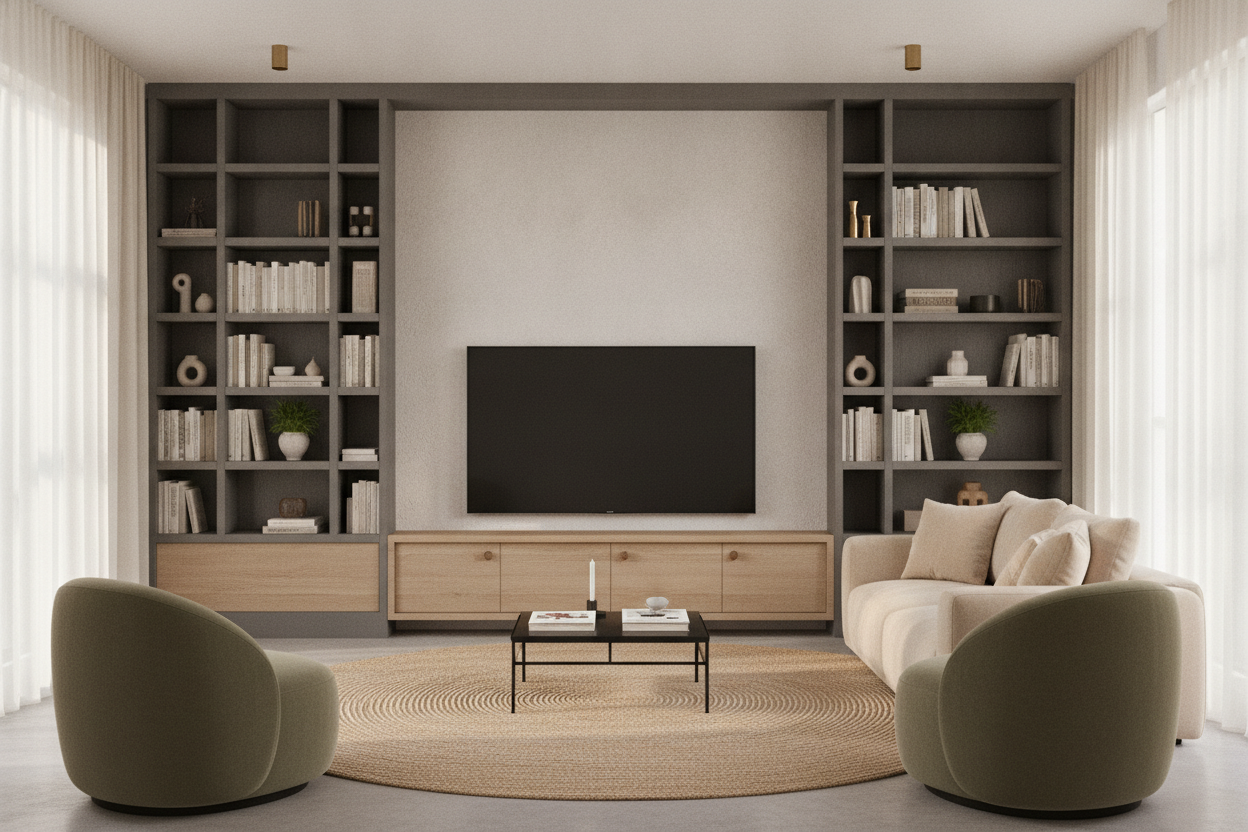
I spent three weeks trying to find the 'perfect' way to hide my 65-inch screen. I bought vintage oil paintings, I considered those motorized canvases that cost more than my car, and I even thought about a literal velvet curtain. Eventually, I realized that my living room tv wasn't the problem—my insecurity about it was.
We live in a world where we watch shows. There is no shame in having a television room that actually functions as one. The more you try to camouflage the tech, the more you highlight it. It is time to stop the design gymnastics and just let the screen exist.
Quick Takeaways
- Gallery walls around TVs usually create visual noise rather than hiding the screen.
- A TV should be grounded by furniture that is at least 20% wider than the screen itself.
- Unmounting your TV can make a room feel more intentional and less like a sports bar.
- Good cable management is more effective than any 'hidden' cabinet.
The Gallery Wall Camouflage is Fooling No One
We have all seen the Pinterest boards: a family room with tv ideas that involve surrounding the screen with twenty mismatched frames. Here is the truth: it never looks like a curated art collection. It looks like a TV room setup that is trying too hard. The black rectangle of a powered-down screen is a massive visual weight that 'light' frames cannot balance.
When you clutter the wall with small objects, your eye does not know where to land. Instead of a clean modern living room tv area, you get a chaotic mess that makes the room feel smaller. If you want art, put art on a different wall. Let the TV wall be simple. Modern tv room ideas should focus on clean lines and negative space, not filling every square inch of drywall with a thrifted wood frame.
Why I Finally Took My Screen Off the Wall
For years, I was a 'mount it as high as possible' person. I thought it made the room look bigger. I was wrong. Mounting a TV often turns it into a floating black void that sucks the life out of your interior design living room tv plans. Unless you are building it into a custom recessed niche, a mounted TV often looks like an afterthought.
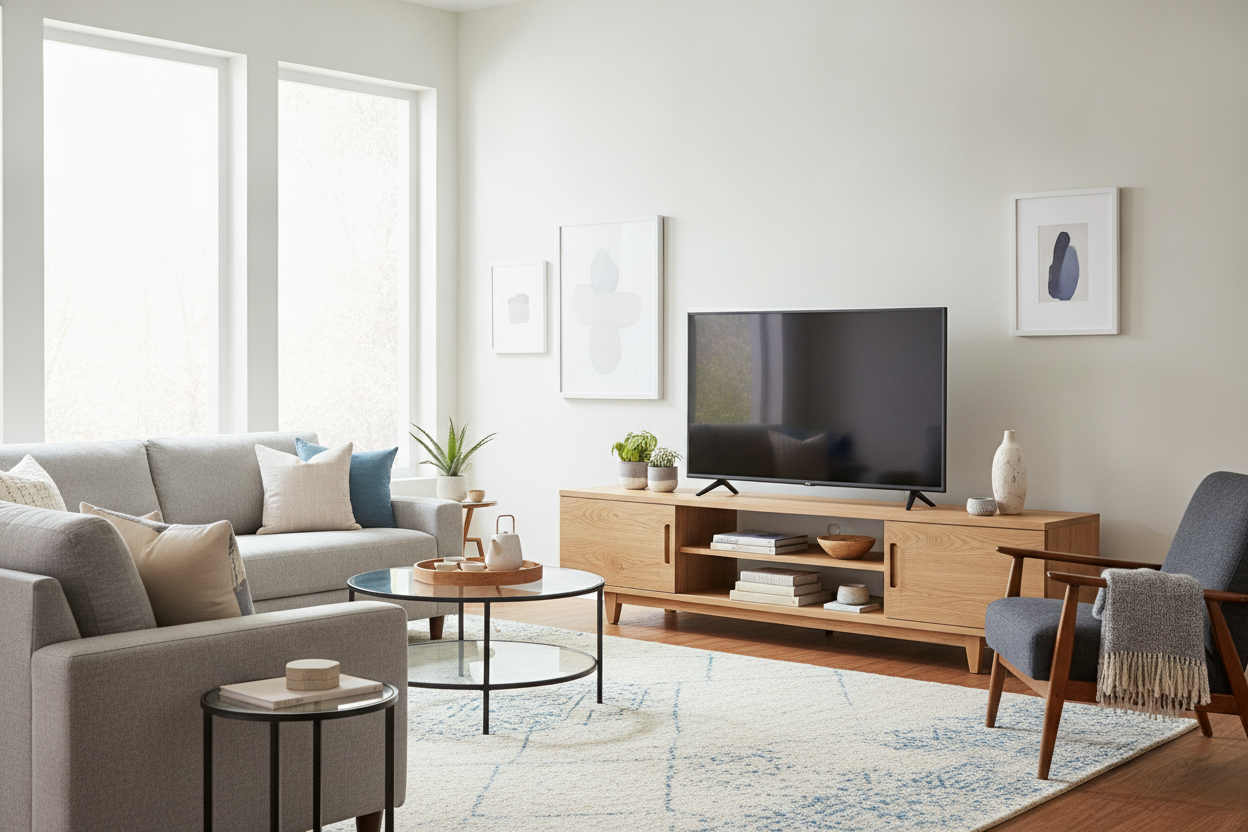
I finally unmounted mine and put it back on a sleek living room modern tv stand. The change was immediate. By bringing the screen down to eye level and placing it on a physical object, the room felt grounded. It no longer looked like a waiting room; it looked like a home. This is a common mistake in modern tv room design—we forget that furniture provides the warmth that tech lacks.
Grounding the 'Black Box' With Real Furniture
The biggest mistake I see in family tv room design ideas is using a console that is too small. If your TV is wider than your furniture, it looks top-heavy and cheap. You want your media unit to be the anchor. For a 65-inch screen, you need something substantial. A wide adjustable tv stand allows you to stretch the footprint of the furniture so the TV looks like it belongs there, rather than just hovering over it.
If you hate the look of 'media furniture,' don't use it. I’ve found that a solid wood modern sideboard works ten times better than most cheap particle-board TV stands. It has the height and the 'heft' to balance a large screen. Plus, the storage is actually deep enough for things you want to hide, like routers and those tangled HDMI cables we all pretend don't exist.
Rethinking the Typical Family Room Layout
Your tv room inspiration shouldn't involve a room where every single chair is bolted to the floor facing the screen. That is a theater, not a living space. A successful living room layout allows for conversation first. Try placing your seating in a U-shape or a L-shape where people can look at each other, with the TV positioned on a side wall or a secondary focal point.
In a contemporary tv room, the screen is a tool, not a god. I like to use swivel chairs or a deep sectional that allows you to lounge toward the TV for movie night but sit upright for coffee with friends. This makes the tv in a room feel like a feature you use, rather than the only reason the room exists. It’s about creating a family tv room that works for 2 PM on a Tuesday just as well as 8 PM on a Saturday.
When You Actually Do Need to Hide It
I will admit there are exceptions. If your living room is also your home office or a formal parlor where you host clients, you might not want a giant screen staring at you all day. In those cases, a modern wall cabinet for living room storage is the way to go. This isn't about 'hiding' it out of shame; it’s about 'closing' the room when the workday is done.
Closing the doors on your tech provides a psychological boundary. It says the room is now for reading or talking, not scrolling. But for most of us, a well-chosen piece of furniture and a bit of confidence in our design of tv lounge spaces is all we really need. Stop the camouflage. Buy the big console. Enjoy your show.
FAQ
How high should my TV be?
Your eyes should be level with the middle of the screen when you are sitting down. If you have to tilt your head back, it is too high. Please, for the love of your neck, stop putting TVs over high fireplaces.
Is a TV stand better than mounting?
It depends on the room, but a stand usually looks more like 'interior design' and less like 'tech setup.' It also gives you a place to hide cables without cutting holes in your drywall.
How do I deal with ugly cables?
Use a cable management box or velcro ties. If you are using a sideboard or console, you can often drill a small hole in the back panel to thread everything through. Clean cables make any tv room interior look high-end.


Leave a comment
This site is protected by hCaptcha and the hCaptcha Privacy Policy and Terms of Service apply.