

















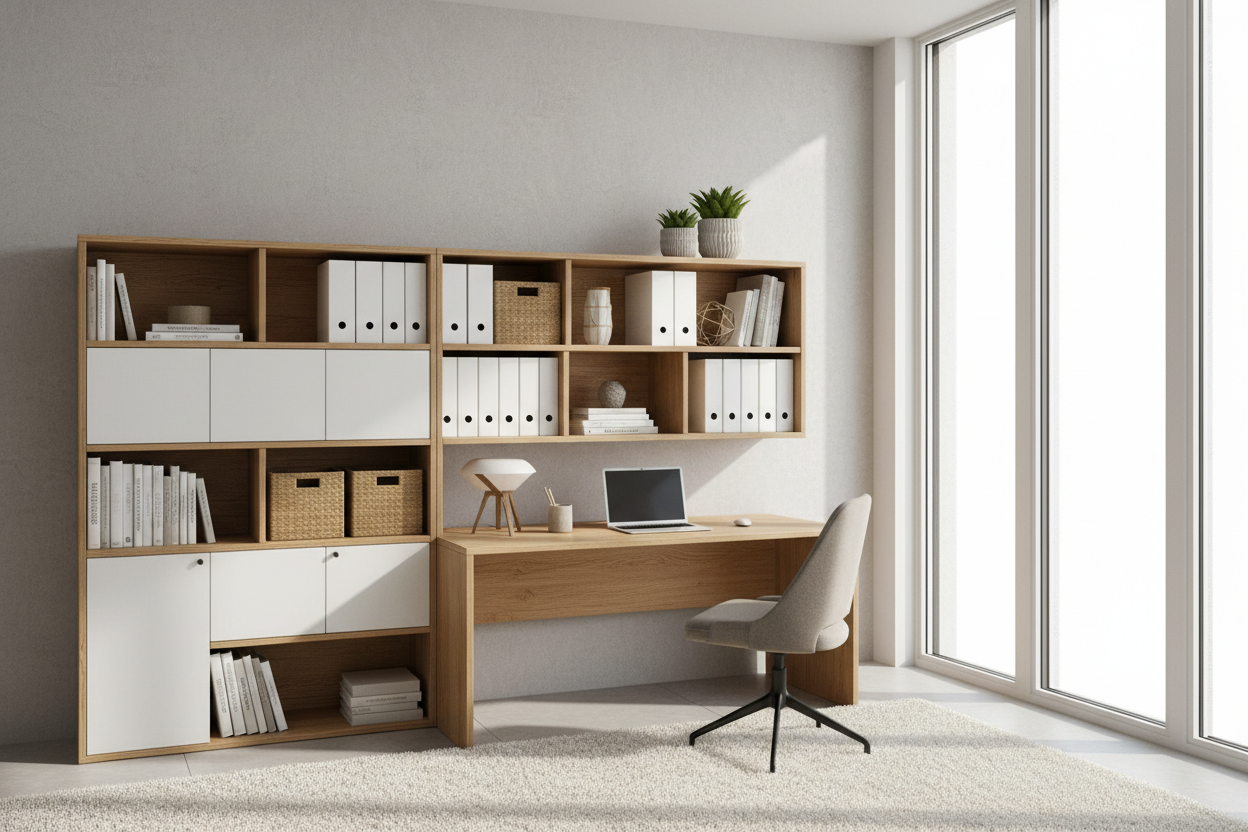
There is a specific kind of visual noise that accumulates in a workspace. It starts with a stack of papers, then a stray coffee mug, and suddenly, your creative flow is blocked by clutter. As a designer, I see this constantly. The instinct is to buy more storage, but often, the solution isn't just a cabinet—it is vertical integration. An office shelving desk solves the footprint dilemma by merging your work surface with upward storage, acting as a functional anchor for the room.
Key Features to Look For
- Vertical Clearance: Ensure at least 20-24 inches of height between the desktop and the first shelf to accommodate monitors.
- Material Density: Look for solid wood or high-grade plywood; avoid low-density particle board that bows under weight.
- Depth Ratios: The shelving depth should be shallower than the desk depth (approx. 12" vs 24") to prevent a "caved-in" feeling.
- Cable Management: Check for pre-drilled grommets or open-back designs to route wires from upper peripherals.
Balancing Visual Weight and Scale
When selecting a shelf office desk, you are dealing with a substantial piece of furniture. In design terms, we call this "visual weight." If you place a dark, heavy unit in a small room, it dominates the space and makes the walls feel like they are closing in.
For smaller footprints, I recommend open-frame metal structures or floating ladder styles. This allows light to pass through the home office desk shelf assembly, maintaining an airy atmosphere. Conversely, if you are anchoring a large executive office, a built-in look with closed cabinetry on the lower levels and open shelving above creates a sophisticated focal point.
Material Integrity: Avoiding the Sag
Nothing ruins the aesthetic of a workspace faster than a shelf bowing in the middle. While it is tempting to opt for a cheap desk shelf solution to save budget, standard particle board has a very low tensile strength. Over time, the humidity in your home combined with the weight of books will cause permanent warping.
If you are investing in an office table shelf system, look for hardwoods like oak or walnut, or metal-reinforced engineered wood. If budget is a constraint, ensure the shelves have a shorter span (under 30 inches) or include central support brackets.
Ergonomics and The "Monitor Trap"
The most common complaint I hear regarding a desk table shelf setup involves ergonomics. Many manufacturers design these units for laptop users, placing the first shelf too low. If you use an external monitor, you need vertical clearance. Before purchasing, measure your screen height on its stand. You do not want to be forced to remove a shelf just to fit your screen, as this often compromises the structural stability of the unit.
Styling Your Office Table Shelves
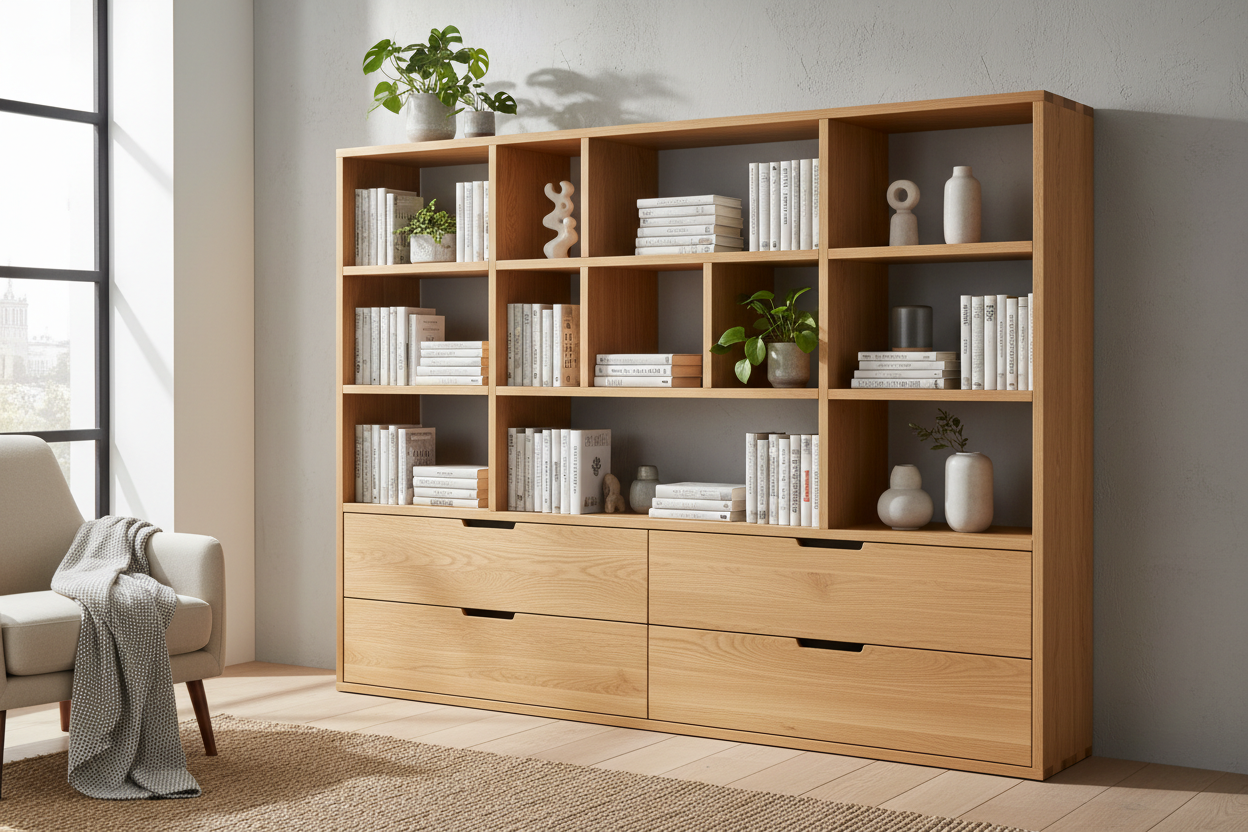
Functionality does not mean sacrificing beauty. When styling office table shelves, follow the "Z" pattern. Place your heaviest visual items (like storage bins or dense book clusters) on the bottom left and top right. Fill the gaps with lighter objects like succulents or framed art. This keeps the eye moving and prevents the unit from looking top-heavy.
Lessons from My Own Projects
I learned the hard way about "reach zones" during a project for a client who was a graphic designer. We installed a stunning, floor-to-ceiling shelving unit with an integrated desk. It looked incredible in photos.
However, two months later, she called me. The issue wasn't the look; it was the dust and the reach. I had designed the upper shelves to hold her reference archives, but they were just six inches out of her seated reach. She had to stand up on her chair to grab a Pantone book. Furthermore, the dark walnut finish we chose showed every speck of dust that settled on the open shelves, highlighting fingerprints near the handles.
Now, I always advise clients: keep the shelves within arm's length (the primary zone) reserved for daily tools. Use the upper echelons for decorative items that you don't need to touch often. And if you hate dusting, glass-fronted cabinets are not just a style choice—they are a sanity saver.
Conclusion
Transforming your workspace requires more than just buying furniture; it requires curating your environment. An integrated desk and shelving unit can reclaim your floor space and elevate your workflow, provided you respect the balance of scale and material quality. Measure twice, check your monitor height, and invest in a piece that will support your career for years to come.
Frequently Asked Questions
How much weight can a typical office desk shelf hold?
This varies wildly by material. A standard particle board shelf might hold 20-30 lbs before sagging, whereas a solid wood or metal shelf can often support 50-75 lbs. Always check the manufacturer's "load rating" before stacking heavy encyclopedias.
Can I add a shelf to my existing desk?
Yes, you can use a desk hutch or a clamp-on shelf. However, ensure your existing desk surface is solid. Clamping a heavy riser onto a hollow-core door desk can crack the surface.
What is the best depth for shelves above a desk?
Ideally, shelves directly above the monitor should be no deeper than 10 to 12 inches. If they are as deep as the desk (24 inches+), they will cast a shadow on your workspace and make you feel claustrophobic.

Leave a comment
This site is protected by hCaptcha and the hCaptcha Privacy Policy and Terms of Service apply.