

















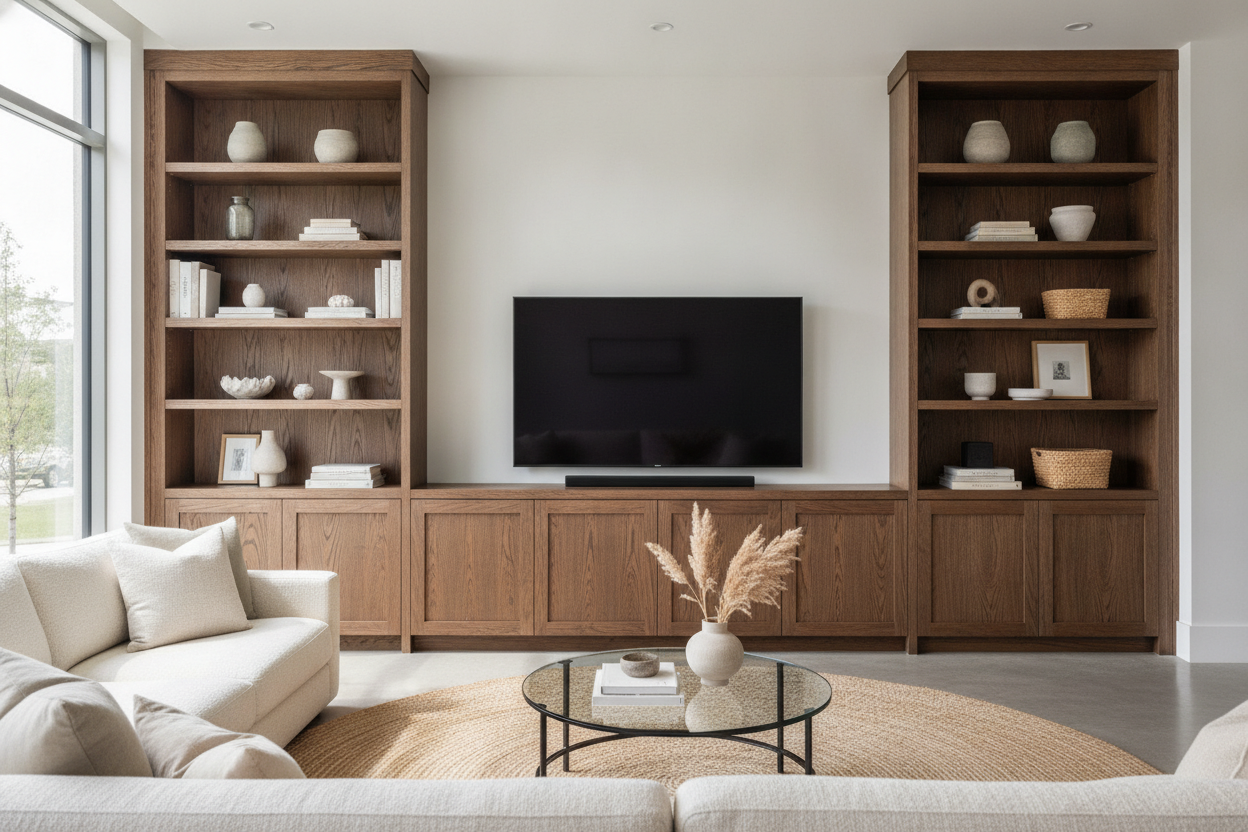
I remember the Saturday I finally snapped. I was sitting on my floor, trying to 'style' a Wi-Fi router behind a ceramic bust of David, while simultaneously trying to hide a 6-foot-long black power strip that looked like a dead snake. My living room didn't look like a magazine; it looked like a tech support center that had been hit by a tornado of 'aesthetic' baskets.
The dream of the perfectly curated media shelf is a lie we have all been sold. Unless you own exactly zero electronics and only display three vintage Leica cameras, open shelving is just a high-maintenance dust magnet. That is why I have officially moved to tv consoles with doors, and I am never looking back. It is the single fastest way to make a room feel like an adult lives there.
- Dust Control: Doors keep the gray fuzz off your expensive PlayStation and receivers.
- Visual Peace: Clean lines mean your eyes can rest instead of counting tangled HDMI cords.
- Cable Management: You can hide the 'cable nest' without actually having to organize it perfectly.
- Tech Protection: Keeps curious toddlers and pets away from glowing buttons and expensive wires.
The Pinterest Lie of the 'Perfectly Styled' Open Console
We have all seen those photos: a white oak shelf with a single succulent, two art books, and a TV that apparently doesn't require electricity. In the real world, your TV has a soundbar, a cable box, and a tangle of wires that attracts dust bunnies like a magnet. I spent years trying to make my entertainment centers with doors-less units work, and all I got was a weekly chore of wiping down every individual black plastic box.
The reality is that gaming consoles and routers are not decor. They are functional tools that are almost always ugly. When you use an entertainment stand with doors, you stop performing for guests and start living. You can actually shove that extra controller or the tangled mess of chargers inside and just... close the door. The relief is instant.
Why Hiding the Mess Instantly Makes Your Room Look Expensive
There is a reason high-end interior designers lean toward closed storage. It creates a 'visual quiet' that allows the architecture of the room to shine. When I finally swapped my open metal rack for tv stands with doors, the whole room felt three times more expensive. It stopped looking like a college dorm and started feeling like a home.
Exposed tech has a way of making a living room feel like a sports bar or a basement man-cave. It is distracting when you are trying to relax. Making the switch to a cabinet cured my sports bar living room and turned it back into a cozy sanctuary. Now, when the TV is off, I am looking at beautiful wood grain or fluted textures instead of a blinking blue 'internet' light.
The Ventilation Rule: Don't Suffocate Your Tech
One mistake I made early on was buying a cheap, solid-back cabinet and shoving my hot-running receiver inside. Within two hours, the fan was screaming, and I smelled hot plastic. If you are shopping for entertainment cabinets with doors, you have to prioritize airflow. High-end electronics generate a lot of heat, and a sealed box is a death sentence for a PS5.
Look for a stand with slatted doors. Slats are the holy grail of media storage because they allow air to circulate freely while still hiding the visual clutter. If you go with solid doors, make sure the back panel has massive cutouts—not just a tiny 2-inch hole—to let the hot air escape. I usually leave about two inches of clearance between the back of my gear and the cabinet wall.
Solid Wood vs. Glass: Picking the Right Camouflage
Choosing between tv stand cabinet doors made of solid wood or glass comes down to your remote setup. If you are still using old-school infrared (IR) remotes, solid wood will block the signal. You will find yourself standing up and pointing the remote over the top of the door like a madman. I have been there, and it is annoying.
If you need that signal to pass through, a credenza with sliding glass doors is a sophisticated middle ground. I personally love fluted or frosted glass. It blurs the shapes of the tech inside—hiding the cables—but still lets you use your remote without opening the cabinet. For a moodier look, a black cabinet with glass doors can look incredibly sharp while keeping your gear accessible and dust-free.
Finding the Right Proportions for Awkward Layouts
In my first 600-square-foot apartment, I thought I had to stick to open shelves to make the room feel 'airy.' Wrong. A small tv stand with doors actually makes a small room feel bigger because it eliminates the visual noise of the clutter. The key is the depth. You need at least 16 to 18 inches of internal depth to fit a standard receiver or a modern gaming console without the cables getting bent against the back panel.
Check the leg height, too. If you buy tv stands with cabinet doors that sit flush on the floor, they can look heavy in a small space. I always look for something with 6-inch tapered legs. It gives you that hidden storage you crave while keeping the floor visible, which tricks the eye into thinking the room is larger than it is.
FAQ
Will my remote work through closed wood doors?
Usually, no. Standard infrared remotes need a line of sight. However, most modern smart TVs and consoles use Bluetooth or RF remotes that work perfectly through wood. If you have an older cable box, you might need an IR repeater kit—they are cheap and hide easily.
How do I prevent my electronics from overheating?
Avoid 100% sealed cabinets. Choose stands with doors that have slatted fronts, mesh inserts, or large ventilation cutouts in the back. Always leave a few inches of 'breathing room' around each device inside the cabinet.
Are sliding doors better than swinging doors?
Sliding doors are a lifesaver in tight spaces where you don't have the clearance to swing a door open. Just keep in mind that with sliders, you can usually only access half the cabinet at a time.

Leave a comment
This site is protected by hCaptcha and the hCaptcha Privacy Policy and Terms of Service apply.