

















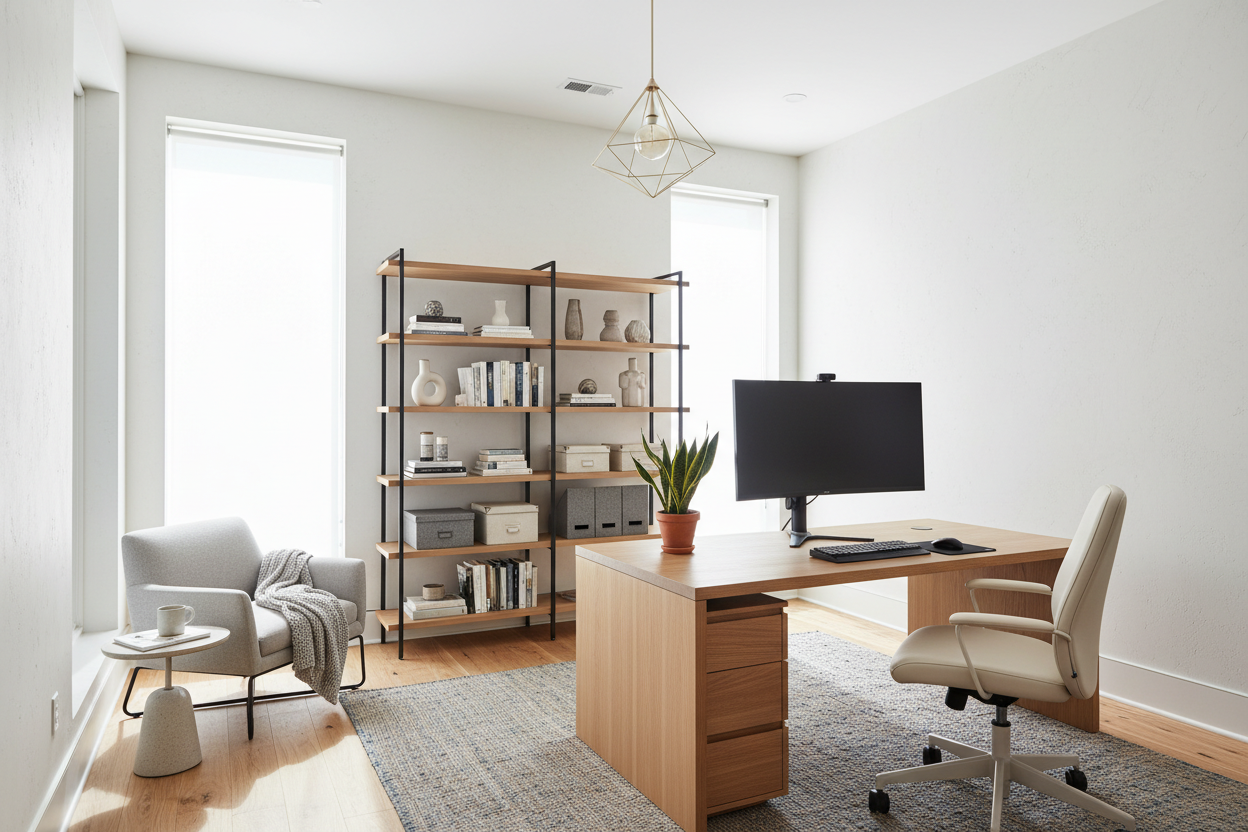
We have all been there: trying to finalize a presentation while balancing a laptop on the kitchen island, surrounded by domestic chaos. It is the classic dilemma of the modern era—the need for professional focus clashing with the realities of residential living. Creating a dedicated workspace is no longer a luxury; it is a necessity for mental clarity and productivity. However, effective office ideas design requires more than just shoving a desk into a spare corner; it demands a strategic approach to ergonomics, lighting, and spatial psychology to create an environment where you actually want to spend your day.
Quick Decision Guide: The Essentials
- Ergonomics First: Prioritize a chair with lumbar support and a desk height that allows your elbows to rest at a 90-degree angle. No aesthetic is worth back pain.
- Lighting Strategy: Layer your lighting. Combine ambient overhead fixtures with focused task lighting and, ideally, natural light to reduce eye strain.
- Material Durability: For high-traffic surfaces, opt for high-pressure laminates or sealed solid wood over soft veneers that scratch easily.
- Storage Solutions: Vertical shelving and hidden cable management are crucial for maintaining visual calm in simple home office ideas.
- Spatial Flow: Ensure there is at least 36 to 48 inches of clearance behind your desk for chair movement.
Mastering the Layout and Flow
The foundation of any successful project lies in the floor plan. Whether you are working with big home office ideas or trying to squeeze a workstation into a multi-purpose room, the placement of your furniture dictates the room's energy.
The Command Position
Avoid facing the wall if possible. In professional home office ideas, we often utilize the "command position," where the desk faces the door but is not directly in line with it. This offers a view of the room and reduces the subconscious anxiety of having your back to the entrance. If you are exploring office in room ideas where space is tight, try floating the desk perpendicular to a wall rather than pushing it flush against it. This creates a distinct zone for work.
Zoning for Focus
For open home office ideas, visual separation is key. Use an area rug to anchor the desk and chair, creating a psychological boundary between "work mode" and "home mode." If you have a home office with a view, position the desk perpendicular to the window to enjoy the scenery without fighting screen glare.
Furniture Selection: A Specialist's Perspective
Sourcing the right pieces is about balancing the visual weight of the furniture with its utility. When looking for furniture ideas for home office setups, consider the silhouette.
Desk Materiality
A sleek home office often features glass or metal, which helps keep the room feeling airy. However, be mindful of the tactile experience; glass can be cold and noisy. For a natural home office, solid wood (walnut or white oak) adds warmth and texture. Be wary of cheap particle board disguised as wood; it often bows under the weight of dual monitor setups. Investing in a desk with integrated cable management channels is one of the best interior design ideas for home office organization.
The Chair: The Non-Negotiable
While stylish home office ideas often feature sculptural dining chairs, these are detrimental to long-term health. Look for task chairs that blend aesthetics with mechanics—think breathable mesh backs with polished aluminum bases, or high-quality leather that patinas over time. The goal is to find a piece that looks like furniture, not industrial equipment.
Lighting and Wall Design
Lighting defines the mood. Bright home office ideas rely on maximizing daylight, but you must control it. Sheer drapery or solar shades are excellent for diffusing harsh sunlight while keeping the room airy.
For home office wall design ideas, consider the background of your video calls. A gallery wall or a bookshelf styled with intention acts as a sophisticated backdrop. Avoid clutter; negative space allows the eye to rest. Trendy home office ideas currently favor moody colors—deep greens or charcoals—which can actually aid concentration by reducing visual noise.
My Personal Take on Office Ideas Design
I learned a hard lesson early in my career regarding stylish home offices versus functional ones. I once designed a creative home office for myself using a stunning, vintage mid-century modern writing desk. It was beautiful—teak with brass accents. It looked incredible in photos.
However, within two weeks, I regretted it. The desk was too shallow (only 24 inches deep), meaning my monitor was too close to my face, causing headaches. Furthermore, it lacked a "modesty panel" or drawers, so every single cable and hard drive was visible underneath, creating a chaotic look that ruined the serene vibe I was aiming for. I realized that best home office pictures often lie about the reality of technology. Now, I always insist on deep desks (30 inches minimum) and integrated wire management, even if it means sacrificing a bit of that vintage charm. Function must support form, or the design fails.
Conclusion
Curating your workspace is an investment in your career and your well-being. By blending ergonomic principles with your personal taste—whether that is fancy office ideas or simple home office decorating ideas—you create a space that invites productivity rather than inducing stress. Start with the layout, invest in a quality chair, and manage your lighting. The rest is just decoration.
Frequently Asked Questions
How do I make a small workspace look professional?
For simple home office design ideas in small spaces, verticality is your friend. Use wall-mounted shelving to clear the desk surface. Choose furniture with exposed legs to maintain a sense of openness, and stick to a monochromatic color palette to reduce visual clutter.
What is the best color for a home office?
This depends on your work style. Blue and green tones are generally considered the best interior design ideas home office colors for focus and calmness. However, if you are in a creative field, warmer tones like terracotta or soft yellow can stimulate energy and innovation.
Is a custom built-in desk worth the investment?
If you are looking for model home office design quality and plan to stay in the home for years, yes. Custom millwork maximizes every inch of space, especially in awkward alcoves, and offers superior cable concealment compared to retail furniture.

Leave a comment
This site is protected by hCaptcha and the hCaptcha Privacy Policy and Terms of Service apply.