

















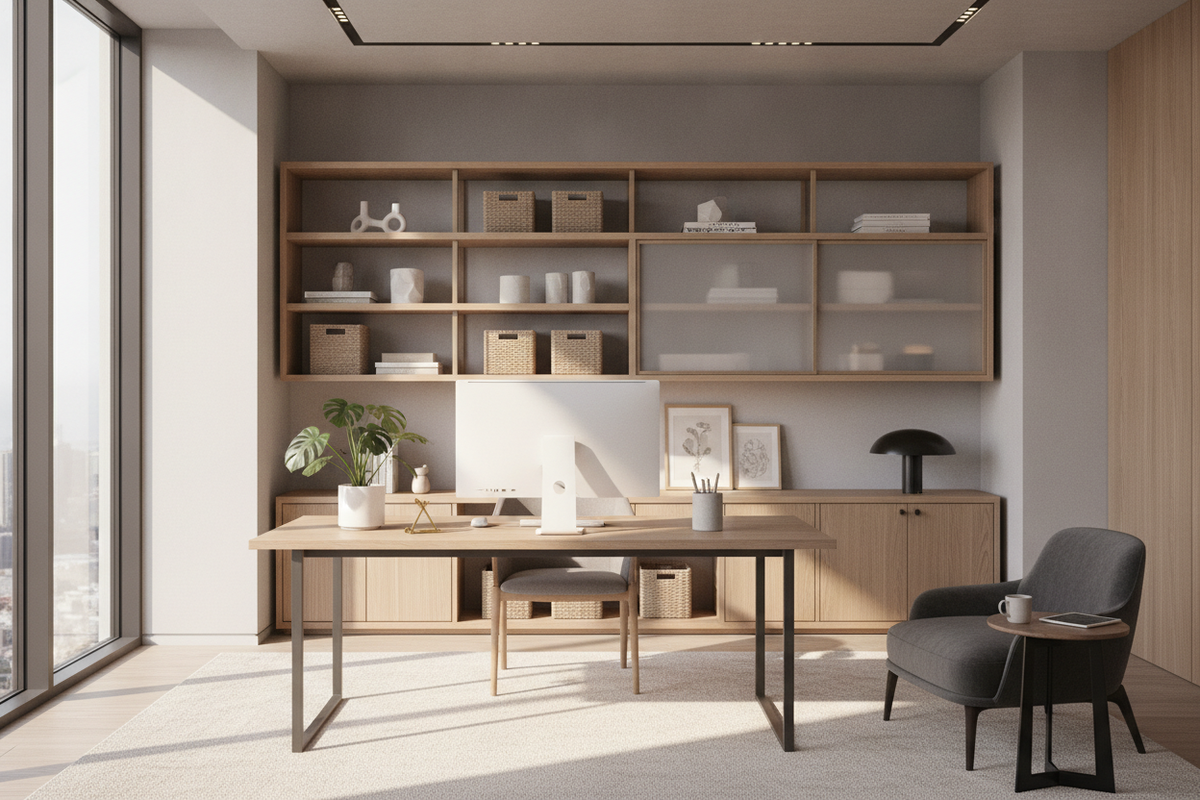
Defining the Modern Office Aesthetic
The contemporary workspace has evolved from a purely utilitarian setting into an intentional sanctuary designed to support both deep focus and creative energy. Establishing a cohesive office aesthetic is not merely about decorating empty surfaces; it is an architectural approach to how furniture silhouettes, storage systems, materials, and light interact within a room. When visual clutter and mismatched proportions are eliminated, the workspace naturally fosters mental clarity.
Achieving a refined home office aesthetic requires balancing visual restraint with personal warmth. By examining spatial dimensions, selecting complementary textures, and integrating discrete functional storage, you can build an aesthetic office that enhances your daily workflow. For a deeper look at aligning visual balance with concentration, explore our comprehensive office aesthetics guide.
Core Aesthetic Themes for Home and Work Offices
Before selecting individual furniture items, establishing a clear thematic direction ensures every desk, chair, and cabinet contributes to a harmonious whole. Several enduring design themes define the modern aesthetic office space:
- Warm Minimalist: Grounded in soft neutral tones, rounded edges, textured wall treatments, and generous negative space. This approach favors closed cabinetry and sculptural, monolithic desks that keep surfaces bare and tranquil.
- Mid-Century & Structured Classic: Characterized by rich walnut or espresso finishes, understated brass hardware, structured shelving, and tailored leather seating. It brings a grounded, timeless tone to any aesthetic office room.
- Biophilic & Scandinavian: Focused on pale oak finishes, linen textures, soft white accents, and abundant indoor foliage. This palette emphasizes airy openness and natural illumination.
- Industrial Modern: Blending matte black steel framework, dark timber tones, and clean linear silhouettes for a structured, urban work office aesthetic.
Desk Setup Architecture: Balancing Form and Surface Flow
The desk serves as the primary focal point of any office aesthetic design. Rather than treating the desktop as a temporary holding zone for equipment, treat it as a zoned workspace where every item has an assigned position.
Divide the desk surface into three distinct functional zones:
- Primary Active Zone: The central area reserved exclusively for your keyboard, mouse, and immediate writing surface. Keeping this area clear of peripheral items maintains a calm visual horizon.
- Secondary Reference Zone: Flanking areas designated for secondary display screens, reference documents, or a compact notepad.
- Curated Accent Zone: A subtle corner reserved for a single sculptural item, such as a ceramic vessel, a textured stone coaster, or a warm task lamp.
Thorough cable management is the cornerstone of an elevated aesthetic desk setup. Route all power cables through under-desk channels and use wireless peripherals wherever practical to preserve crisp lines across the tabletop.
Spatial Layouts and Furniture Sizing Frameworks
An inspiring office work aesthetic depends heavily on spatial flow and proportional furniture sizing. Oversized desks can overwhelm a modest room, while undersized storage units can make a spacious office feel fragmented.
Positioning your desk in a command orientation—facing into the room or angled toward a window rather than pushed directly against a blank wall—instantly elevates the architectural presence of the space. To prevent awkward bottlenecks and ensure effortless movement around your workstation, consult our office aesthetic guide on spatial planning.
Storage Integration: Eliminating Visual Clutter
True aesthetic sophistication requires concealing functional necessities behind elegant facades. Visible paper stacks, peripheral electronics, and miscellaneous stationery create visual friction that detracts from the room's character.
Incorporate tall, streamlined storage such as a space design product to utilize vertical wall volume without encroaching heavily on floor pathways. For low-profile perimeter organization, repurposing a sleek credenza or a design space product provides generous enclosed shelving to tuck away printers, backup drives, and archival folders while offering an elegant surface for curated art staging.
Layered Lighting: Ambiance, Task Illumination, and Accent Glow
Lighting defines the mood and depth of an aesthetic home office. A single overhead ceiling fixture often creates harsh shadows and flattens the visual texture of the room. Instead, implement a multi-tiered lighting scheme:
- Ambient Illumination: Soft, diffused overhead or perimeter lighting that sets a gentle baseline brightness.
- Focused Task Lighting: An adjustable, architecturally designed desk lamp that casts targeted illumination directly onto work surfaces.
- Accent Glow: Warm LED strips along bookshelf perimeters or a slender floor lamp placed in an underutilized corner to create visual warmth and depth.
Harmonize all light sources with warm to neutral color temperatures to maintain a soothing, cohesive atmosphere. For specific techniques on preventing lighting imbalances across your screens and work surfaces, review our companion office aesthetic guide.
Material Palettes and Tactile Layering
A visually compelling aesthetic office space relies on tactile contrast rather than vibrant color saturation. Pairing diverse textures adds richness while maintaining a serene visual environment:
- Matte and Wood Surfaces: Pair soft-sheen lacquered cabinets or natural wood grain desks with smooth leather or wool desk mats.
- Metallic Accents: Introduce brushed champagne brass or matte black hardware consistently across cabinet pulls, desk lamp fixtures, and picture frames.
- Soft Textiles: Use woven flatweave rugs, linen window drapery, and acoustic fabric wall panels to soften ambient sound and introduce cozy warmth.
Practical Step-by-Step Guide to Executing Your Aesthetic Reset
Transforming your workspace is most successful when approached through structured phases rather than haphazard purchases:
- Perform a Clear-Surface Audit: Remove every item from your desk and storage units. Categorize tools by frequency of daily use and commit to storing non-daily items inside closed cabinets.
- Select a Focused Color Foundation: Choose two dominant foundation tones (such as soft ivory and natural oak) and one grounding accent finish (such as matte charcoal or brushed brass).
- Anchor Foundation Furniture: Position your primary desk and storage credenzas with generous clearance for chair movement and door swings.
- Install Layered Illumination: Position task lighting to minimize screen glare and add gentle accent fixtures to balance perimeter shadows.
- Curate Meaningful Finishing Touches: Style open display shelves sparingly using the rule of odd numbers, balancing books, sculptural ceramics, and living greenery.
Building a Sustainable Workspace Sanctuary
An exceptional office space aesthetic is never static; it adapts to your evolving workflow, creative rituals, and functional needs. By prioritizing balanced furniture proportions, concealed storage utility, and a thoughtful material palette, you create an environment that feels both professional and deeply inspiring.


Leave a comment
This site is protected by hCaptcha and the hCaptcha Privacy Policy and Terms of Service apply.