

















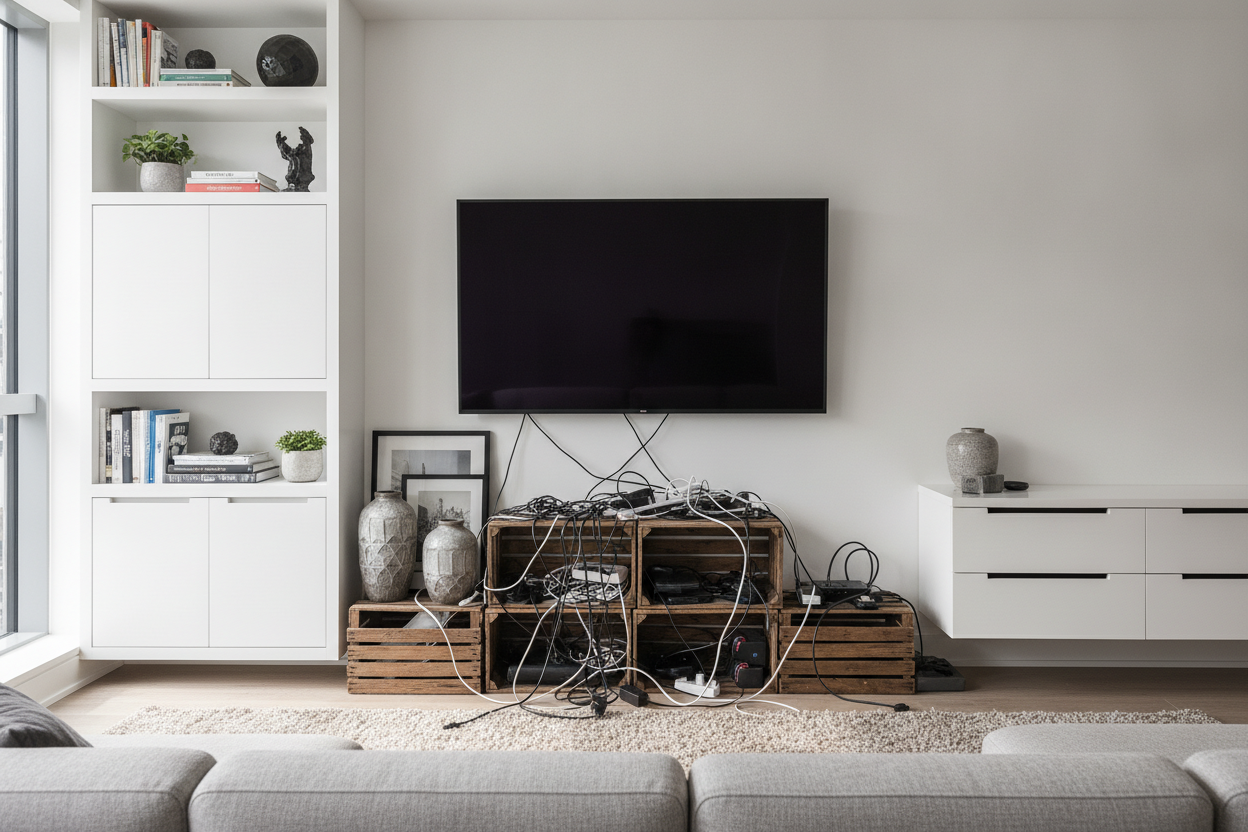
I remember the moment I finally got my 65-inch OLED on the wall. I stepped back, admired the clean lines, and then looked down. My router, Nintendo Switch, and a literal nest of black cables were just sitting on the hardwood floor like a pile of electronic trash. I had spent so much time worrying about the mount height that I completely forgot about storage for wall mounted tv setups.
Quick Takeaways
- Cables don't vanish; they just get more obvious when the TV is higher.
- Low-profile credenzas anchor the room better than a bare wall.
- Floating shelves are great for minimalism but terrible for hiding bulky power bricks.
- Always measure your depth—don't let a console stick out like a sore thumb.
The 'Floating TV' Illusion (And The Reality of Cords)
We all see those Pinterest photos where a TV sits perfectly on a shiplap wall with absolutely nothing around it. It looks like magic. In reality, that person probably spent three days fishing wires through their studs or they simply aren't actually using the TV for anything other than a screensaver. If you have a cable box, a gaming console, or even just a power cord, you need a plan.
The 'floating' look quickly turns into a 'hanging by a thread' look when you have three HDMI cables dangling down the wall. It breaks the immersion. When I first did it, I thought I could just tuck the wires behind a plant. I was wrong. The plant died from the heat of the router, and the wires still looked like a mess. You need dedicated tv wall mount storage to make the setup look intentional rather than unfinished.
To Float or to Ground? Choosing Your TV Wall Mount Storage
You have two main paths here: the architectural floating shelf or the grounded piece of furniture. Floating shelves are the ultimate minimalist move. They keep the floor space clear, which makes small living rooms feel much larger. I actually used wall shelves for tv storage in my last apartment, and while it looked slick, I had to get creative with Velcro to hide the Apple TV behind the screen.
The downside of the floating shelf is weight and depth. If you're a physical media collector or have a heavy AV receiver, a floating shelf might start to sag unless you hit every single stud with a heavy-duty bracket. Grounded furniture is much more forgiving and offers way more storage for things that aren't electronics, like board games or extra blankets.
The Magic of a Low-Slung Credenza
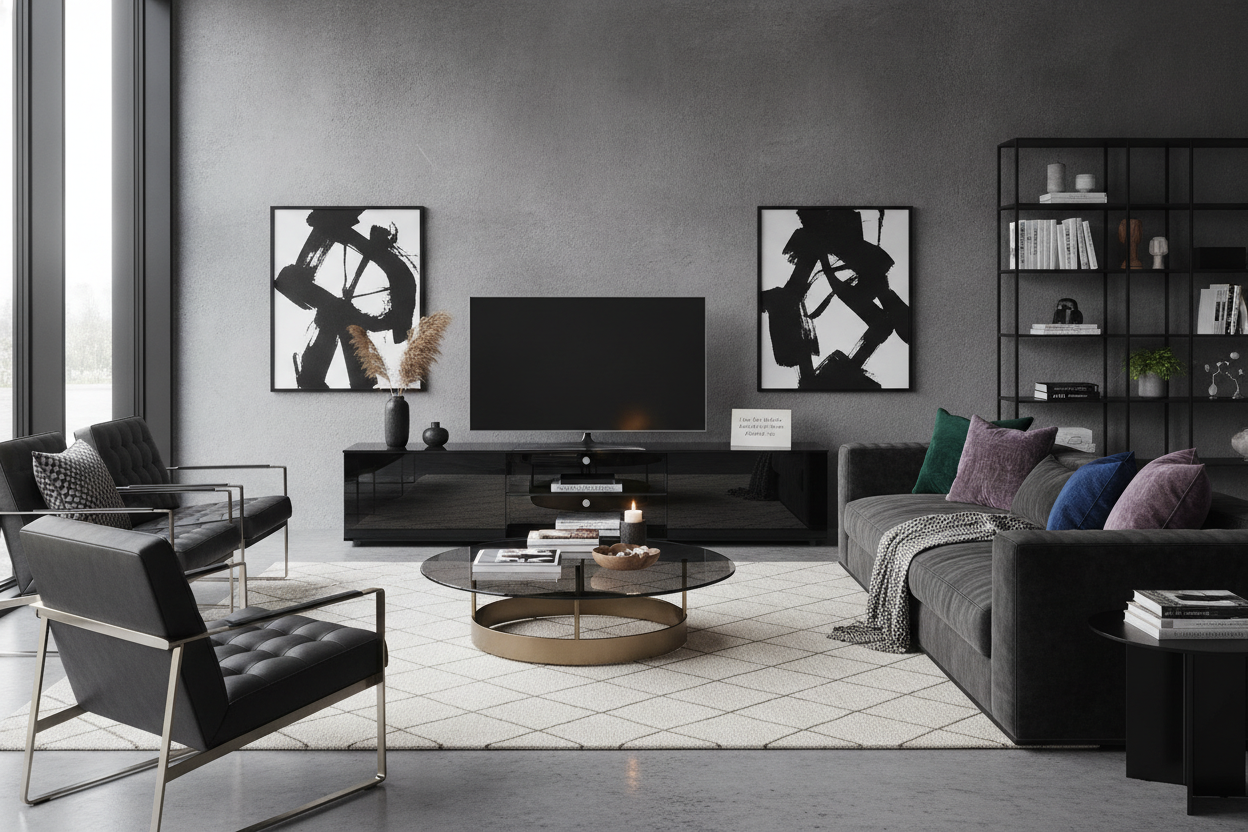
If you have the floor space, a long, low-slung piece is the gold standard. It provides a visual 'base' so your TV doesn't look like it's just drifting away into the ceiling. I'm a firm believer that the console should be at least 10 to 12 inches wider than the TV on both sides. If the furniture is the same width as the screen, the whole setup looks top-heavy and awkward.
I am particularly fond of a storage credenza with sliding glass doors. The glass allows your remote signals to reach the devices without you having to leave the doors hanging open. Plus, a piece with a bit of height (around 20-24 inches) is the sweet spot for hiding a mesh router and a power strip while still leaving plenty of room for the TV to breathe above it.
When to Go Fully Custom (or Just Fake It)
For a while, I was obsessed with the built-in look—you know, the kind that looks like the wall was literally carved out to hold your media. You don't actually need a $5,000 carpenter to get this vibe. I've seen people line up three identical modular cabinets to create a wall-to-wall effect that looks incredibly high-end. It hides everything from the subwoofer to the messy tangled mess of the 'junk drawer'.
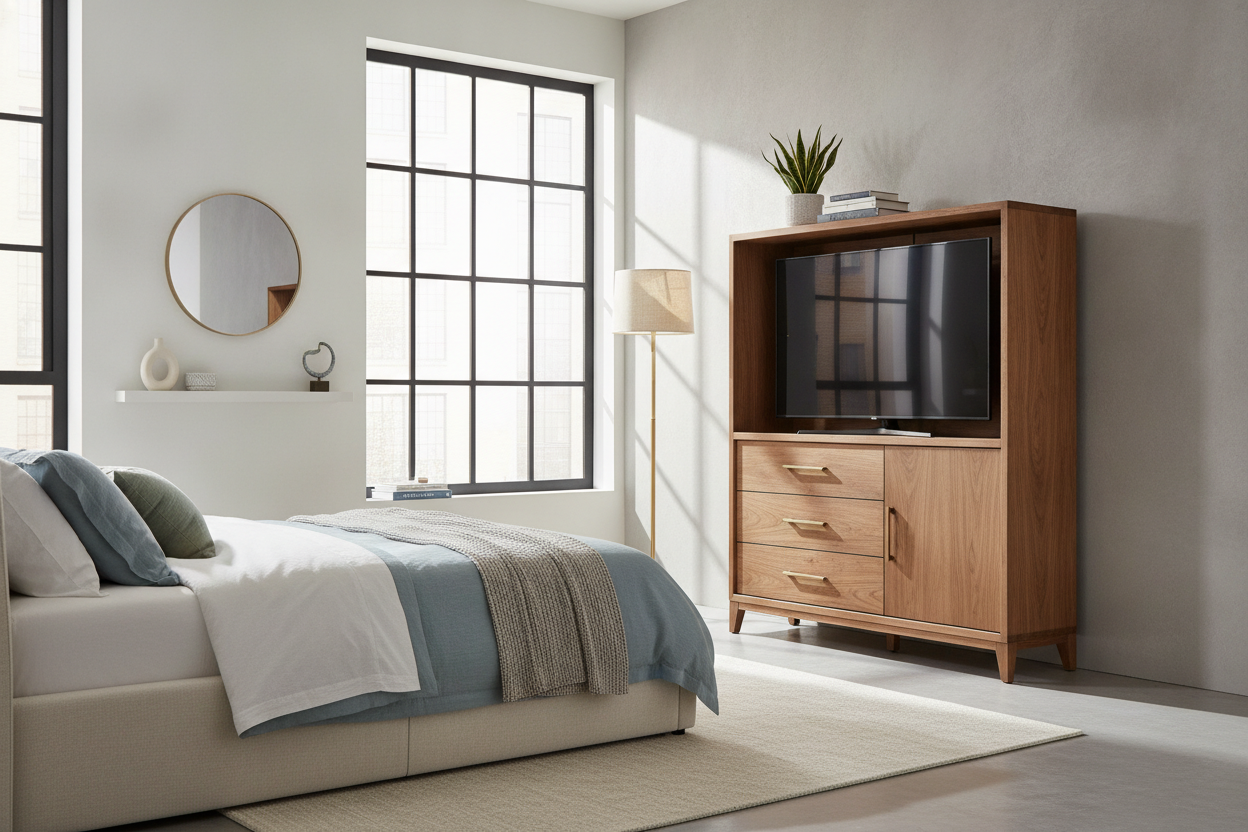
Eventually, I modern wall cabinet for living room storage and the change was instant. By moving the storage up off the floor but keeping it substantial, the room felt more structured. It’s about finding that middle ground between a tiny shelf that holds nothing and a massive entertainment center that swallows the whole room.
3 Rules for Styling the Awkward Gap Under Your TV
The space between the bottom of the TV and the top of your storage is a danger zone. Rule one: keep your decor low. If you put a tall vase of pampas grass there, it’s going to overlap the screen and drive you crazy during movie night. Rule two: use a tray to group small items like remotes and coasters so they don't look like clutter. Rule three: pick the right storage furniture that actually fits your lifestyle.
If you're a gamer, you need ventilation. If you're a minimalist, you need doors to hide the plastic. Whatever you choose, make sure it serves the TV, not the other way around. A well-styled storage piece makes the TV look like a piece of art rather than just a black rectangle on the wall.
FAQ
How high should I mount my TV?
Mount it so your eyes are level with the bottom third of the screen while you're sitting on your sofa. If you're looking up, it's too high. Your neck will thank me later.
Can I put my router inside a closed cabinet?
Yes, but it might slightly degrade your signal and it will definitely get hot. Look for cabinets with slatted doors or mesh fronts to keep the air moving.
How do I hide the wires if I'm a renter?
Use paintable cable raceways. They stick to the wall and hold all your cords in a neat plastic channel. Paint them the exact color of your wall and they practically disappear.

Leave a comment
This site is protected by hCaptcha and the hCaptcha Privacy Policy and Terms of Service apply.