

















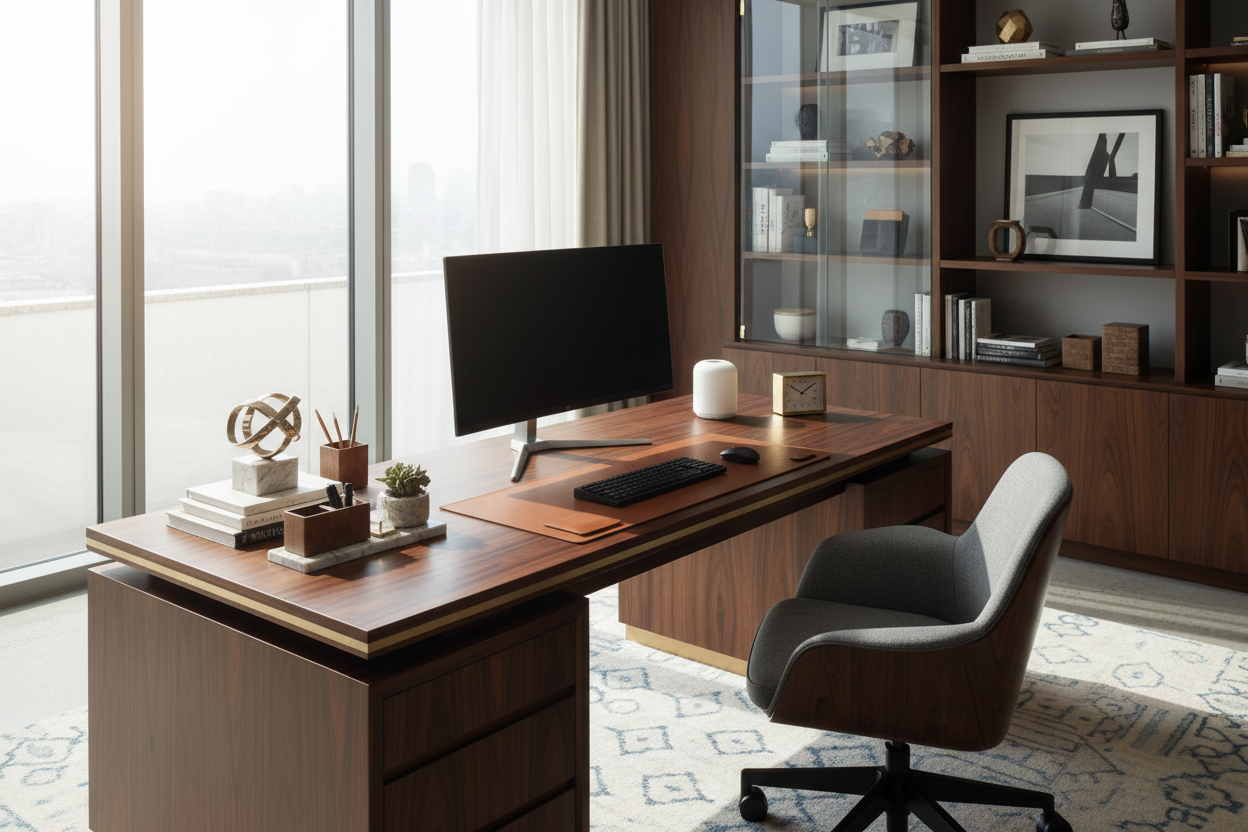
There is a fine line between a curated workspace and a cluttered catch-all. As a designer, I often see clients struggle to balance personality with professionalism. They want a space that feels inspiring, yet they fear that adding accessories will encroach on their working real estate. The secret lies in intentionality. Implementing the right desktop decoration ideas isn't about filling space; it is about refining your environment to support your workflow while elevating the room's overall aesthetic.
Quick Decision Guide: Curating Your Desk
- Functionality First: Ensure every decor item serves a purpose or inspires creativity; avoid purely ornamental clutter in high-traffic zones.
- Material Palette: Opt for natural materials like solid wood, leather, or matte ceramics to add warmth and reduce visual fatigue.
- Scale & Proportion: Follow the rule of thirds. Your decor should never occupy more than one-third of your active surface area.
- Lighting Temperature: Choose task lighting with adjustable Kelvin settings (2700K-4000K) to reduce eye strain and highlight decor textures.
Establishing Visual Hierarchy
When styling a surface, the eye needs a place to rest. In interior design, we refer to this as the focal point. On a desk, your monitor is often the dominant element, so your desktop decor ideas must counterbalance this technology. Create a visual triangle: your monitor is the peak, and your accessories—perhaps a sculptural lamp on one side and a structured organizer on the other—form the base. This grounds the setup and prevents the technology from feeling cold or imposing.
Materiality: The Tactile Experience
Since you are in physical contact with your desk for hours a day, the materials you choose are paramount. I always advise clients to move away from cheap plastics and towards materials that patina over time.
Solid Wood vs. Veneer Accessories
When selecting risers, trays, or organizers, the distinction between solid wood and veneer matters. While veneer is cost-effective, solid walnut or oak accessories have a weight and density that keeps them anchored when you grab a pen or move a file. Furthermore, solid wood can be refinished if scratched, whereas veneer will chip, exposing the composite underneath—a look that instantly degrades the luxury feel of a workspace.
Leather and Soft Goods
Integrating a high-quality leather desk mat is one of the most effective ways to define your work zone. It provides a soft, acoustic barrier against the clatter of keyboards and adds a layer of sophisticated texture. Look for full-grain leather; it breathes and develops a unique character, unlike PU leather which tends to peel and trap heat.
Ergonomics Meets Aesthetics
True luxury is seamless functionality. Your decor should enhance your ergonomics, not hinder them. Consider a monitor riser that doubles as a drawer unit. This lifts your screen to eye level to prevent neck strain while hiding unsightly sticky notes or cables. When selecting lighting, look for lamps with a heavy base and an articulating arm. This allows you to direct light exactly where needed without the fixture taking up valuable writing space. The goal is to have items that look like art objects but function as high-performance tools.
My Personal Take on Desktop Decoration Ideas
I learned a hard lesson about finishes during a project for a tech executive in San Francisco. We styled his massive mahogany desk with a set of stunning, high-gloss lacquer trays and a chrome lamp. It looked incredible in the portfolio photos. However, two weeks later, he called me to complain.
The issue wasn't the aesthetic; it was the glare. Every time he turned on his dual monitors, the light bounced off the glossy lacquer and chrome, creating a distracting reflection that caused eye strain. I had to swap everything out for matte black metal and honed stone accessories. It was a reminder that in a workspace, matte and textured finishes are superior to high-gloss ones because they absorb light rather than reflect it. Also, I realized that felt-bottomed accessories are non-negotiable—nobody wants to hear the scraping sound of a stone planter being dragged across a wood finish.
Frequently Asked Questions
How do I decorate a small desk without losing space?
Focus on verticality. Use a wall-mounted pegboard or a monitor riser with storage underneath. Limit your desktop decor ideas to a single statement piece, like a high-quality lamp, and keep the rest of your tools in a shallow drawer or tray.
What are the best plants for a desktop environment?
Select low-maintenance plants that don't drop leaves, which creates mess. Snake plants (Sansevieria) and ZZ plants are excellent architectural choices that thrive in low light and require infrequent watering. Avoid high-pollen flowers that might trigger allergies during work.
How can I hide cables while maintaining a stylish look?
Cable management is essential for a clean look. Use a cable management box that matches your desk's material to hide power strips. For visible cords, use braided cable sleeves rather than plastic zip ties; the fabric texture looks intentional and designed rather than utilitarian.

Leave a comment
This site is protected by hCaptcha and the hCaptcha Privacy Policy and Terms of Service apply.