

















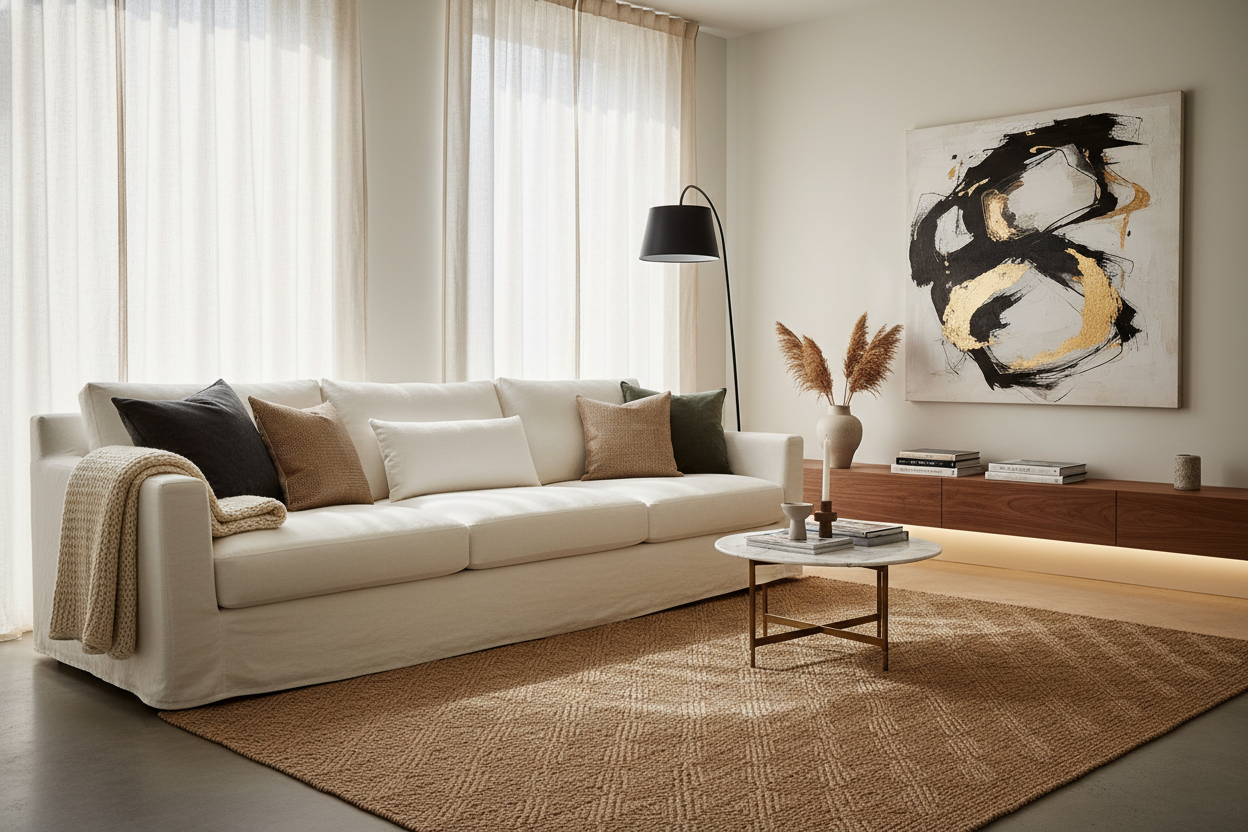
There is a specific tension that exists when a client asks for a pristine, bright living space but operates on a mid-range budget. The immediate fear is that affordable white furniture will look flat, clinical, or worse—cheap. However, the ikea white couch remains one of the most versatile tools in a designer's arsenal when utilized correctly. It acts as a neutral architectural element, allowing us to allocate the budget toward statement lighting or artisan rugs. The secret isn't just buying the sofa; it is about how you curate the environment around it to disguise its mass-market origins.
Quick Decision Guide: Selecting the Right Model
If you are rushing to the warehouse, these are the non-negotiable factors you must evaluate to ensure longevity and style:
- The Washability Factor: Ensure the model has a fully removable slipcover (frame and cushions). Look for 100% cotton or cotton-blend weaves which tolerate bleaching better than pure synthetics.
- Visual Weight: For small apartments, choose legs that lift the frame off the floor (like the Soderhamn) to increase perceived space. For large rooms, a skirted base (like the Uppland) grounds the layout.
- Cushion Construction: Check if the back cushions are reversible. Being able to flip them extends the life of the foam significantly.
- Texture Profiling: Avoid flat, smooth weaves in white. They highlight stains and look lower quality. Opt for textured weaves like twill or boucle to hide wear.
Analyzing the Silhouette and Scale
When specifying an ikea white sofa, scale is the primary pitfall. Many homeowners underestimate the visual volume of white furniture. Because white reflects light, the object appears larger than its dark-colored counterparts.
The Modern Low-Profile Aesthetic
If you are aiming for a contemporary, gallery-esque aesthetic, you are likely looking at modular series. The key here is horizontal linearity. A low-profile ikea couch white unit works best when paired with low coffee tables and floor-level lighting. This creates a lounge-like atmosphere often found in high-end hospitality design. However, be mindful of the seat depth; deep seats require ample throw pillows for lumbar support.
The Traditional Skirted Look
For a farmhouse or transitional style, the skirted silhouette is timeless. It mimics the lines of bespoke upholstery found in luxury showrooms. The fabric drape hides the legs, creating a softer, more substantial block of color. This style demands "breathing room"—ensure there is at least 18 inches of clearance between the sofa edge and your coffee table to maintain flow.
Materiality: Beyond the Stock Cover
As a specialist, I rarely leave an IKEA frame in its original state if the budget allows for a tweak. The stock fabrics are functional, but they often lack the tactile richness of premium textiles.
To truly elevate the piece, consider the concept of "upcycling" the frame immediately. There is a robust ecosystem of third-party manufacturers who create custom slipcovers specifically for IKEA models. Swapping a standard cotton cover for a heavy linen or a performance velvet instantly changes the narrative of the room. It shifts the perception from "flat-pack furniture" to "custom upholstery." If sticking with the stock white cover, focus on texture. A heavy weave catches the light differently, creating shadows that add depth to the white, preventing it from looking like a sheet of paper.
My Personal Take on the IKEA White Couch
I want to share a reality check from a project I managed three years ago. We installed a modular white IKEA sofa in a high-traffic family room. I loved the architectural lines, but there was a detail I hadn't anticipated: the "Velcro crunch."
On this specific model, the slipcovers attached to the frame via heavy-duty Velcro strips. While this kept the fabric taut (a huge plus for aesthetics), every time someone sat down heavily, there was a distinct, plastic crinkling sound. It felt cheap, regardless of how good it looked.
My fix? I actually bought strips of soft felt and applied them over the exposed hooked side of the Velcro where it wasn't strictly needed for tension. It silenced the noise. Furthermore, after six months, the back cushions began to slouch—a common issue with poly-fill. I opened the zippers and stuffed an additional layer of high-density batting into the casings. It cost me $30 and the sofa looked brand new again. These pieces are durable, but they require active maintenance to keep that showroom structure.
Conclusion
Investing in an ikea white couch is not a compromise; it is a strategic design choice. It offers you a blank canvas that is forgiving, washable, and adaptable. By paying attention to texture, silhouette, and perhaps investing in a few custom tweaks, you can create a living space that feels curated and luxurious without the heritage price tag.
Frequently Asked Questions
How do I keep an IKEA white sofa clean with pets?
The beauty of many IKEA models is the removable slipcover. I recommend washing them every 3-4 months. Do not use high heat in the dryer, as this shrinks the cotton, making it impossible to put back on the frame. Put the covers back on while they are slightly damp to stretch them into shape.
Does the white fabric yellow over time?
Natural fibers like cotton can yellow due to sunlight exposure and body oils. To combat this, use a laundry bluing agent or an oxygen-based bleach during your wash cycle. Avoid chlorine bleach as it can actually weaken fibers and accelerate yellowing in certain synthetic blends.
Can I paint the legs of my IKEA couch?
Absolutely. This is the easiest hack to elevate the look. Most stock legs are light birch or plastic. Spraying them matte black or replacing them entirely with tapered walnut legs (standard M8 bolt size usually fits) adds an immediate mid-century modern touch.


Leave a comment
This site is protected by hCaptcha and the hCaptcha Privacy Policy and Terms of Service apply.