

















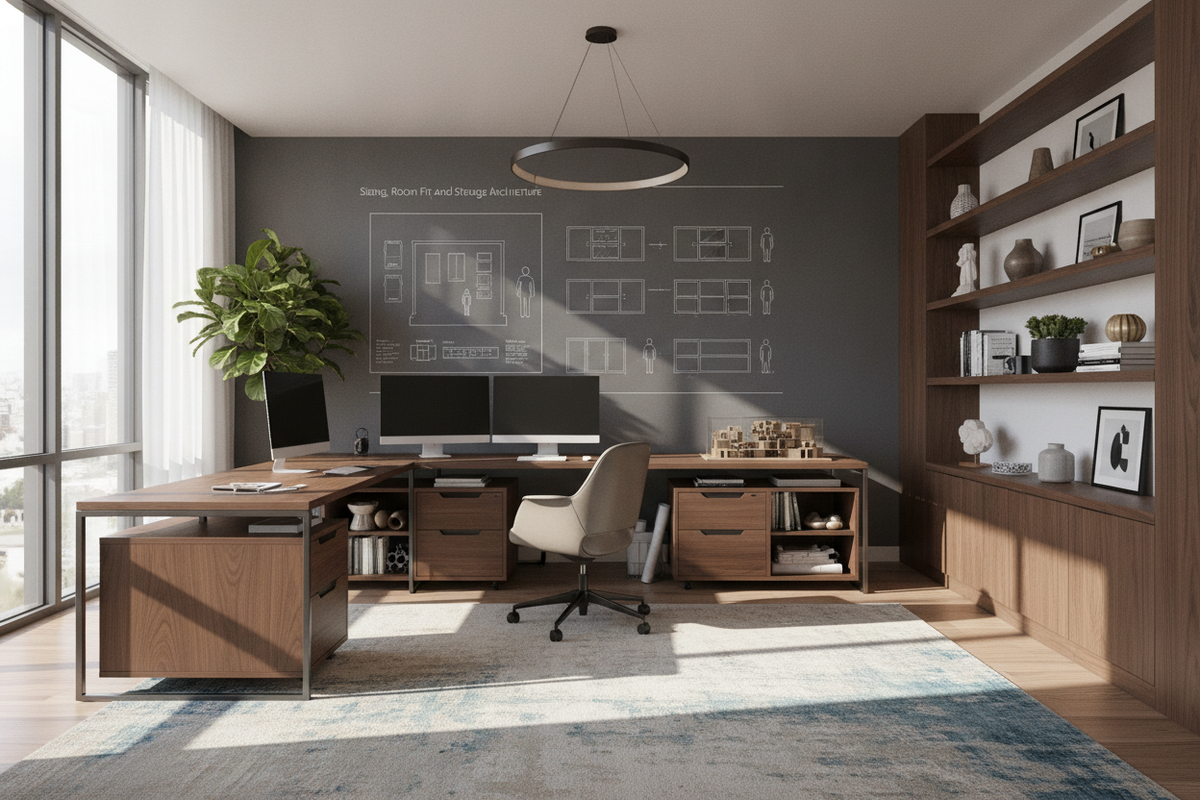
Selecting a large l shape desk transforms a standard workspace into an expansive command center capable of supporting multiple monitors, extensive paperwork, and dedicated peripheral zones. Whether you are outfitting an executive suite or designing a home office, choosing the right workstation requires balancing overall footprint, surface depth, storage integration, and physical room flow.
Large L-Shaped Desk Sizing: Dimensions and Wing Proportions
When evaluating a large l desk, understanding how the primary desk top coordinates with the secondary return wing is essential. Standard configurations often pair an elongated primary workstation with an orthogonal return wing, creating distinct zones for screen-based tasks and tactile projects.
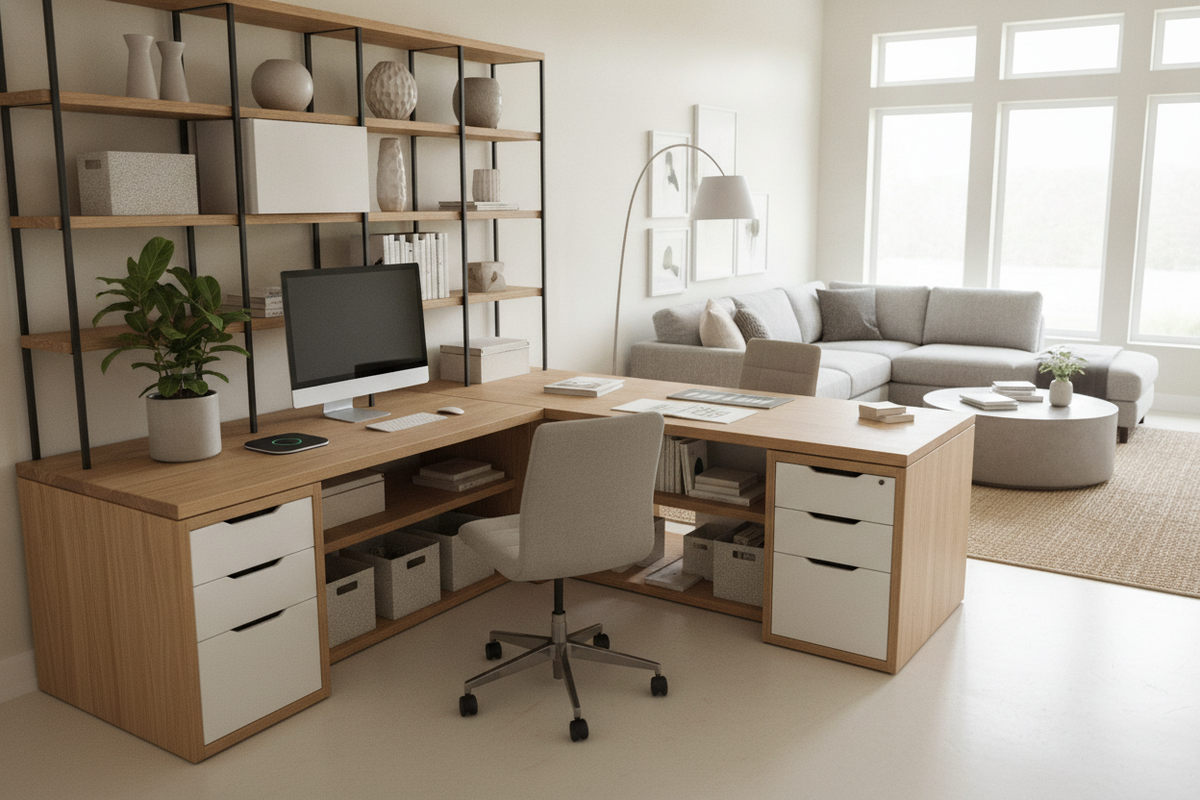
For rooms with moderate proportions, selecting a balanced format such as a white modern corner desk with large storage provides substantial surface area while preserving walkway space. In larger open spaces, an expansive executive setup offers broader wing lengths that allow simultaneous multi-tasking without overlapping equipment.
Profile Depth Strategies: Deep Main Tops vs. Thin Return Wings
Surface depth plays a critical role in ergonomic comfort and room utility. When planning your layout, consider how depth varies between the two desk segments:
- Deep Primary Tops: A wide l desk profile provides ample distance between the user and large desktop displays, leaving room for a full keyboard, mousepad, and document stands.
- Streamlined Return Profiles: Choosing a thin l shaped desk return wing reduces floor footprint along secondary walls while still supporting printers, scanners, or reference books.
- Uniform Width Designs: Symmetrical wing depths offer seamless transitions when moving task chairs between both sections of the desktop.
Room Layout and Spatial Planning for Large Corner Desks
Arranging a huge l shaped desk involves more than pushing furniture into an available corner. Spatial placement directly influences natural lighting, cable routing, and room circulation paths.
A corner-anchored configuration maximizes floor efficiency and tucks cabling neatly against baseboards. Conversely, floating an L-shaped workstation in a peninsula arrangement—where one wing extends into the center of the room—creates an authoritative executive presence and defines distinct zones in multi-use rooms. A versatile corner computer desk with integrated storage works effectively in both corner and peninsula orientations, depending on doorway locations and power outlet access.
Chair Swivel Envelopes and Legroom Clearance
Because an L-shaped desk encourages movement between two adjacent surfaces, the internal corner must accommodate natural chair rotation. Ensure the under-desk knee well is free of intrusive diagonal braces or closely set storage towers, allowing an executive chair to swivel smoothly from the primary computing monitor to the side wing.
Storage Architecture: Integrating Drawers, Shelves, and Cabinets
A large l shaped desk with storage eliminates surface clutter by integrating organization directly into the workstation frame. The balance between concealed cabinetry and open shelving determines how efficiently supplies can be accessed during the workday.
To maintain clean sightlines across a large office desk l-shape, consider pairing foundational desk cabinetry with coordinating above-desk storage solutions that keep frequently referenced materials off primary work surfaces without obstructing natural light.
Pedestal Drawer Layouts and Accessible Utility Zones
When selecting a large l shaped desk with drawers, examine the placement of drawer stacks relative to your primary seating position:
- Outer Wing Pedestals: Placing filing drawers at the outer terminus of the return keeps the main knee space open for leg movement.
- Upper Utility Drawers: Shallow top drawers house daily stationery, cables, and charging accessories within arm's reach. Implementing structured desk drawer organization strategies ensures small items remain tidy and easy to find.
- Lower File Storage: Deep lower drawers equipped with hanging file rails provide secure, dust-free archiving for active paperwork.
Material Selection, Structural Stability, and Frame Architecture
Due to the wide spans characteristic of a wide l shaped desk, structural integrity is paramount. Desktop panels must resist bowing under the concentrated weight of monitor arms, towers, and desktop hardware.
- Engineered Timber and Laminates: High-density engineered wood finished with durable melamine or laminate offers high scratch resistance and consistent surface uniformity across wide spans.
- Solid Wood Accents: Natural wood elements add warmth and organic texture to modern office furniture layouts.
- Reinforced Metal Framing: Steel leg assemblies with welded corner supports provide rigid support and prevent sway when adjusting seated positions.
Corner Seam Mechanics and Load Distribution
The junction where the two desk wings meet bears substantial structural responsibility. High-quality L-shaped desks utilize reinforced steel joining plates, cantilever under-frame supports, or an auxiliary center support leg. This structural reinforcement ensures that heavier desktop accessories do not cause joint separation or sagging over extended use.
Dual-Wing Workflow Zoning: Screen Management and Task Separation
The primary advantage of a large l shaped office desk is the ability to partition workflows spatially across distinct zones:
- Primary Computing Zone: Dedicate the main surface to primary screens, webcams, keyboards, and central task lighting for focused digital work.
- Analog Task & Writing Zone: Use the return wing as an uncluttered space for reviewing physical documents, sketching, or staging project binders.
- Peripheral Docking Area: Place hardware such as desktop printers, network hubs, and charging cradles along outer corners to minimize visual distraction.
For extensive office spaces requiring additional document containment, pairing your workstation with complementary credenzas or bookcases from a home office and study storage collection creates a cohesive, highly functional professional environment.
Delivery Logistics, Assembly Planning, and Long-Term Maintenance
Before ordering a large l shaped desk, verify doorway dimensions, hallway turns, and stairwell clearances along the delivery route. Because large desks ship in flat-pack segments, staging the assembly area in the intended room prevents difficult maneuvering after construction.
During assembly, ensure all leveling glides are adjusted to compensate for uneven flooring, which maintains a perfectly flat corner seam. Routine maintenance involves dusting surfaces with a soft microfiber cloth and using coasters or desk pads under hot beverage mugs and heavy metal accessories to preserve the desktop finish for years of productive use.

Leave a comment
This site is protected by hCaptcha and the hCaptcha Privacy Policy and Terms of Service apply.