

















Introduction: Why Choose an L-Shaped Modular Desk?
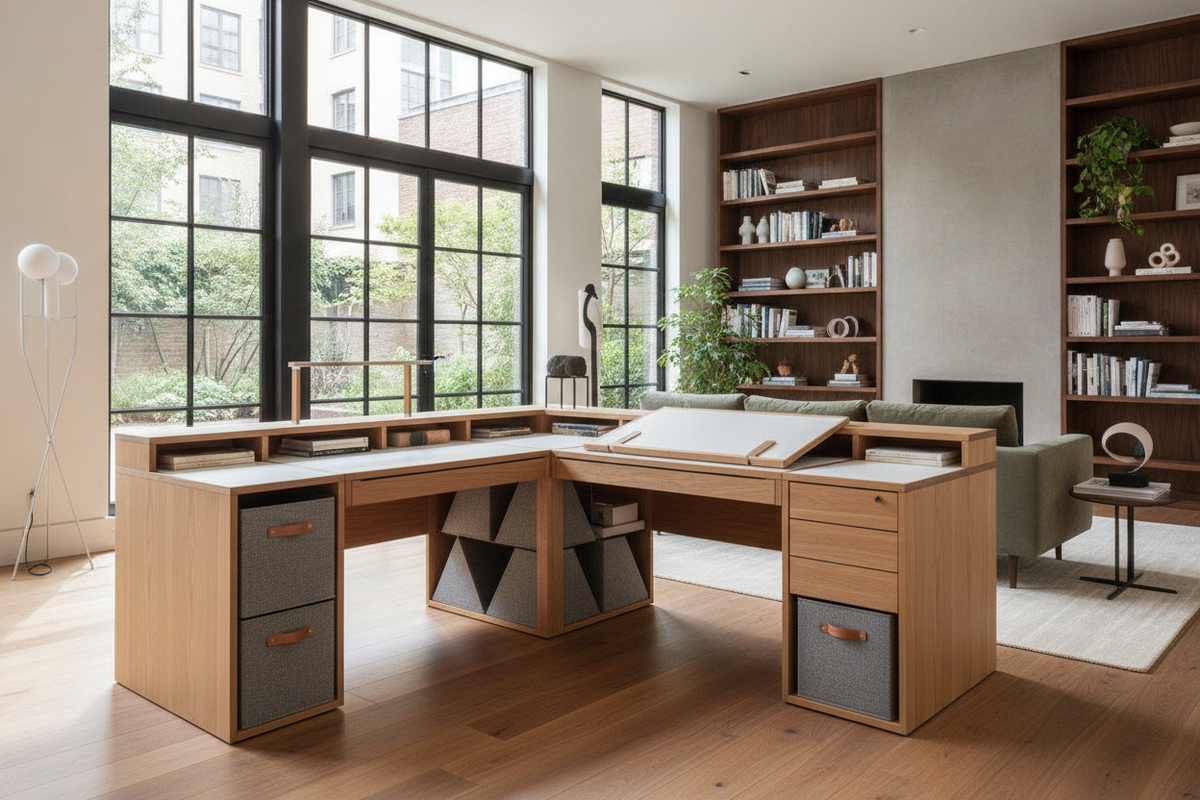
Selecting a dedicated desk configuration often reveals the tension between spacious utility and room architecture. While single-slab corner desks occupy a fixed footprint, an l-shaped modular desk provides structural flexibility by treating the workstation as an interconnected suite rather than an immovable monolith. Traditional single-piece corner desks restrict interior arrangements because their cutouts and structural returns are permanently oriented toward one corner. In contrast, an adaptable modular l desk allows you to calibrate the working envelope to match shifting door clearances, window placements, and task workflows.
The central advantage of a modular l-shaped desk rests on task zoning. By establishing two distinct planes intersecting at a right angle, you separate primary focus activities—such as active computing, video conferencing, and multi-monitor referencing—from secondary support tasks like document review, hardware docking, or writing. This spatial separation keeps the main surface clear of peripheral clutter while maintaining convenient reach across both axes.
Core Anatomy of Modular L-Shaped Workstations
A true modular setup consists of discrete structural members engineered to function together seamlessly or decouple cleanly when floor plans change.
Primary Work Surface vs. Return Wing Roles
In standard architectural planning, the larger segment serves as the main desk bridge, accommodating deep screen mounts, keyboards, and central seated positioning. The secondary surface, commonly termed the return wing, tends to feature a shallower profile. Assigning the deeper section to core computing tasks preserves adequate focal distance from displays, while reserving the narrower return for printing equipment, notebooks, charging trays, or desktop filing keeps secondary necessities close at hand without crowding knee space.
Reversible Orientation and Corner Adaptability
Fixed workstations frequently present layout challenges during residential relocations or office reorganizations. Reversible modular designs mitigate this by employing symmetrical under-frame mounting points and universal fastener channels. This construction lets you position the return wing on either the left or the right side of the main console. Reconfigurability preserves the utility of your furniture when architectural constraints—such as floor heating vents, natural light sources, or entryway swings—dictate a reversal of the room's primary focal axis.
Dimensional Frameworks and Spatial Planning
Planning for a multi-piece workstation requires evaluating room volume, user clearance, and movement pathways rather than simply matching surface dimensions to available wall lengths.
- Primary Surface Proportions: Prioritize a main desktop with sufficient depth to support your monitor stands, keyboard deck, and forearm resting positions without forcing displays too close to your eyes.
- Return Wing Proportions: The return can remain shallower to minimize intrusion into the central room floor while still presenting ample surface area for auxiliary machinery and desk accessories.
- Knee-Well and Transition Clearances: The inner corner juncture where the two modules connect must provide an open arc for legs and task chair casters. Workstations featuring recessed support legs or cantilevered bracket supports offer seamless side-to-side transitions without risking chair base collisions.
- Chair Turning Radius: Account for the full swing of an ergonomic office chair. A spacious clear zone behind the central work vertex ensures uninhibited movement when standing up, turning between surfaces, or adjusting tilt tension.
Storage Integration: Pedestals, Credenzas, and Vertical Units
Effective desk utility depends on how well storage elements coordinate with the work surface perimeter. Rather than relying solely on built-in drawers that permanently lock in knee space, modular architecture separates surface frames from storage fixtures.
Under-Desk Modular Pedestals vs. Freestanding Lateral Storage
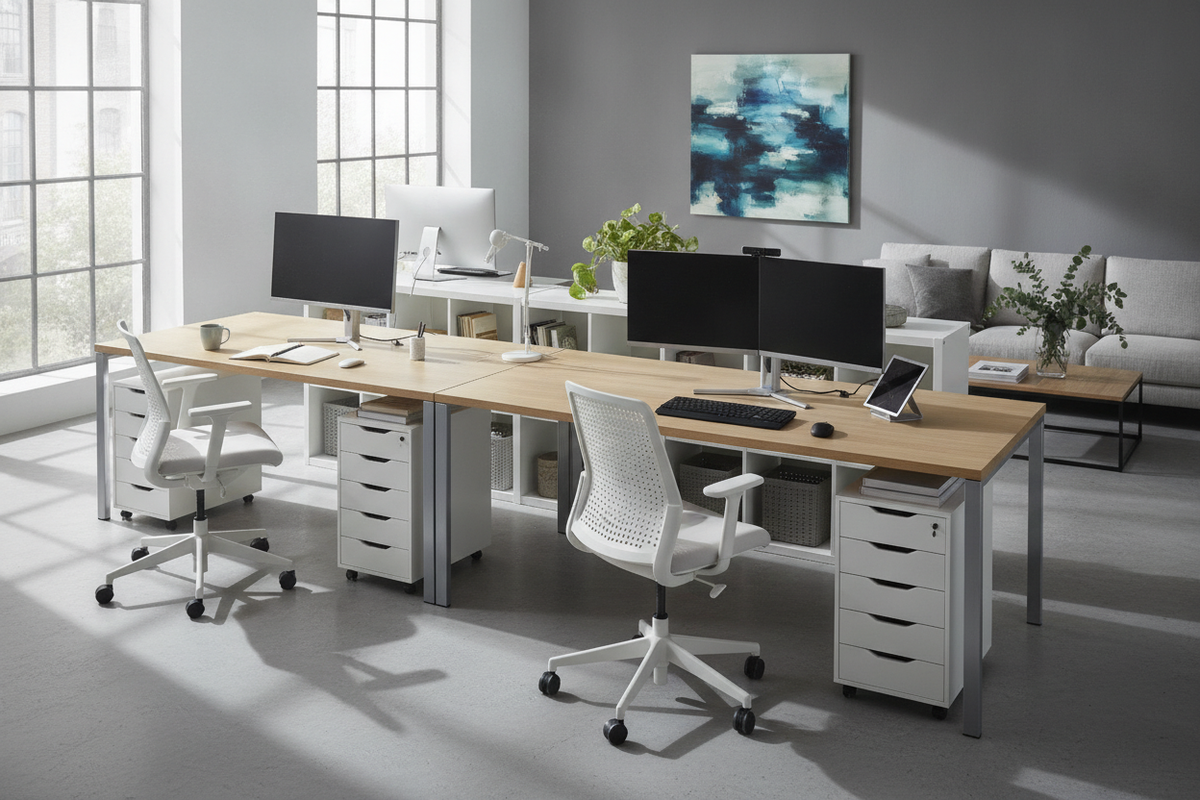
Deciding where to anchor files and supplies hinges on whether you value open legroom or direct seated access. Independent rolling pedestals and stationary file cabinets can slide beneath the return surface to make use of under-desk volume. However, when working with compact returns, placing freestanding cabinetry along an adjacent wall preserves open floor space for chair swivel. When planning perimeter organization around a multi-piece desk, pairing the workspace with dedicated modular storage systems ensures consistent finish matching and cohesive utility.
Managing Cable Infrastructure Across Separate Modules
Because an L-shaped modular layout joins multiple independent panels, running power feeds, display cables, and peripheral wiring requires deliberate planning. Desks equipped with surface grommets, under-frame wire baskets, and bridge channels allow cords to traverse the junction without pinching along the seam. Routing primary power blocks to an under-desk horizontal channel on the main bridge ensures that peripheral accessories on the return can connect cleanly without dropping loose cords across the knee cavity.
Material Composition and Joint Stability
The mechanical performance of a multi-piece desk centers on the joinery connecting the bridge and return. Poorly supported desk seams can sag, pinch fingers, or shift out of alignment over time under active pressure.
High-grade modular designs commonly rely on heavy-gauge steel framework systems beneath both surfaces, paired with structural steel tie-plates that clamp the adjacent desktops flush. Heavy-duty levelers mounted under each leg post allow for micro-adjustments that overcome uneven flooring, ensuring the surface transition remains flat across the entire seam. When selecting surfaces, engineered wood cores wrapped in high-pressure laminates or durable veneers provide balanced resistance to humidity expansion, minimizing warping along connecting edges compared to untreated planks.
Room Fit and Workstation Placement Strategies
The spatial relationship between your modular desk and surrounding walls defines the flow, lighting, and acoustic comfort of the room:
- The Corner Nest: Placing both exterior wings directly flush against adjacent intersecting walls maximizes open floor area in smaller studies. This layout controls cord visibility and keeps circulation pathways clear, though it requires attention to task lighting to prevent corner shadows.
- The Floating Executive Layout: Positioning the primary desk outward toward the room entrance while placing the return against a side wall creates an open, commanding presence. This arrangement supports professional background framing for video calls and invites natural perimeter movement.
- Room Zoning: In open-concept spaces or shared living areas, the return wing can function as an architectural half-wall that separates the working zone from dining or lounging areas. Home offices requiring extensive vertical shelving alongside an L-shaped layout can adopt techniques from an adaptable modular wall arrangement to create a cohesive built-in aesthetic.
Assembly, Reconfiguration, and Longevity Considerations
Proper assembly sequencing ensures lasting structural rigidity across modular surfaces. Always start by assembling each framework module independently on a level surface without fully tightening joint hardware. Align the main surface and return wing in their designated positions, engage the joining tie-plates and bridging brackets, and adjust all leveling glides until the tabletop seam is entirely flush. Once surface alignment is verified, complete final hardware torque checks across both frames.
By investing in a flexible workstation built on modular engineering principles, you avoid the static limitations of traditional corner furniture. The capacity to reverse return orientations, adapt under-desk storage, and rebalance room placement ensures that your workspace continues to support productive routines through every layout change.

Leave a comment
This site is protected by hCaptcha and the hCaptcha Privacy Policy and Terms of Service apply.