

















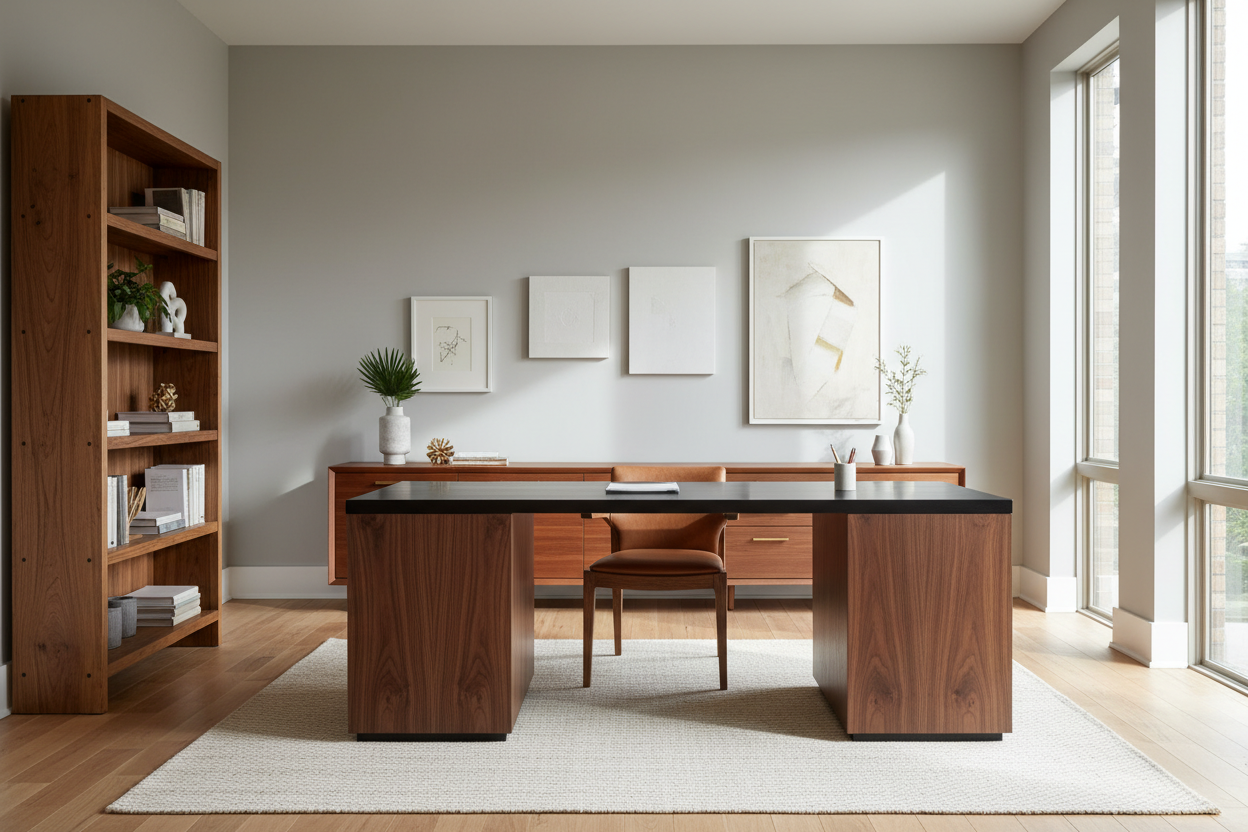
There is a specific, palpable difference when you walk into a workspace anchored by natural materials. The acoustics feel softer, the air smells faintly organic, and the visual weight of the room commands respect. In my career designing executive suites and private studies, I have found that the decision to purchase office furniture real wood is rarely one of mere utility; it is an investment in longevity and atmosphere. While flat-pack composites have their place, they often lack the structural integrity and tactile warmth that elevates a work environment from temporary to timeless.
Quick Decision Guide: Key Features to Look For
Before committing to a high-ticket piece, scan for these critical indicators of quality to ensure you are getting authentic value.
- Joinery Techniques: Look for dovetail or mortise-and-tenon joints rather than staples and glue, which indicate longevity in solid hardwood office furniture.
- Wood Species Hardness: For high-traffic desk surfaces, opt for Oak, Walnut, or Maple over softer woods like Pine which dent easily.
- Finish Quality: Ensure the wood is sealed with a high-quality oil or lacquer that protects against coffee rings without masking the grain.
- Grain Consistency: Real wood has natural variations; a perfectly repeating pattern usually indicates a printed laminate, not genuine timber.
Distinguishing Solid Hardwood from Veneer
One of the most common points of confusion for my clients is the difference between solid wood office furniture and wood veneer. Neither is inherently "bad," but understanding the distinction is vital for setting price expectations.
Solid hardwood office furniture is exactly what it sounds like: planks of timber cut from a tree. It can be sanded down and refinished multiple times over decades. If you scratch a solid oak desk, you can repair it. However, solid wood is reactive; it expands and contracts with humidity changes.
Veneer, on the other hand, involves a thin slice of premium wood glued over a stable core (like MDF). While often dismissed, high-end veneers allow for complex grain matching (marquetry) that is impossible with solid planks. However, for a "forever piece," solid wood remains the gold standard for structural resilience.
Designing a Cohesive Wood Office
When curating a wood office, the goal is not to match every piece perfectly, which can result in a flat, "showroom" appearance. Instead, aim for tonal harmony. If your desk is a deep, cool-toned Walnut, you can pair it with lighter shelving, provided the undertones remain cool. Mixing woods adds depth and sophistication to wood home office furniture arrangements.
Texture and Finish
Consider the tactile experience. A "live edge" slab offers a rustic, organic feel that contrasts beautifully with modern technology. Conversely, a highly polished, dark mahogany finish leans traditional and authoritative. The finish dictates the formality of the space.
Ergonomics and Tech Integration
The challenge with traditional wood office furniture for home is often functionality. Antique or strictly traditional wooden desks rarely account for dual monitors or cable management. When sourcing real wood home office furniture, look for modern artisans who incorporate grommets, hidden cable trays, and keyboard drawers into the solid wood construction. A desk must be a tool, not just a sculpture.
My Personal Take on Office Furniture Real Wood
I want to share a lesson I learned the hard way early in my career—not with a client, but in my own home office. I fell in love with a gorgeous, reclaimed pine farmhouse table to use as my primary desk. It had incredible character and warmth.
However, within two weeks, I realized a critical functional flaw: Pine is soft. Every time I wrote a note with a ballpoint pen on a single sheet of paper, the pressure transferred through and left permanent "ghost writing" indentations in the wood. I ended up having to use a leather blotter pad permanently, which hid the beautiful wood grain I paid for.
Furthermore, real wood is heavy. When I moved that desk to a new room, the humidity change caused the drawer to stick for a month until the wood acclimated. These are the nuances of living with organic materials—they have quirks. Now, I advise clients to stick to hardwoods like White Oak or Walnut for writing surfaces and save the softer woods for shelving or accent chairs. The patina is beautiful, but only if it’s the kind of wear you intended.
Frequently Asked Questions
How do I maintain solid wood office furniture?
Dust regularly with a microfiber cloth and avoid silicone-based sprays which create buildup. For oil-finished desks, re-oil the surface once a year to keep the wood nourished and water-resistant. Always use coasters.
Is real wood home office furniture better for the environment?
Generally, yes. High-quality solid wood furniture lasts for generations, keeping it out of landfills. Look for FSC-certified wood to ensure the timber was harvested from sustainably managed forests.
Can I mix metal filing cabinets with home office wooden furniture?
Absolutely. Mixing materials creates a curated, industrial-chic or modern aesthetic. Matte black or brushed brass metal accents pair exceptionally well with the warm tones of natural wood.


Leave a comment
This site is protected by hCaptcha and the hCaptcha Privacy Policy and Terms of Service apply.