

















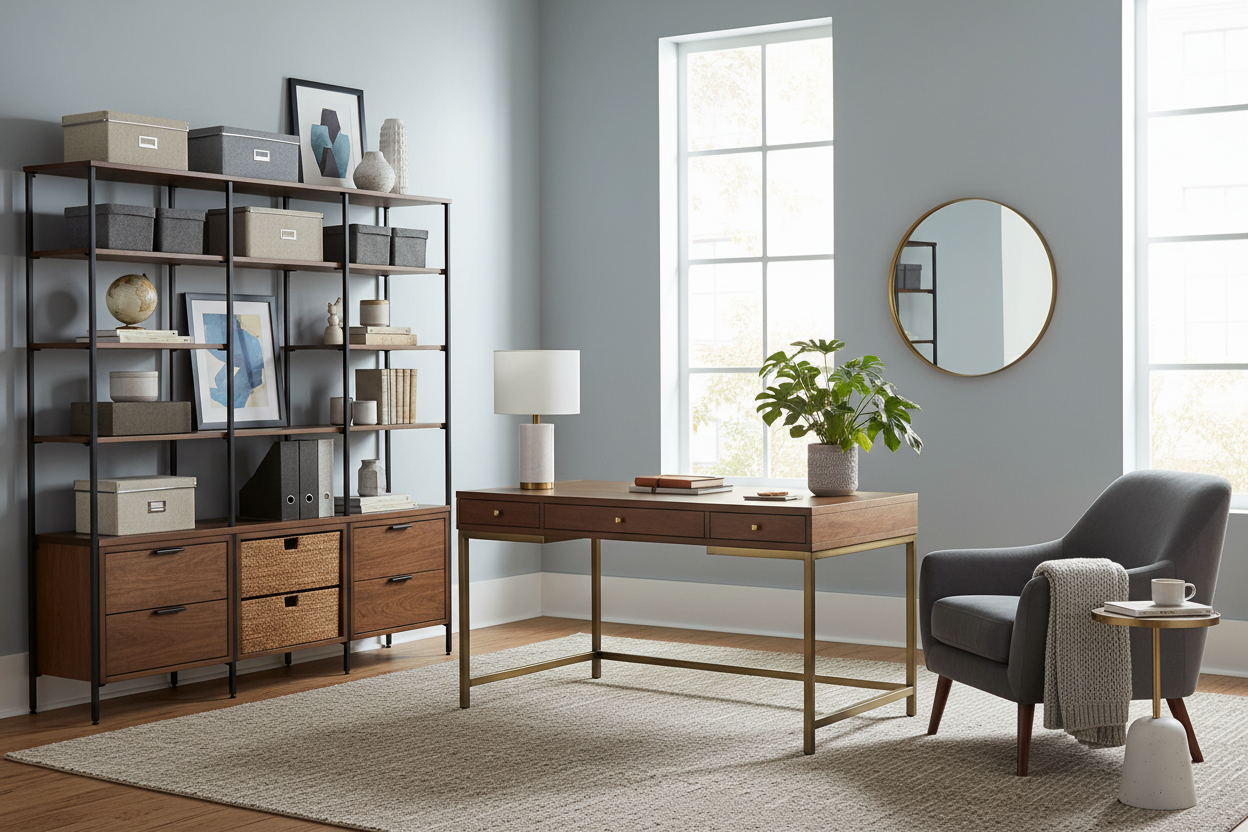
We have all been there: staring at a makeshift workspace that feels more chaotic than creative. The dilemma isn't just about finding a desk; it's about curating a space that fosters productivity without ruining the aesthetic flow of your home. When clients come to me seeking a balance between high-design visuals and functional durability, the conversation almost always turns to a west elm home office setup.
But does the brand's mid-century allure hold up to the daily grind of an eight-hour workday? Below, I break down the materials, ergonomics, and spatial strategies you need to know before swiping your card.
Key Features to Look For
If you are evaluating furniture for your workspace, use this checklist to ensure you are buying for longevity rather than just a catalog look:
- Material Composition: Distinguish between solid kiln-dried wood (higher durability) and engineered wood with veneers (requires coasters and care).
- Ergonomics & Dimensions: Check desk depth—anything under 20 inches will struggle to accommodate a monitor and keyboard comfortably.
- Storage Integration: Look for pieces that offer concealed cable management to maintain visual minimalism.
- Finish Durability: Water-based finishes (common in West Elm pieces) are eco-friendly but sensitive to heat and moisture rings.
- Leg Silhouette: Tapered legs create a sense of openness in small rooms, while block legs anchor larger spaces.
Balancing Aesthetics with Ergonomics
The primary draw of West Elm is undoubtedly the silhouette. Their designs often feature clean lines and mid-century modern influences that prevent your office from looking like a corporate cubicle. However, as a designer, I always advise clients to look past the "pretty."
When exploring west elm office ideas, pay close attention to the desk height and chair pairing. Many of their popular desks, such as the Mid-Century collection, have a specific apron (the wood panel connecting the legs) that can limit legroom if you have a high-thigh clearance or prefer a crossed-leg seating position. Visual balance is critical, but not at the expense of your posture. Ensure your chair arms can tuck under the desktop to maximize floor space when the office is not in use.
The Material Truth: Veneers vs. Solid Wood
This is the most common point of confusion. A significant portion of west elm office decor utilizes eucalyptus or acacia veneers over engineered wood. This isn't inherently bad—it prevents warping in humid climates—but it dictates how you treat the surface.
If you are a heavy writer or someone who tosses keys onto the desk, you need to be aware that veneers can chip if struck on the edges. For high-traffic home offices, I recommend looking for their Contract Grade items. These meet commercial durability standards and are far more forgiving of coffee spills and daily wear than their standard residential counterparts.
Maximizing Function with Verticality
One of the smartest investments you can make is in vertical west elm office storage. Floor space is premium real estate. Collections like the "Industrial Modular" series allow you to build upward rather than outward.
Wall-Mounted Solutions
Floating shelves or ladder-style desks draw the eye up, making a cramped room feel loftier. When styling these, follow the 60/30/10 rule: 60% books and files (function), 30% storage boxes (concealment), and 10% decorative objects (personality). This keeps the shelves from looking cluttered while ensuring they serve their purpose.
My Personal Take on West Elm Home Office Furniture
I want to share a specific experience from a project I installed last year in a client's downtown loft. We selected the Acorn Mid-Century Desk—a classic choice. Visually, it was stunning and warmed up the concrete walls perfectly.
However, here is the unpolished truth: the "Acorn" finish is beautiful, but it is softer than people realize. During the install, I noticed that even dragging a heavy ceramic planter across the surface left a faint micro-scratch. I immediately advised the client to invest in a custom glass top or a high-quality leather desk blotter.
Another detail often overlooked is the drawer glides. On some of the compact desk models, the drawers are wood-on-wood rather than metal runners. They can feel stiff during humid months. I now keep a stick of beeswax in my install kit to lubricate these runners immediately. It’s a small tweak that changes the tactile experience from frustrating to luxurious. If you are buying this for daily use, treat the wood regularly, and it will age beautifully; ignore it, and it will look tired within a year.
Conclusion
Investing in a West Elm workspace is a commitment to a specific aesthetic that blends seamlessly with residential living. While the price point reflects the design, the value lies in selecting the right materials for your specific workflow. By prioritizing Contract Grade options and protecting those veneer finishes, you can create a workspace that is as resilient as it is refined.
Frequently Asked Questions
How do I maintain the Acorn finish on my desk?
Avoid harsh chemical cleaners. Use a soft, dry cloth for dusting and a slightly damp cloth for spills, wiping immediately. I recommend using a leather desk pad to protect the veneer from laptop heat and writing indentations.
Are West Elm desks suitable for small apartments?
Yes, specifically the "Mini" versions of their standard desks. They usually shave off about 6 to 10 inches in width and depth, making them ideal for alcoves. However, measure your monitor stand first to ensure it fits the reduced depth.
Is the Slope Leather Office Chair comfortable for all-day use?
The Slope chair is fantastic for lumbar support due to its curved shell, but it is firm. If you prefer a plush, sink-in feeling for an 8-hour shift, you might find it too rigid. It is best suited for those who prefer an active, upright sitting posture.


Leave a comment
This site is protected by hCaptcha and the hCaptcha Privacy Policy and Terms of Service apply.