


















I was mid-Zoom call when my fancy electric desk emitted a smell like burnt toast and a pathetic 'clunk.' One leg stayed high, the other sank low, and my monitors began a slow-motion slide toward the floor. I spent the next hour crawling under the frame with a hex key, trying to pry my laptop out of the wreckage. That was the day I decided a manual standing desk was the only way I'd ever work again.
- No motors means zero chance of electrical failure or stuck legs.
- You can place the desk anywhere without hunting for a wall outlet.
- It takes about 30 to 60 seconds to change heights—not a full cardio session.
- Manual desks are usually $100-$300 cheaper than their motorized cousins.
The day my motorized desk died (and trapped my legs)
Motors are great until they aren't. Most people don't realize that electric desks are basically computers with legs; they have motherboards, sensors, and delicate wiring that hates dust and static. If you've ever tried to test before buying a used adjustable standing desk, you know the anxiety of wondering if the previous owner spilled a latte into the control box.
My electric model didn't just break; it held my workspace hostage. Because the motor burned out while the desk was uneven, I couldn't even use it as a standard seated desk. I had to disassemble the entire thing just to get back to work. A manual height adjustable desk removes that point of failure entirely. If you can turn a handle, the desk will move. Simple as that.
The reality of the hand crank: Is it actually hard?
People act like using a manual stand desk is a CrossFit routine. It’s not. Most modern manual adjustable desk legs use a gear ratio that makes the lift feel surprisingly light. On my current setup, it takes about 35 turns to go from my seated height to my standing height. It takes about 45 seconds.
Is it a minor inconvenience? Sure. But it’s also a forced 45-second break from staring at a screen. I’ve found that the physical act of cranking the manual adjustable table makes me more intentional about when I stand. I don't just fidget with the height every five minutes; I move when my body actually needs the shift.
The absolute joy of a cord-free setup
This is the aesthetic benefit that finally sold me. An electric desk is tethered to the wall like a hospital patient. You have to deal with cable trays, power strips, and that ugly 'snake' of black wires trailing down to the baseboard. A manual height adjustable standing desk can live anywhere.
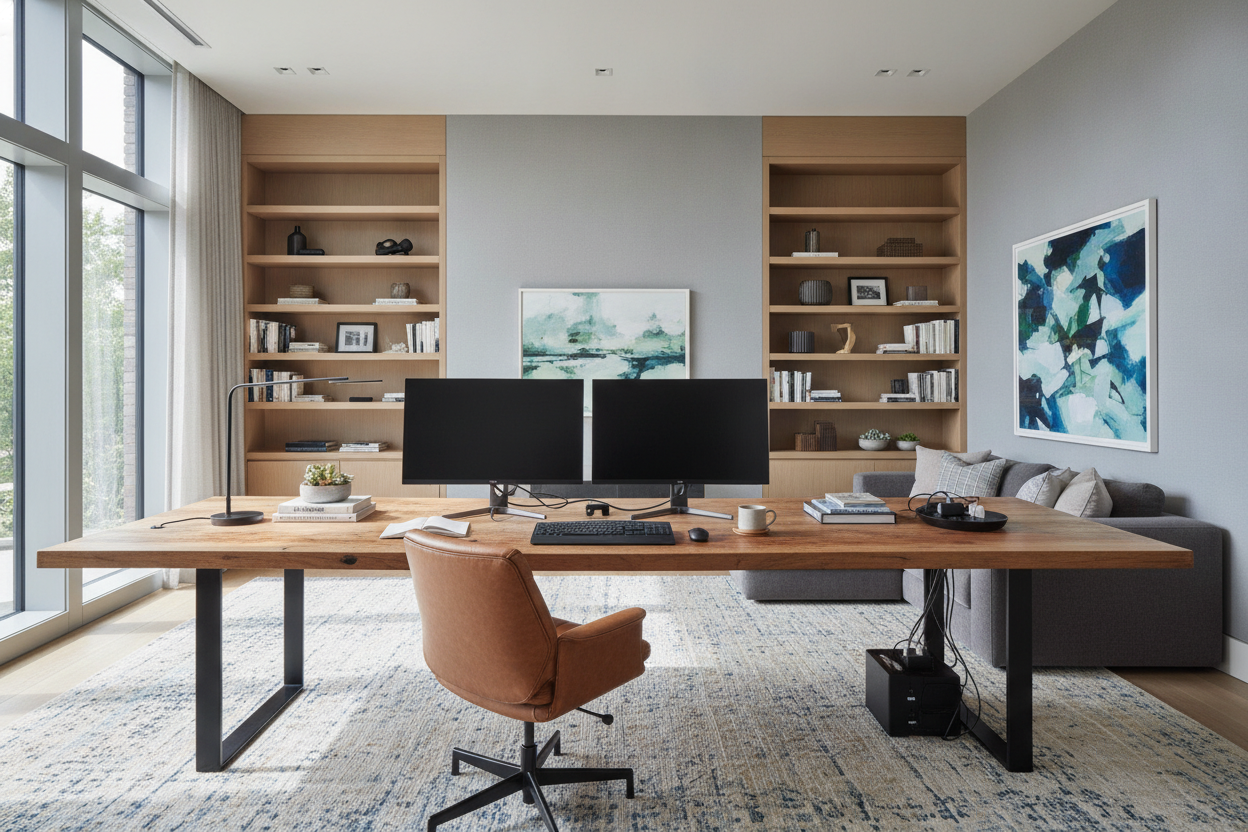
I currently have my desk floating in the middle of the room to catch the morning light from the window. Because I don't need a plug, it looks significantly cleaner than any standard writing computer desk I've owned. It’s just a piece of furniture, not a piece of machinery. The visual clutter is gone, and my robot vacuum doesn't get strangled by power cords anymore.
When you should definitely stick to electric
I’m a fan of the crank, but I’m not a zealot. There are times when a manual sit stand desk is a bad idea. If you have a massive workstation—think three 27-inch monitors, a heavy PC tower, and studio speakers—the weight adds up. Cranking 80 pounds of gear into the air is a genuine workout that might leave you sweaty before a meeting.
If you are looking at something massive like a 71 W height adjustable standing desk and you plan to load it to the max, just get the motor. Your wrists and your patience will thank you. Manual desks are best for streamlined setups: a laptop, a monitor, and maybe a very heavy coffee mug.
My final verdict on the manual desk life
I’m never going back to a motor. The peace of mind that comes with a manual adjustable desk is worth the 45 seconds of cranking. I know that ten years from now, this desk will still work exactly the same way it does today. No error codes, no reset procedures, and no burnt-out circuit boards.
If you’re on the fence but worried about the effort, you could always start smaller with an adjustable standing tabletop desk to see if you actually enjoy the sit-to-stand lifestyle before committing to a full-sized manual rising desk. For me, the simplicity is the selling point.
FAQ
How long does it take to crank a manual desk?
Usually between 30 and 60 seconds depending on the gear ratio and how far you're moving it. It’s roughly one inch of lift for every 3-5 rotations.
Are manual standing desks wobbly?
No more than electric ones. Stability comes from the weight of the feet and the thickness of the steel legs, not the method of lifting. Look for a desk that weighs at least 60 lbs for good stability.
Can I remove the crank handle?
Most manual sit to stand desk models have a removable or fold-away handle so it doesn't poke you in the hip while you're working.


Leave a comment
This site is protected by hCaptcha and the hCaptcha Privacy Policy and Terms of Service apply.