

















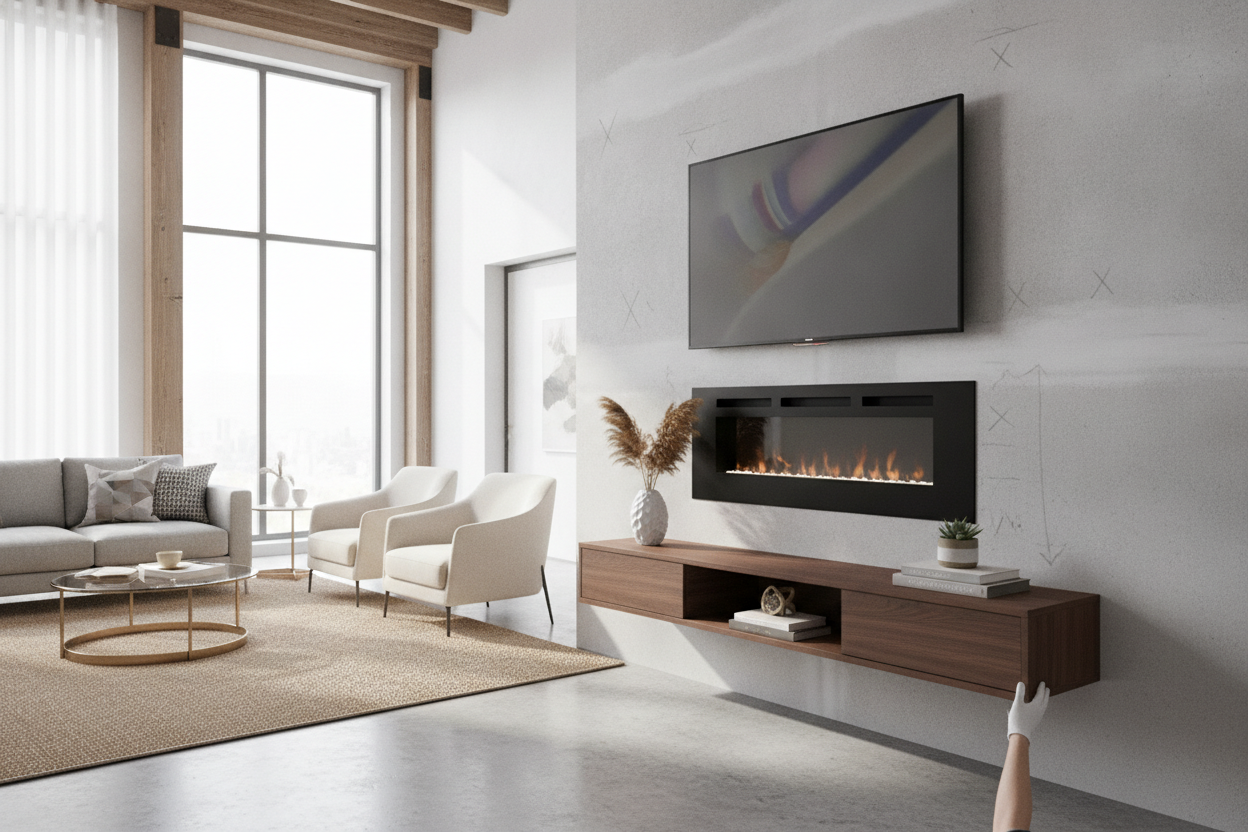
I remember staring at a 70-pound box in my hallway, sweating. I’d just bought a hanging tv stand with fireplace because I wanted that 'floating' Pinterest vibe, but my house was built in the late 70s. I spent three nights convinced the whole wall would just peel off like a wet sticker the moment I turned the heater on.
We’ve all seen those horror stories—the midnight crash, the shattered glass, the drywall repair bill that costs more than the furniture. But after hanging three of these in various apartments and houses, I’ve realized the 'danger' is usually just bad math and cheap hardware.
- Studs are mandatory: No exceptions, no 'heavy-duty' anchors.
- Front-venting only: Top-venting heat will kill your TV in six months.
- Weight distribution: Use a French cleat system if the unit doesn't come with one.
- Cable management: Plan the power source before you drill the first hole.
The 3AM Crash Paranoia (And Why It's Mostly Unjustified)
The fear of a wall mounted fireplace entertainment center falling is real because these things aren't light. You’re combining a heavy MDF or wood cabinet with a metal-and-glass heating insert. It feels like a lot for a sheet of gypsum to handle. But here is the secret: drywall doesn't hold the weight; your 2x4 studs do.
When you're faking a custom media wall, you aren't just sticking it to the surface. Most modern units use a wide mounting bracket. This spreads the load horizontally across 16-inch or 24-inch stud gaps. As long as you hit those wooden pillars, that console isn't going anywhere. I’ve sat on my floating unit (briefly, don't do this) and it didn't even creak.
Drywall Anchors Are the Enemy: The Stud-Finding Reality
If you try to hang a wall mounted tv unit with fireplace using toggle bolts or those plastic screw-in anchors, you are asking for a disaster. Drywall is basically compressed chalk. Over time, the vibration from the fireplace fan and the weight of your TV will crumble the hole until the whole thing slides out. It’s not a matter of 'if,' but 'when.'
You need a real stud finder—the kind that actually works, not the $5 one that beeps at everything. Most wall mounted TV stands come with decent lag bolts, but I usually head to the hardware store and buy 3-inch structural screws. They have a built-in washer and a bite that won't quit. If your studs aren't lining up with the holes in the unit, don't panic. Screw a piece of 3/4-inch plywood to the studs first, then mount the console to the plywood. It’s a rock-solid move that saves your walls.
The Cord Conundrum: Where Does the Plug Actually Go?
Nothing kills the 'wow' factor of a wall mounted tv console with fireplace faster than a thick black cord dangling down to the baseboard. It looks like your furniture has a tail. Since these fireplaces draw significant power (usually 1400-1500 watts), you can't just hide the cord behind the drywall without a proper in-wall cable management kit that is rated for power.
I personally prefer the 'bridge' kits that allow you to relocate an outlet behind the unit without actually wiring a new circuit. If you’re renting and can’t cut a 2-inch hole in the wall, buy a slim D-line cord cover and paint it the exact color of your wall. It’s a 10-minute fix that makes the whole fireplace tv stand wall mount look like a custom built-in.
Clearance and Heat: Don't Roast Your Router
Heat rises. This is basic physics that some furniture designers seem to forget. If you buy a wall mount entertainment center with fireplace that vents out the top, you are essentially slow-cooking your TV. I’ve seen screens develop 'ghosting' or dead pixels because the bezel was sitting in a 110-degree updraft for four hours.
Always look for front-venting units. When choosing the perfect TV stand with a fireplace, verify the 'clearance to combustibles' in the manual. Usually, you want at least 8-12 inches between the top of the fireplace and the bottom of your TV. This keeps your electronics cool and ensures your fireplace tv stand with swivel mount can actually move without hitting anything.
When You Should Just Give Up and Buy a Floor Model
I love the floating look, but it’s not for everyone. If you live in a modern high-rise with metal studs, mounting a heavy wall unit fireplace tv stand is a nightmare. Metal studs are flimsy and require specialized 'snap toggles' that I wouldn't trust with a heavy hearth. Similarly, if you have old-school lath and plaster walls, you’re likely to crack the finish the moment you tighten a bolt.
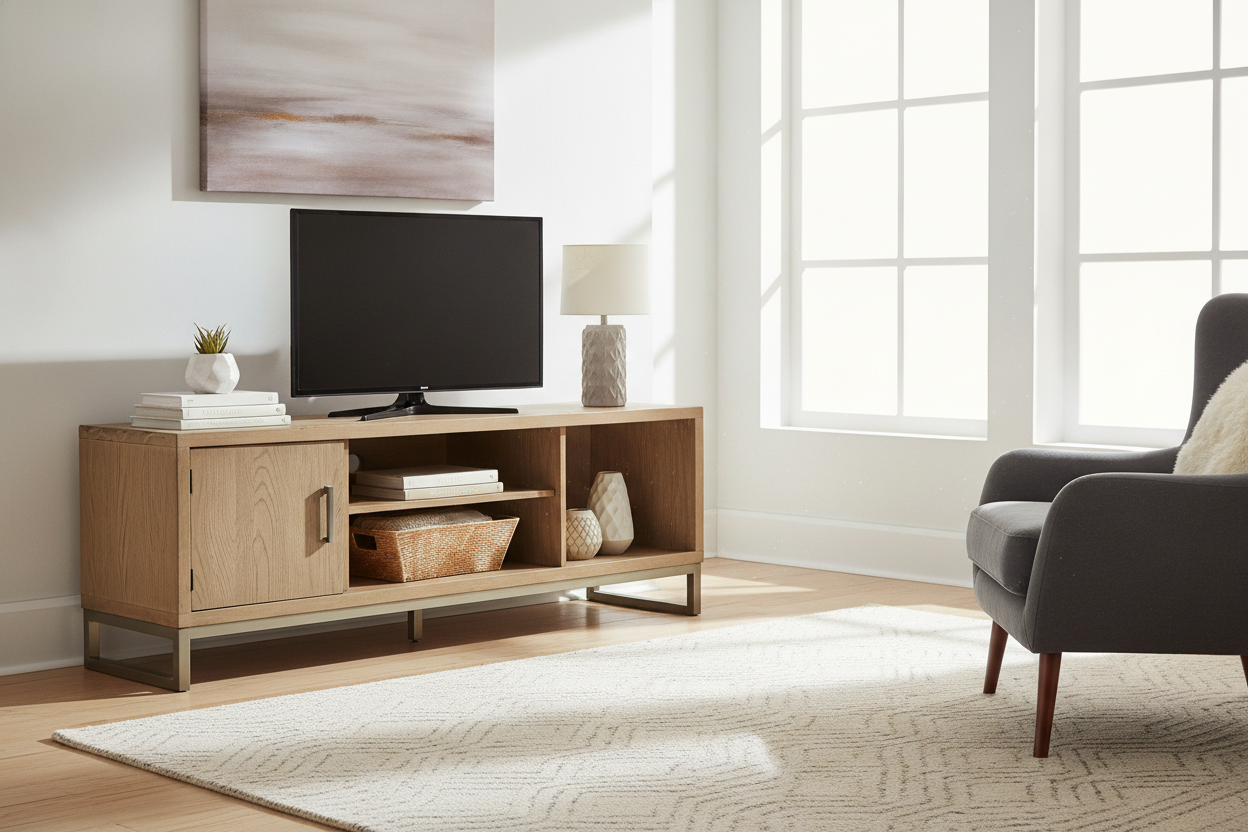
If the DIY stress is keeping you up at night, there is no shame in the floor-model game. You can still get the look with a fireplace tv stand wall unit that sits on the ground but has a slim profile. Just browse standard TV stands and find one with a built-in mount. You get the height and the heat without the fear of a structural failure at midnight.
How high should I mount my hanging fireplace TV stand?
Usually, the center of your TV should be at eye level when you're sitting. For most people, this means the bottom of the fireplace unit will sit about 10-15 inches off the floor. Any higher and you’re going to have a sore neck.
Can I put a soundbar on a floating fireplace console?
Yes, but check the depth. Many floating units are slim (10-12 inches deep) to keep the weight down. Make sure your soundbar isn't wider than the shelf, or it’ll look top-heavy and awkward.
Does the fireplace make the wall behind it hot?
The back of these units is usually well-insulated. If it’s installed correctly with the required air gaps, the wall should stay cool to the touch. If the wall feels hot, turn it off—you’ve likely blocked a vent.

Leave a comment
This site is protected by hCaptcha and the hCaptcha Privacy Policy and Terms of Service apply.