

















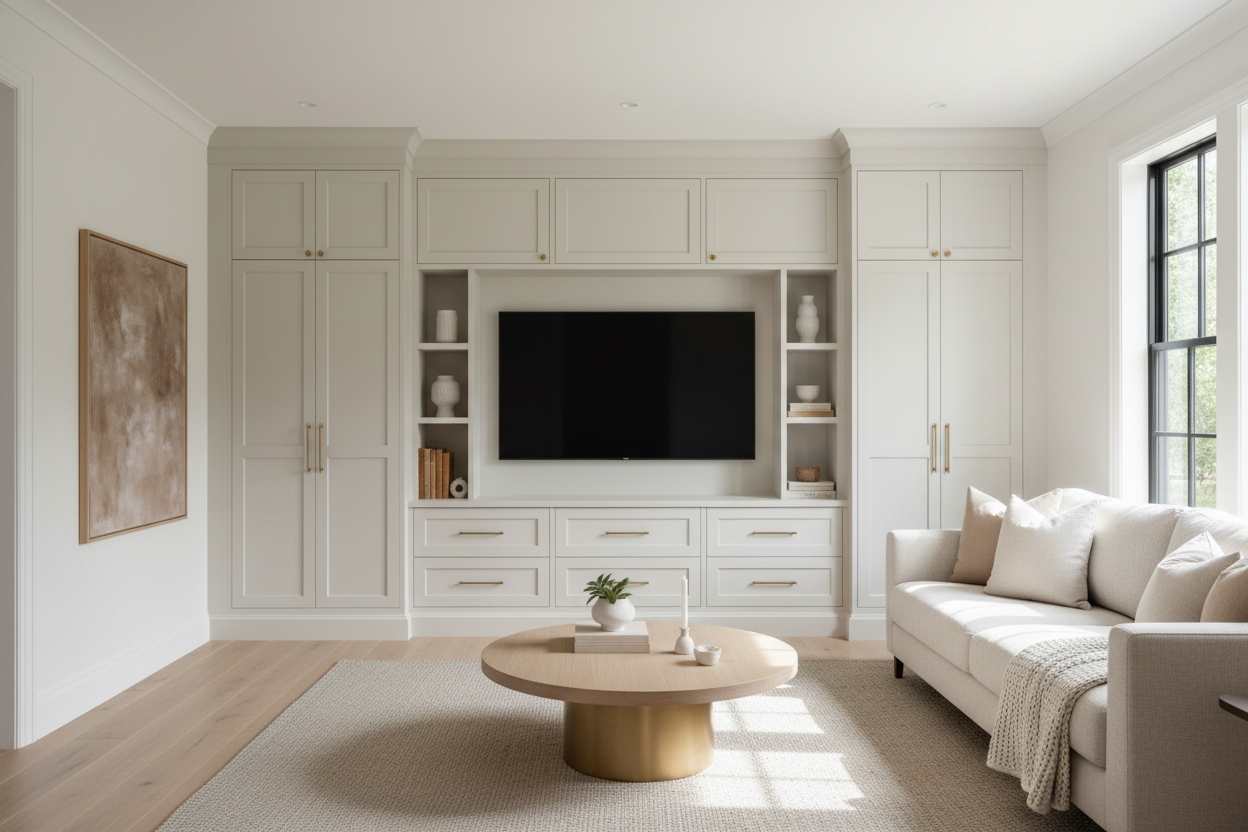
I used to spend my Sundays moving ceramic vases two inches to the left, trying to achieve that perfect 'effortless' look. I thought I was living the minimalist dream with those thin oak planks floating on my white walls. In reality, I was just a full-time curator for my own dust bunnies. Swapping those high-maintenance shelves for built cupboards was the day I finally got my weekends back.
- Open shelves are a full-time job; closed cupboards are a vacation.
- Visual clutter causes low-grade anxiety that you don't notice until it's gone.
- Custom millwork (or the DIY version) adds actual value to your home.
- Depth matters: 12-15 inches is the sweet spot for most living room storage.
The Open Shelving Illusion (And Why It Failed Me)
I fell for the Instagram trap hard. I wanted the airy, 'breathable' kitchen and the curated living room. But unless you own exactly three neutral-toned bowls and zero plastic Tupperware, open shelving is a logistical nightmare. I started to regret my open shelves about three weeks in when the 'carefully curated' stack of books became a magnet for cat hair and kitchen grease.
Every time I wanted to relax, I was staring at a pile of mismatched spines and dusty trinkets. It felt like my house was constantly shouting at me to tidy up. It turns out, I don't want to see my stuff. I want to know where it is, and then I want it to disappear behind a solid door.
Why Having Cupboards Built In Changed the Game
Having cupboards built in isn't just about storage; it's about psychological relief. When you have floor-to-ceiling units, you're utilizing every vertical inch of your footprint. It makes a room feel larger because the visual 'noise' is silenced. I'm talking about 12 to 15-inch depths that swallow up the clutter that usually sits on your coffee table or spills out of a flimsy media console.
There is a specific kind of joy that comes from sweeping a pile of mail, three remote controls, and a half-finished knitting project into a cupboard and shutting the door. You aren't being messy; you're being efficient. Real life is messy. Your walls shouldn't force you to pretend otherwise.
Hiding the Ugly Stuff
Let's be honest about what we actually own. It's not all hand-thrown pottery. It's Wi-Fi routers with five blinking lights, tangled nests of HDMI cables, and that 'emergency' drawer full of batteries and old receipts. Behind a cupboard door, these things lose their power to ruin your decor. I also finally found a home for my board games—those oversized, brightly colored boxes that never look 'aesthetic' no matter how you stack them.
How to Fake the Look Without a Contractor
You don't need a $10,000 contractor budget to get this done. I've 'faked' this look using standard kitchen base units and a little bit of ambition. The secret isn't the cabinet itself; it's the trim. By adding a 3-inch crown molding at the top and a solid baseboard at the bottom, you anchor the piece to the architecture of the house.
The most important tool in your kit is the 'filler' piece. This is just a strip of wood that bridges the gap between the side of the cabinet and your wall. Caulk the seams, paint everything the same color (I'm partial to a satin finish in a deep mushroom or classic navy), and you get a custom built in look for the price of a mid-range sofa. Use 3/4-inch cabinet-grade plywood for any DIY doors—anything thinner will warp the second the humidity hits 50%.
Mixing Open and Closed Storage (The Real Sweet Spot)
I'm not suggesting you live in a windowless box. The 'Goldilocks' setup is heavy-duty closed cupboards on the bottom and maybe two or three well-spaced shelves on top. This anchors the room with visual weight at the bottom while giving you a small, manageable area to display the things you actually like looking at.
If you're dealing with a high-traffic area like an entryway, you need furniture that works as hard as you do. An island with built in shoe bench is a perfect example of this. It provides that heavy-duty, closed storage for the 'ugly' shoes and bags while keeping the room feeling intentional and anchored. It's about finding that balance between 'I live here' and 'I have my life together.'
FAQ
Are built-ins worth the investment?
Yes. Unlike a freestanding cabinet that you'll likely sell for $50 on Facebook Marketplace in five years, built-ins are considered a permanent upgrade to the home's footprint. They add functional square footage.
Do built cupboards make a small room feel cramped?
Actually, the opposite. A single, cohesive wall of cabinetry feels like a wall, whereas three different small pieces of furniture make a room feel cluttered and choppy. Go big or go home.
What is the best material for cupboard doors?
If you're painting, MDF is actually superior to solid wood because it doesn't expand and contract with the seasons, meaning your paint won't crack at the joints. If you want a wood grain look, go for a high-quality birch or oak veneer.


Leave a comment
This site is protected by hCaptcha and the hCaptcha Privacy Policy and Terms of Service apply.