


















I spent three years staring at a wall of open oak shelves, convinced I was living in a Nancy Meyers movie. I bought color-coordinated books, ceramic vases that cost more than my groceries, and tiny succulents that died within a week. But by month six, the reality set in. My 'curated' display was actually just a high-end dust collector for my router, a tangled mess of HDMI cables, and my dog’s half-chewed tennis balls.
The dream of the airy, open aesthetic is a lie sold to us by people who don't actually own stuff. I finally ripped them out and replaced them with built in cupboards for living room storage, and my blood pressure has never been lower. If you are currently drowning in visual clutter, let’s talk about why the 'closed door' policy is the only way to keep your sanity.
- Open shelving requires constant 'styling' that feels like a second job.
- Closed lower cabinets hide the ugly essentials like Wi-Fi routers and board games.
- The 1/3 closed to 2/3 open ratio is the golden rule for custom cabinetry.
- Dusting twelve open shelves takes 40 minutes; wiping down a cupboard door takes ten seconds.
The Open Shelving Delusion (Why I Was Wrong)
I fell for the Pinterest trap hard. I thought if I had enough open space, I’d magically become the kind of person who only owns aesthetic objects. I was wrong. Real life involves plastic remote controls, beat-up paperbacks with broken spines, and that one weird basket of 'miscellaneous' cords we all refuse to throw away.
The transition from showing everything off to styling your living room with the right storage cabinets was a revelation. I realized that my living room didn't need to be a museum; it needed to be a place where I could shove a messy stack of mail into a drawer when guests walked through the door. Open shelves offer no mercy for the unorganized.
Why Built In Cupboards For Living Room Actually Make Sense
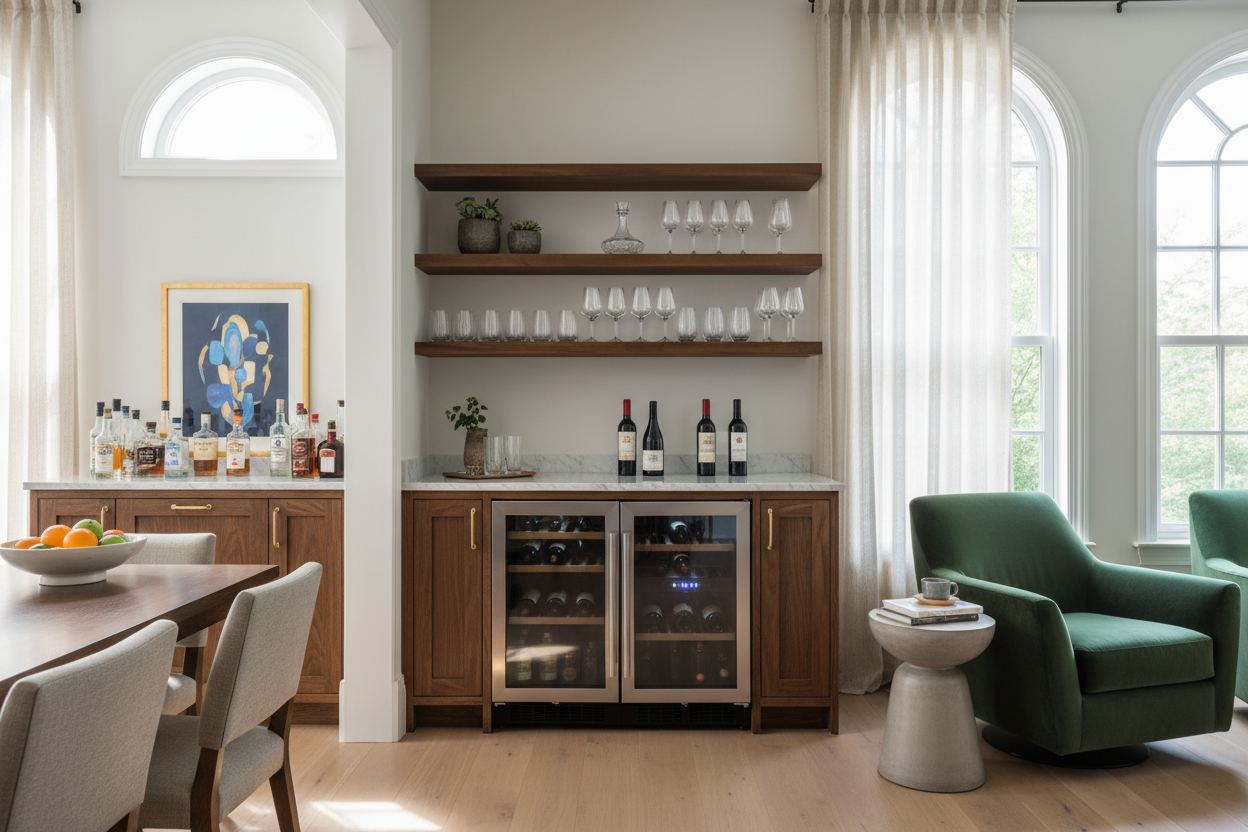
The smartest storage designs I’ve ever tested always involve a 'drop zone' behind a solid door. You want the top half of your wall to feel light and airy—sure, keep a few shelves for the things you actually like looking at—but the bottom 30 inches should be strictly utilitarian. It grounds the room and provides a visual 'weight' that floating shelves just can't match.
When you invest in quality living room storage, you aren't just buying a box; you're buying the ability to hide the chaos. Mixing open top sections with closed bottom cupboards gives you the best of both worlds: a place for your personality and a place for your junk. I used to spend my Saturday mornings rearranging vases; now I just shut the cupboard door and go get coffee.
Hiding the Ugly Stuff (Cords, Board Games, and Routers)
Let’s be honest: board game boxes are hideous. They are neon, oversized, and never stack quite right. The same goes for your Xbox and that blinking black box from the cable company. Using built in living room cabinets with doors allows you to keep these items exactly where you use them without having to look at their plastic shells 24/7. I even drilled a small hole in the back of my lower cabinet to route the power strips, keeping the 'cord octopus' completely out of sight.
The 'Dust Factor' Nobody Mentions Online
Nobody posts a TikTok of themselves dusting 40 individual glass jars and book spines every Tuesday. In my old built in cupboards living room setup, the dust was relentless. Since switching to a design with more closed cabinetry, my cleaning time has been cut in half. A solid door acts as a shield, keeping the interior contents pristine while you only have to worry about the exterior surface. It’s a practical win that most interior designers gloss over in favor of the 'look.'
Getting the Ratio Right: Built-In Storage Cabinets Living Room
If you go full-cabinet from floor to ceiling, your living room will feel like a corporate office or a kitchen. You need a balance. I recommend the 1/3 rule: the bottom third of the wall should be built-in storage cabinets living room style (around 30 to 36 inches high), and the top two-thirds can be your display area. This mimics the height of a standard sideboard, which feels natural to the eye.
For the lower section, I like a depth of at least 15 to 18 inches. This is deep enough to hold a large sideboard display buffet or even some heavy-duty storage bins. If you go too shallow, you won't be able to fit larger items like blankets or specialized electronics, defeating the whole purpose of the upgrade.
Faking the Look Without the Contractor Drama
You don't need a $10,000 custom millwork budget to get this right. I’ve seen some incredible results using modular pieces that are trimmed out to look permanent. The trick is to buy units with consistent heights and add a continuous piece of crown molding across the top and a chunky baseboard across the bottom. This bridges the gap between 'furniture' and 'architecture.'
Many people start with an Ikea built in cabinets living room hack. By using their standard frames and adding custom doors or a DIY paint job, you get that built-in living room cabinets with doors look for a fraction of the price. Just make sure you anchor everything to the studs—nothing ruins the 'custom' vibe faster than a cabinet that wobbles when you open the door.
FAQ
Do built-ins make a small living room look smaller?
Actually, no. If you paint them the same color as your walls, they tend to 'recede' and make the room feel more expansive and cohesive than a bunch of mismatched freestanding pieces.
What is the best depth for living room cupboards?
Stick to 12 inches for upper shelves (books and decor) and 16-20 inches for lower cupboards. This ensures you can actually fit things like board games and media components inside.
Should I choose glass or solid doors?
Solid doors every time. Glass doors are just open shelves that you have to Windex. If the goal is to hide clutter, you need an opaque front.


Leave a comment
This site is protected by hCaptcha and the hCaptcha Privacy Policy and Terms of Service apply.