

















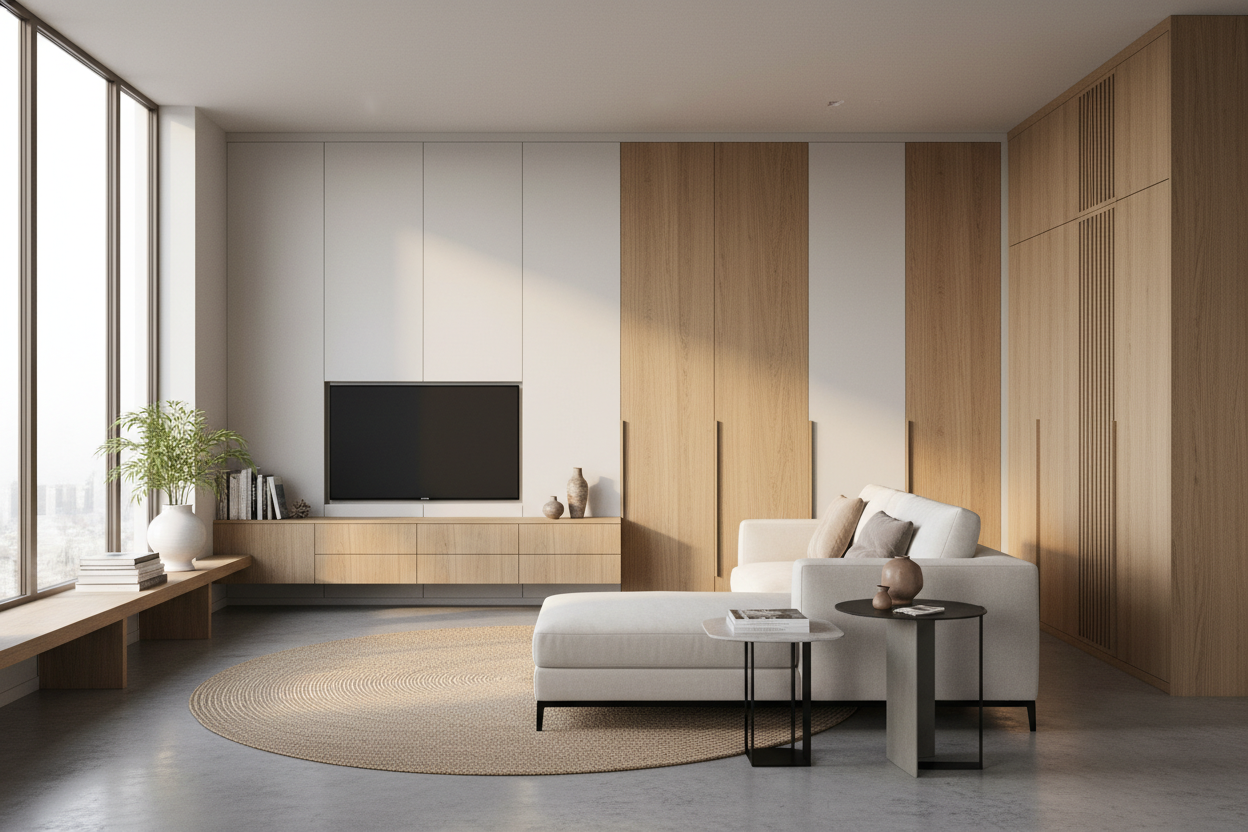
I spent three hours last Sunday with a microfiber cloth and a bottle of spray, moving individual ceramic bowls just to wipe away gray lint. It was the moment I realized my 'curated' life was actually a part-time job I didn't apply for. After years of chasing that airy, open-shelf look, I'm calling it: I'm done. I need storage unit furniture that actually hides my mess instead of putting it on a pedestal.
We've all been sold the dream that if we just buy enough brass bookends and trailing ivy, our clutter will somehow become 'art.' In reality, my living room looked like a high-end thrift store that hadn't been dusted since the mid-nineties. My brain was vibrating from the visual noise of seeing every single spine of every single book I own.
- Open shelves are dust magnets that require weekly maintenance to look decent.
- Closed cabinets significantly reduce visual noise and mental fatigue.
- Low-profile furniture keeps the sightline clear, making small rooms feel larger.
- Real storage units with doors allow you to hide the 'ugly' essentials like routers and chargers.
The Pinterest Lie of the 'Perfectly Curated' Bookshelf
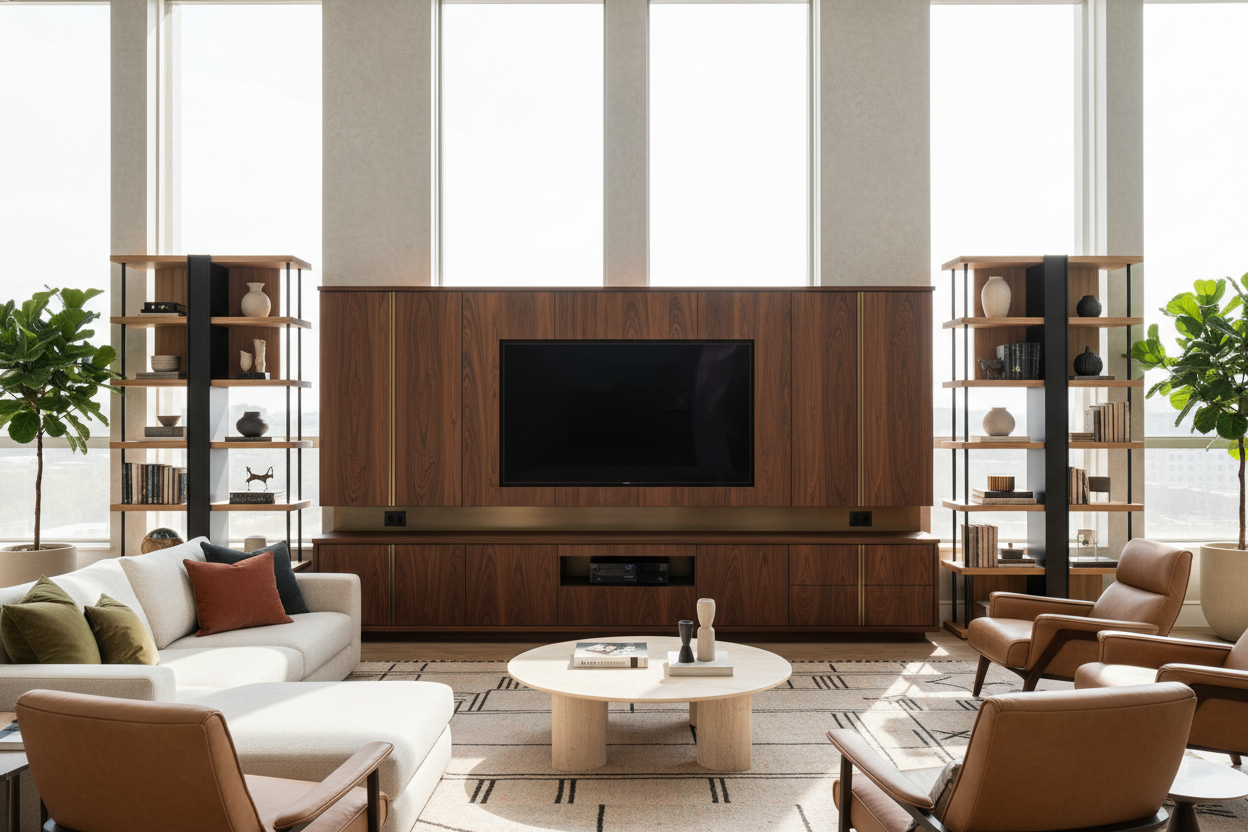
The 'bookshelf wealth' trend is the biggest scam in interior design since the inflatable sofa. It promises a cozy, intellectual vibe, but unless you have a full-time housekeeper, it just looks messy. I tried it all: color-coding my books (which makes finding anything impossible), layering vintage oil paintings in front of encyclopedias, and nesting small bowls inside larger bowls. The result? A layer of thick, gray dust on everything within forty-eight hours.
It’s not just the cleaning; it’s the mental load. Every time I sat on my sofa to watch a movie, my eyes would drift to that one crooked book or the way the Pothos plant was yellowing behind a ceramic bust. Open shelving demands perfection, and frankly, I’m too tired to be perfect. Most of us don't have a collection of museum-grade artifacts; we have half-finished craft projects, extra HDMI cables, and a stack of mail we’re avoiding. Putting that on an open rack is just masochism.
Why I Finally Caved and Bought Storage Unit Furniture
The breaking point was a Tuesday night when I couldn't find my passport because it was 'styled' somewhere behind a decorative birdcage. I realized that my home had become a stage set rather than a place to live. I started browsing for sleek storage furniture that actually had doors. Glorious, solid, opaque doors that didn't care if the contents were organized or just shoved inside in a fit of rage.
There is a specific kind of peace that comes with closing a cabinet door on a mess. It’s like hitting 'clear all' on your browser tabs. I moved away from the wire racks and the ladder shelves and looked for pieces with weight. I wanted 15mm thick panels and soft-close hinges that felt substantial. When you switch to enclosed storage, you aren't just hiding stuff; you're reclaiming your visual environment. You stop seeing the 'stuff' and start seeing the room again. It’s an interior design blessing that we’ve ignored in favor of 'airy' aesthetics for far too long.
The Magic of Sideboards and Low-Profile Cabinets
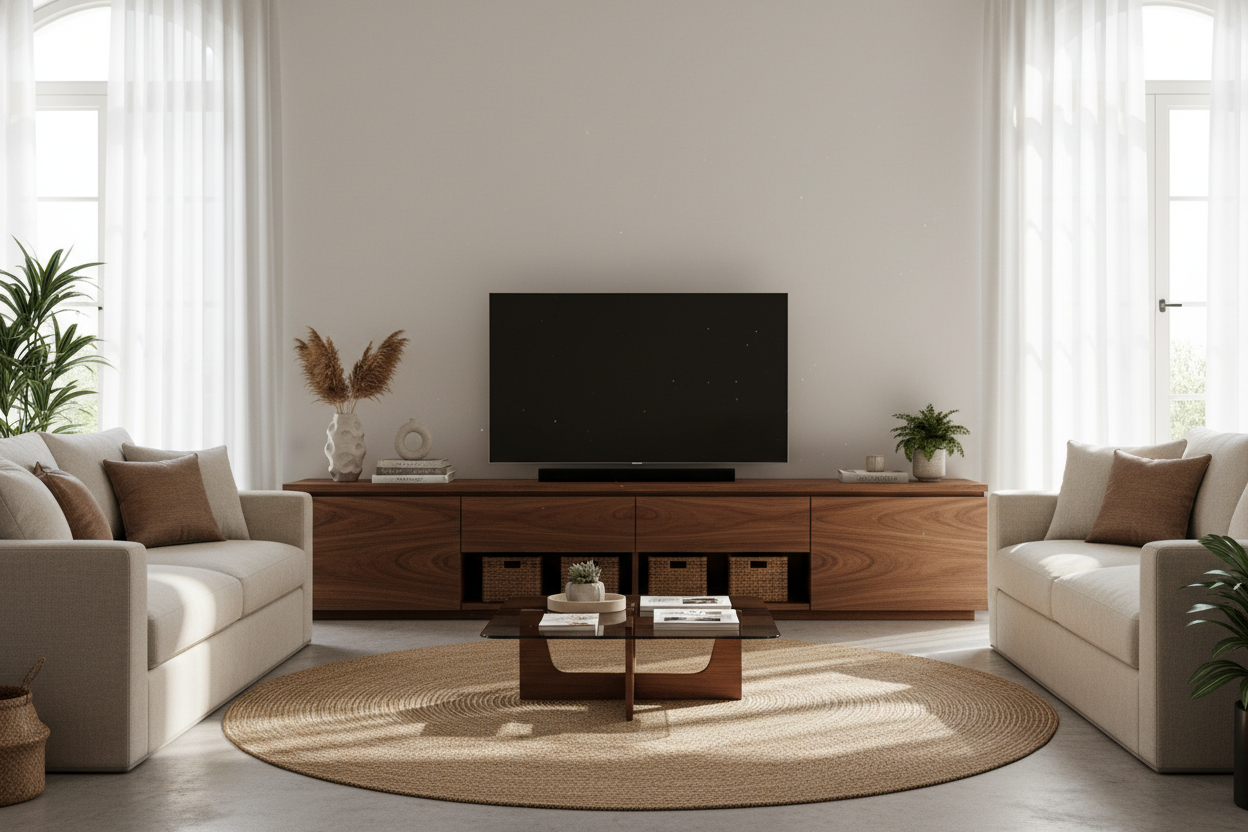
I used to think I needed tall bookshelves to 'draw the eye upward.' All it really did was make my 12-foot ceilings feel cluttered and claustrophobic. I swapped out a 7-foot open rack for a 59-inch sideboard cabinet and the difference was immediate. By keeping the storage below chest height, the top half of the room opened up. It felt like the walls finally had room to breathe.
A sideboard is the ultimate stealth storage. My 59-inch unit currently holds a printer, three board games, a stack of tax returns, and my entire collection of 'fancy' candles that I never light. On the outside, it’s a clean, walnut-finished surface that grounds the room. If you’re struggling with a room that feels chaotic, a short storage table or low cabinet is usually the answer. It provides a landing strip for a single lamp or a tray, rather than fifty different objects competing for your attention. I’ve found that 18 inches of depth is the sweet spot—deep enough for a standard receiver or a stack of sweaters, but not so deep that it eats up your floor plan.
Taking the 'Hide It All' Philosophy to the Front Door
The success of the living room overhaul made me look at my entryway with fresh, judgmental eyes. For years, I used a standard metal shoe rack. It was 'functional,' but it meant the first thing I saw when I walked home was a pile of muddy sneakers and mismatched flip-flops. It was a high-stress welcome. I decided to invest in proper entryway shoe storage furniture to kill the clutter at the source.
I ended up choosing a sideboard with wall hanging decorations to act as a command center. Now, the shoes are behind doors, the keys are in a dedicated drawer, and there’s a mirror above it for that last-second teeth check. My entryway no longer looks like a locker room; it looks like an intentional part of my home. If you're still living with an open-air shoe pile, I'm telling you—get a cabinet. It’s the difference between feeling like you live in a dorm and feeling like you live in an adult's apartment. My stress levels dropped by at least 30% the moment I stopped looking at my own sneakers every time I went to get the mail.
FAQ
Is closed storage more expensive than open shelving?
Generally, yes. You're paying for the extra material of the doors and the hardware like hinges and handles. However, the 'cost per save' on your sanity and cleaning time makes it a much better long-term investment than a cheap $40 wire rack.
How do I stop a large storage unit from looking too heavy?
Look for pieces with 'legs.' If you can see the floor underneath the cabinet—even just 4 or 6 inches of it—the piece will feel significantly lighter and less bulky than a unit that sits flush against the carpet.
Can I still display some of my things?
Of course. The goal isn't to live in a sterile box. Use the top surface of your sideboard for your favorite items. The trick is to keep the 90% of 'utility' items behind doors so the 10% you actually love can shine without the clutter.

Leave a comment
This site is protected by hCaptcha and the hCaptcha Privacy Policy and Terms of Service apply.