

















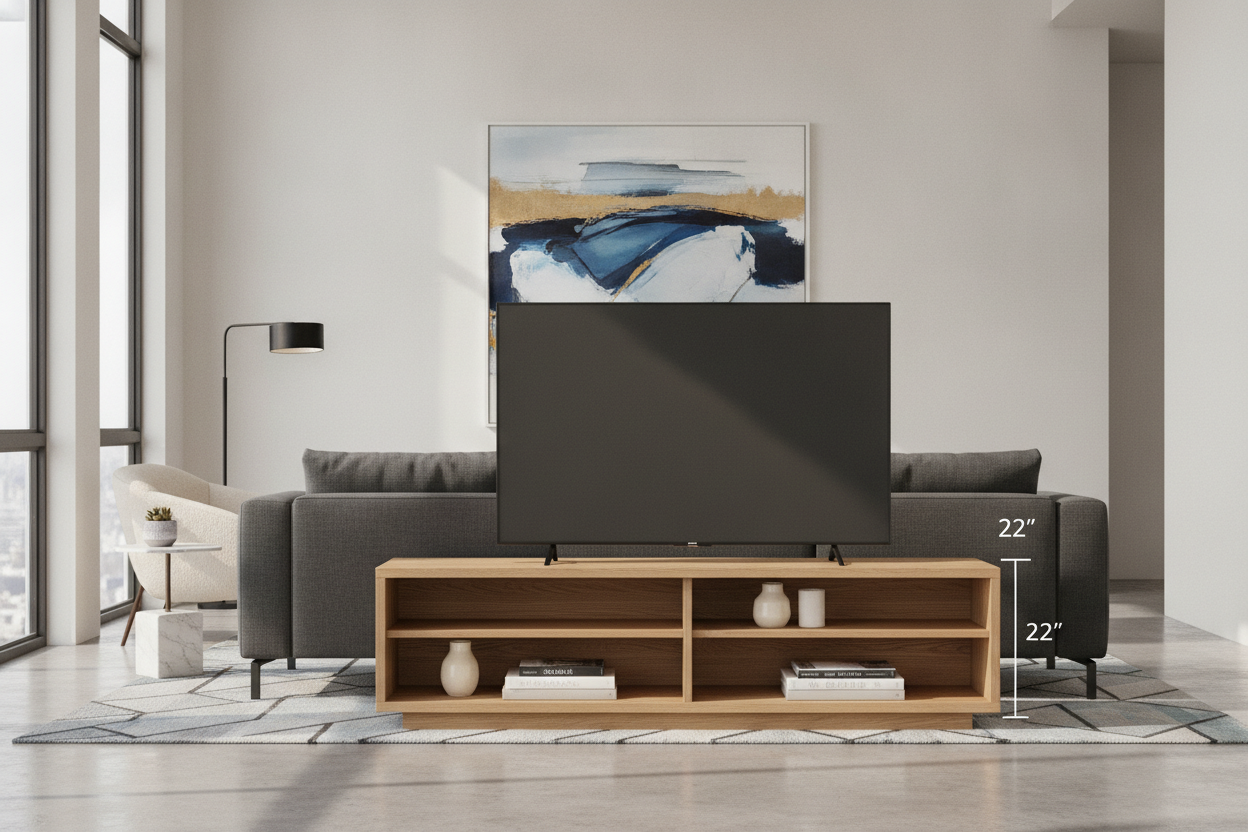
I remember my first real furniture purchase: a low-slung, velvet sofa with those trendy 17-inch seat cushions. It looked incredible, but I paired it with a hand-me-down dresser that stood 34 inches tall. For six months, I felt like I was sitting in the front row of a movie theater, constantly craning my neck upward to see the screen. Swapping that bulky dresser for a 22 inch tv stand didn't just save my neck; it finally made my living room look like a designer actually lived there.
- Matches the lower profile of modern, deep-seated sofas.
- Creates a sense of vertical space, making standard ceilings feel taller.
- Aligns the center of large screens with your natural seated eye level.
- Provides a stable, grounded anchor for the room's layout.
The Visual Magic of Dropping Your Furniture Height
High furniture is a silent space-killer. When you shove a chunky, 30-inch-high console against a wall, you're effectively cutting your room's vertical height in half. It creates a heavy visual block that makes even a decent-sized living room feel claustrophobic. In my old 600-square-foot apartment, a tall media cabinet made the wall feel like it was closing in on me. The moment I switched to a lower profile, the whole room felt like it took a deep breath.
A 22 inch tv stand works because it keeps the bulk of the furniture below your knee line. This trick opens up the entire top two-thirds of the wall, allowing the eye to travel all the way to the ceiling without interruption. It’s a classic gallery trick: keep the heavy stuff low so the architecture can shine. If you're tired of your living room feeling like a storage locker, lowering your sights is the easiest fix in the book.
Ergonomics Check: Is a TV Stand 22 Inches High Right for You?
Let's talk about the math of your living room, because your chiropractor certainly wants you to. The general rule of thumb is that the center of your TV screen should be at eye level when you're seated. For most adults on a standard sofa, your eyes are roughly 40 to 42 inches off the floor. If you have a 65-inch TV, the vertical center of that screen is about 16 inches from the bottom. On a tv stand 22 inches high, that puts the center of your screen at exactly 38 inches—right in the sweet spot.
If you've gone full 'lounge' with one of those ultra-low modular pits where the seat height is barely 15 inches, you might even consider going even lower to 19 inches. The goal is a straight-ahead gaze. If you find yourself looking up even slightly, you're going to end up with tension headaches during your next weekend binge-watch. A lower console is especially vital if you've recently upgraded to a massive 75-inch or 85-inch screen, as the sheer height of the glass requires a lower base to keep it ergonomic.
Balancing the Proportions: Width Matters More When You Go Low
The biggest mistake I see people make with low furniture is buying it too narrow. A short stand that’s only 50 inches wide looks like a random box sitting on the floor. To make a low-profile piece look intentional and high-end, you need length. You want the stand to be at least 10 to 20 percent wider than the TV itself to create a balanced silhouette.
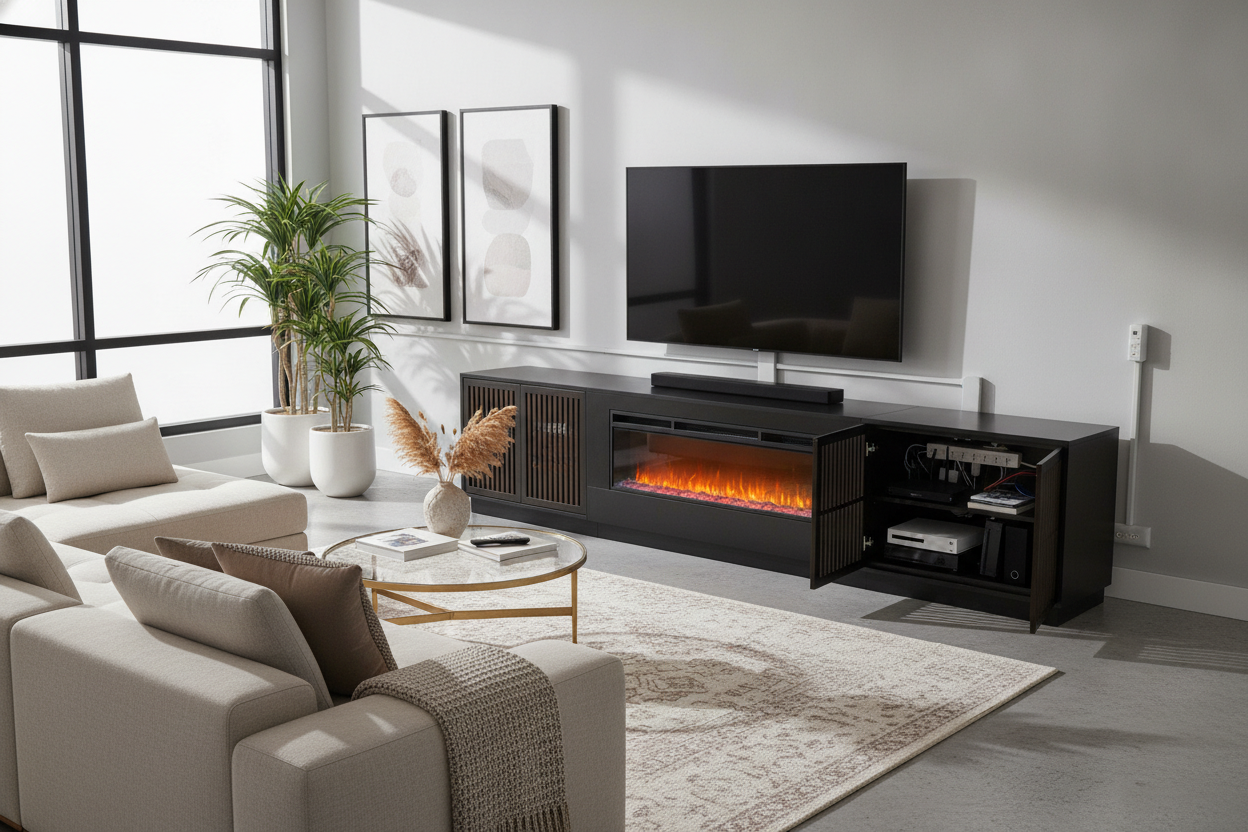
Pairing a large screen with a wider 74 inch tv stand creates a long, lean horizontal line that anchors the entire room. This architectural look mimics the feel of expensive custom built-ins. I once tried to save money by putting a 65-inch TV on a 60-inch stand, and it looked top-heavy and precarious. Moving to a wider, lower base made the whole setup feel grounded and expensive, even though the stand was just a simple walnut veneer piece.
How to Style the Blank Wall Above Your Screen
The most common fear people have when buying a low console is the 'giant empty wall' syndrome. When your furniture sits low, you suddenly have a lot of white space above the TV. Instead of seeing this as a problem, look at it as a canvas. You can use this space for an asymmetrical gallery wall that draws the eye upward, or a single oversized piece of art that balances the horizontal weight of the console.
I personally love using a slim picture ledge about 18 inches above the TV to display a rotating collection of prints and books. It fills the void without making the area feel cluttered. If you're ready to stop staring at a cramped layout and start enjoying a more open, modern vibe, you can browse modern tv stands to find a piece that fits your specific seat height. Don't be afraid to go low—your eyes and your interior designer will thank you.
Is 22 inches too low for a TV stand?
Not if you have modern seating. If your sofa seat is 18 inches or lower, 22 inches is actually the ergonomic ideal for a large screen to ensure you aren't looking up at the TV.
What if I have a really large TV?
The bigger the TV, the lower the stand should be. A 75-inch screen on a tall console will force your neck into an uncomfortable upward tilt, which is terrible for long-term comfort.
Does a low stand look weird in a big room?
Only if it is too narrow. In a large room, you want a long, low console (at least 70 inches) to maintain the correct scale and prevent the furniture from looking lost.


Leave a comment
This site is protected by hCaptcha and the hCaptcha Privacy Policy and Terms of Service apply.