

















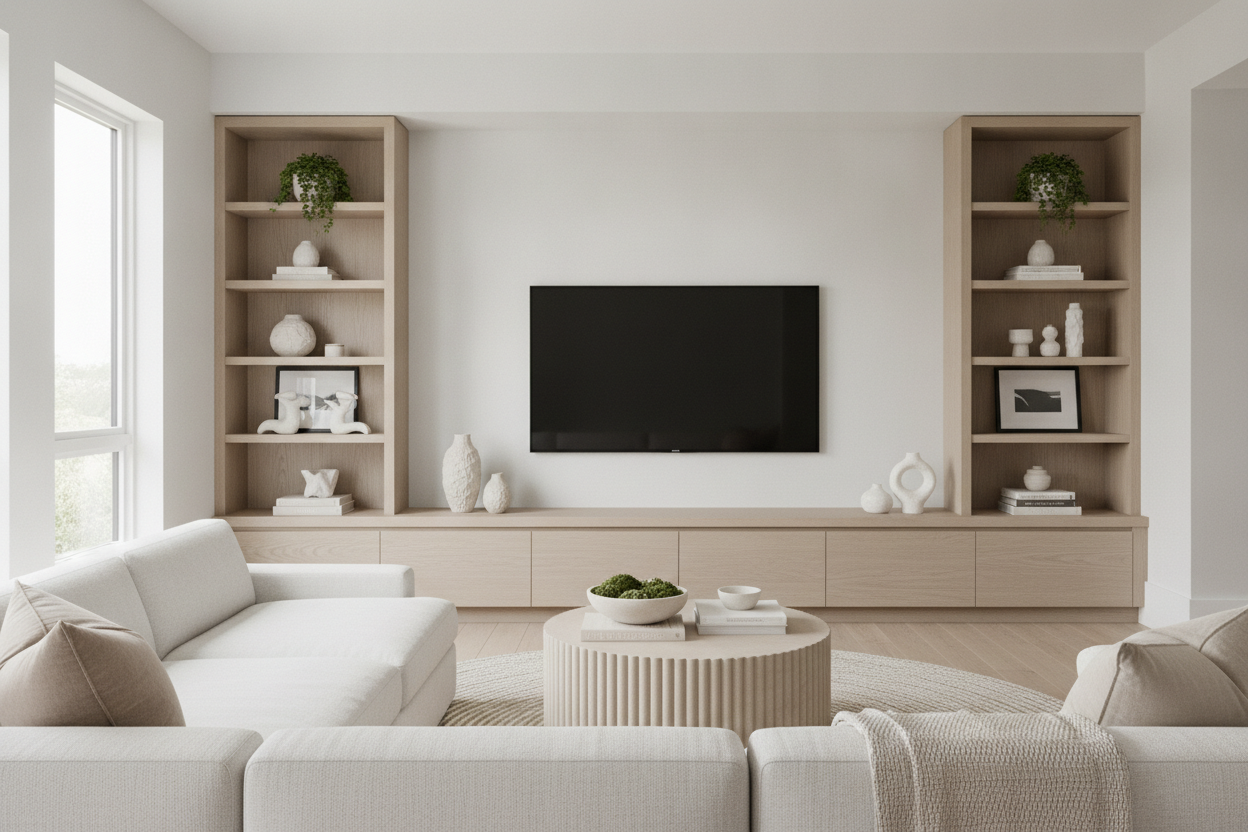
I spent three years staring at a dark walnut beast of a console that weighed about 150 pounds and took up half my visual real estate. It looked expensive in the showroom, but in my 12x14 living room, it was a black hole that swallowed every ounce of afternoon sun. When I finally started shopping for new TV stands, I was terrified of going light. I thought a neutral tv stand would look like a cheap apartment rental or a doctor’s waiting room.
Quick Takeaways
- Dark furniture in small rooms creates a visual 'anchor' that actually drags the ceiling down.
- Look for texture—oak grain, cane, or fluted details—to keep a neutral piece from looking flat.
- Matching undertones to your floor is more important than matching the exact wood species.
- Lighter consoles bridge the gap between a white wall and a giant black screen, reducing eye strain.
The 'Heavy Wood' Mistake I Kept Making
For a long time, I equated 'sturdy' with 'dark.' I bought into the idea that a serious living room needed a massive, espresso-colored anchor. But here is the reality: unless you live in a literal loft with 20-foot ceilings, that dark wood is sucking the life out of your space. My old unit was a 72-inch mahogany monstrosity that made the whole wall feel heavy.
I realized that by defaulting to these 'safe' dark woods, I was accidentally making my small apartment feel like a cave. When I finally swapped it for a neutral tv console, the room literally felt like it grew three feet. It’s not about the footprint of the furniture; it’s about how much light it reflects back at you. If you’re struggling with a room that feels 'stuffy,' your furniture's finish is probably the culprit.
Why 'Neutral' Doesn't Have to Mean 'Builder-Grade Beige'
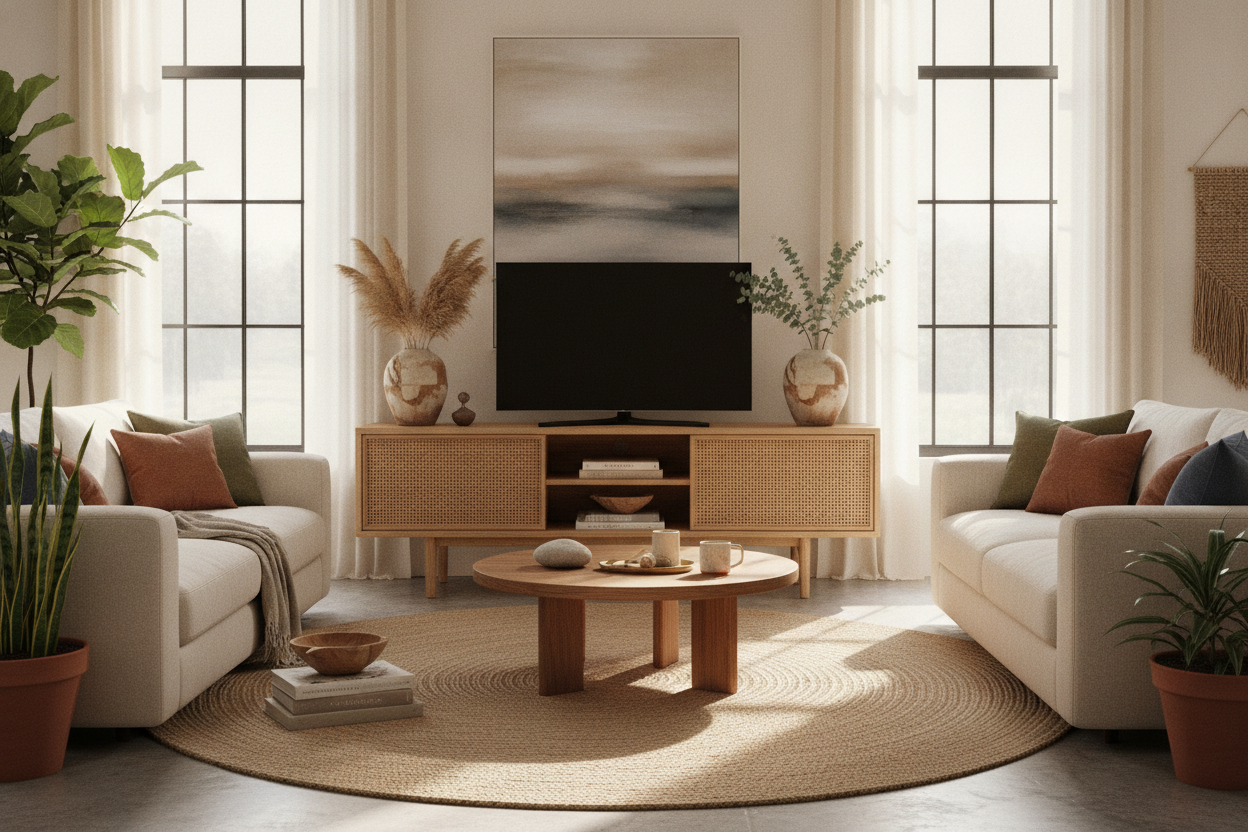
The word 'neutral' gets a bad rap because people associate it with that flat, lifeless laminate you see in dorm rooms. But a high-quality neutral entertainment center is all about the tactile details. I’m talking about whitewashed oak where you can actually feel the grain, or plaster-finish units that have a soft, matte glow. Even a bit of cane webbing or fluted wood can add enough shadow and depth to keep the piece from disappearing.
When you are deciding between a media console versus a credenza in a lighter finish, look at the legs. A neutral piece with tapered legs or an open base feels even airier. I recently tested a sand-colored unit with a subtle wire-brushed texture. It didn't look like 'beige furniture'—it looked like a piece of organic sculpture. That’s the difference between cheap paper veneers and actual design.
The Magic Trick: Softening the Giant Black Box
We all have to deal with the 'black hole' problem: the giant 65-inch television that dominates the room when it's turned off. If you put that TV on a dark stand, you just have a massive, looming tower of darkness. It’s harsh on the eyes and makes the tech the only thing you see.
A tv stand neutral finish acts as a buffer. By choosing a cream, light grey, or natural wood tone, you create a softer transition between your (likely) light-colored walls and the black screen. It blurs the edges of the television’s silhouette. Instead of a jarring contrast, the whole setup feels integrated. It’s a psychological trick that makes the technology feel like a part of the decor rather than an intrusion.
How to Match Your Floors Without Washing Out the Room
The biggest fear I hear is: 'What if it matches my floors too perfectly and just... disappears?' Here is the secret: you don't need an exact match, you need a temperature match. If you have cool-toned grey floors, look for a neutral media console with a 'driftwood' or 'ash' finish. If your floors are warm honey oak, go for white oak or a creamy 'parchment' paint.
I’ve seen people put a cool-grey stand on top of a warm red-oak floor, and it looks like the furniture is floating in the wrong room. You want about two shades of difference between your floor and your stand. If they are too close, throw down a high-texture jute rug to create a 'break' between the two wood tones. This adds the necessary contrast without needing to resort to dark, heavy colors.
Styling a Lighter Console (Without Ruining the Vibe)
Once you have your light-colored unit, you have to style it carefully. If you put white vases on a white stand, it’s going to look sterile. I like to use 'organic' contrast. Think aged brass hardware, a stack of vintage books with linen spines, or a trailing Pothos plant in a terracotta pot. The green of the leaves pops beautifully against a neutral backdrop.
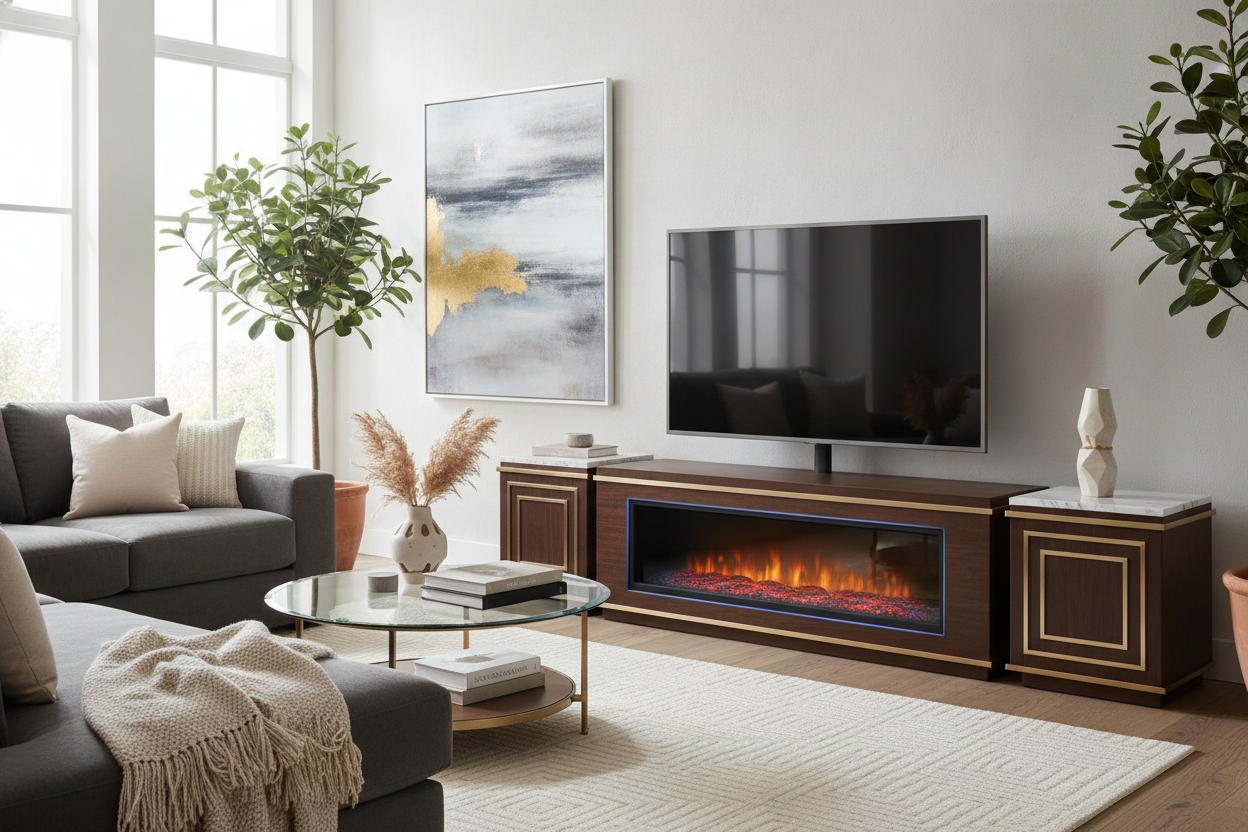
Avoid too much glass or acrylic here; you want materials that feel 'grounded.' If you get the whole thing set up and realize you actually hate the 'quiet' look, you can always pivot to a bold pop of blue instead for your next project. But for most of us, the serenity of a neutral base is hard to beat. It gives you the freedom to change your pillows and rugs every season without having to worry about clashing with a giant piece of dark furniture.
FAQ
Will a light-colored TV stand show more dust?
Actually, no. Dark wood and black glass are the absolute worst for showing every speck of dust and every fingerprint. A light oak or textured neutral finish hides a week’s worth of dust remarkably well.
Is a neutral stand too 'feminine'?
Not at all. It’s about the lines. A chunky, low-profile neutral unit with clean edges and matte black hardware looks incredibly modern and 'industrial-lite' without being oppressive.
How do I know if a neutral finish is high quality?
Check the weight and the edges. If the 'wood' grain pattern repeats perfectly every six inches or the edges look like they are peeling stickers, it's cheap paper veneer. Look for 'real wood veneer' or 'solid hardwood' for a piece that actually lasts.

Leave a comment
This site is protected by hCaptcha and the hCaptcha Privacy Policy and Terms of Service apply.