

















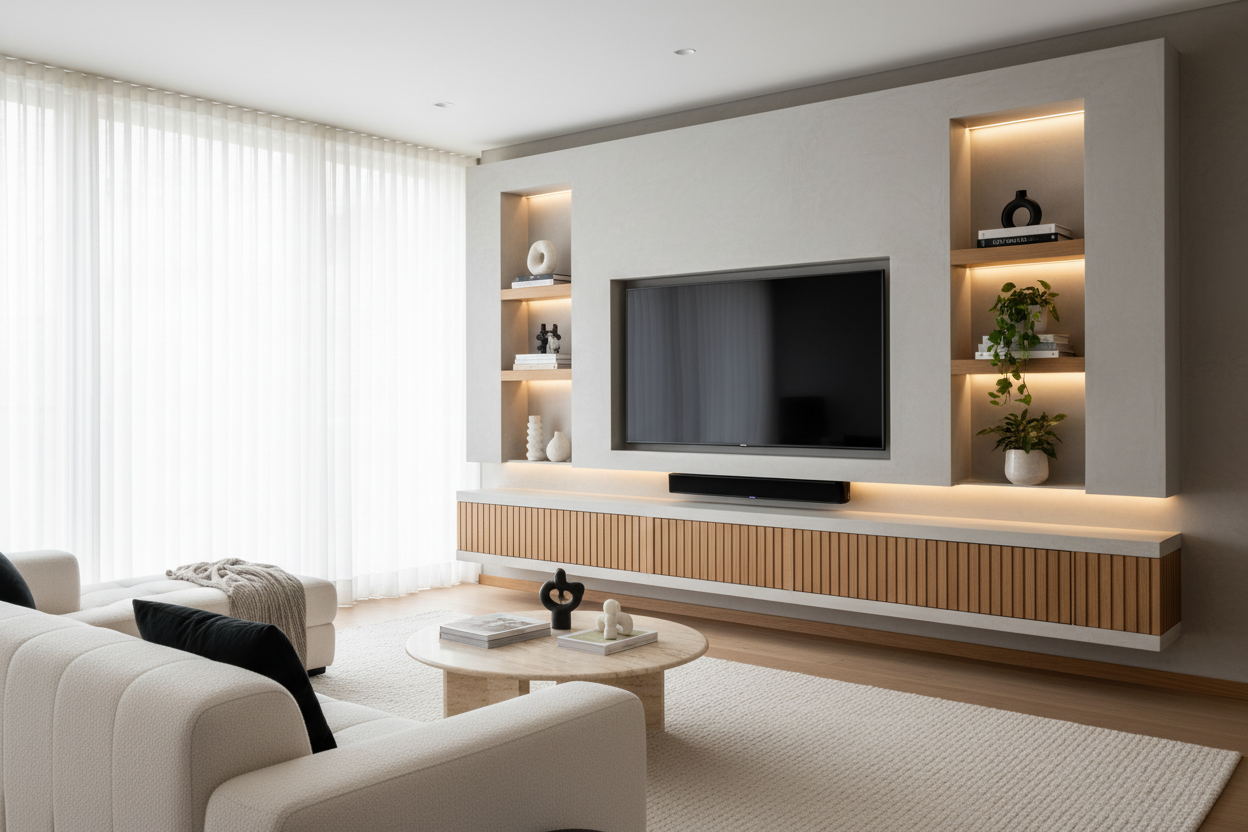
I spent three weeks side-stepping a chunky oak console that jutted out six inches too far into my narrow hallway-of-a-living-room. I finally snapped. I realized a tv stand design in wall wasn't just a Pinterest dream; it was a survival tactic for my 11-foot-wide space. Drywall dust is basically the glitter of the DIY world—it gets everywhere—but the result was worth every vacuuming session.
- Recessing your console saves 12-18 inches of floor space.
- Check for load-bearing studs before you start cutting.
- Standard interior walls are 4.5 inches deep; you might need a 'faux' wall for deeper components.
- Always run a conduit for cables so you don't have to fish them through insulation later.
The Problem With 'Floating' Furniture in Narrow Spaces
We've been told that floating furniture is the ultimate small-space hack. But here's the cold truth: even the sleekest standard freestanding TV stands still occupy physical territory. When you have a narrow room, those extra inches are the difference between a comfortable walkway and bruised shins every time you go to the kitchen for a snack.
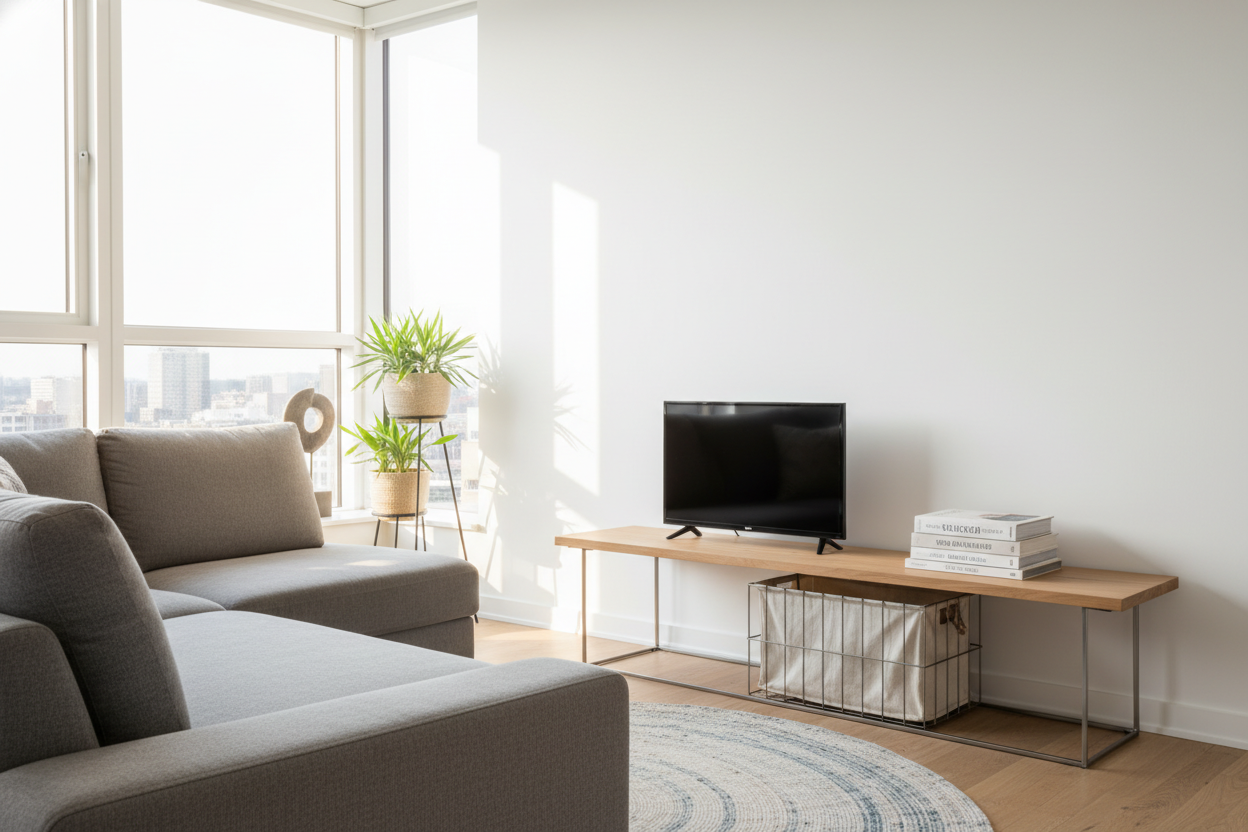
I tried the 'low profile' route first. It didn't work. The furniture still felt like an obstacle rather than an integrated part of the architecture. I wanted my media center to disappear into the room, not dominate it. If you're tired of furniture that feels like it's constantly in your way, going inside the wall is the only real fix.
What Makes a TV Stand Design in Wall Actually Work?
Recessing furniture isn't just about making a hole. You’re dealing with the skeleton of your home. Most interior walls are framed with 2x4 studs spaced 16 inches apart. This means your niche is naturally limited by those vertical supports unless you want to get into structural headers and serious carpentry, which I don't recommend for a weekend project.
Then there's the depth issue. My AV receiver is 14 inches deep. A standard wall is only about 4.5 inches deep. If you want a tv stand wall design that sits flush, you have to find a way to hide that extra 10 inches of bulk behind the scenes—or choose your components very carefully. I ended up cutting through into the closet on the other side of the wall to make it fit.
The Recess vs. Build-Out Debate
You have two choices. You can cut into the existing wall and steal space from the room behind it, or you can build a 'faux' wall—basically a bump-out—into your living room. I chose to steal space from my guest closet. It was a fair trade for a living room that finally felt breathable and custom-built.
Planning the Perfect TV Stand Wall Design for Living Room Flow
The biggest mistake I see? Building for the TV you have today, not the one you'll buy in three years. When planning your tv stand wall design for living room flow, make the recessed niche slightly larger than your current setup. You can always fill the gap with trim or a larger bezel later, but you can't easily stretch a hole in the wall.
I left a two-inch margin around my 55-inch screen. When I eventually upgrade to a 65-inch, I’ll have to rework the drywall, which is a massive pain. Don't be like me. Think about the 75-inch screen you know you're going to want during next year's Black Friday sales.
Faking a TV Console Wall Design Without Tearing Up Studs
If the thought of a reciprocating saw makes you sweat, you can still get the look. A tv console wall design can be mimicked by using ultra-shallow cabinetry and flanking it with floor-to-ceiling shelving or trim. This creates the illusion of a built-in without the structural risk of hitting a live wire or a water pipe.
Before I went full demolition mode, I actually swapped my TV stand for a modern wall cabinet. It helped me realize that I didn't hate the storage; I just hated the legs and the dust bunnies that lived under them. Moving everything to the wall changed the entire energy of the room, even before I cut into the studs.
The 'TV Stand on Wall Design' Alternative for Renters
Renters, don't despair. You can't cut holes in your landlord's drywall, but you can still achieve a tv stand on wall design that feels intentional. The trick is to find a piece that has a very slim profile and matches your wall color perfectly to reduce visual weight.
A high-quality wall mounted media console entertainment center gives you that off-the-floor aesthetic without the permanent commitment. Use cord covers that you can paint to match your walls. It’s 90% of the look for 10% of the effort and zero structural damage to your security deposit.
Frequently Asked Questions
Can I do this on a load-bearing wall?
Technically yes, but it’s much harder. You’ll need to install a structural header to support the weight of the house above the opening you’ve created. If you aren't an experienced builder, stick to non-load-bearing partition walls or build a bump-out instead.
How do I manage the heat from my electronics?
Recessed spaces get hot fast. I installed a small, silent USB-powered fan in the back of my niche to keep the air moving. Without it, my gaming console sounded like a jet engine within twenty minutes of play.
What happens if I want to move my furniture later?
That’s the downside. This is a permanent architectural choice. If you decide to rearrange the room, you’re looking at a drywall repair and painting project. Make sure your layout is one you can live with for at least five years before you start cutting.


Leave a comment
This site is protected by hCaptcha and the hCaptcha Privacy Policy and Terms of Service apply.