

















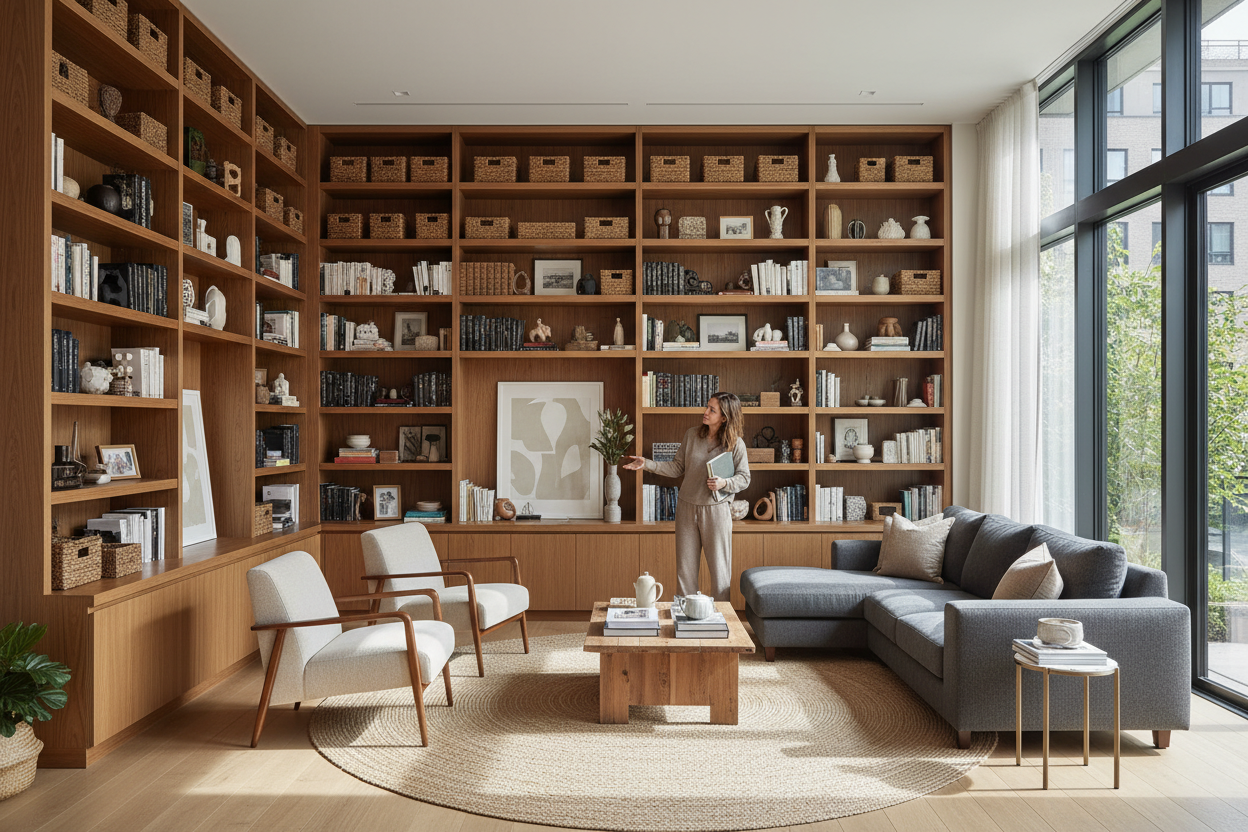
I remember staring at my 47th Pinterest tab at 2 AM, convinced that floor-to-ceiling built-in shelves for living room walls would finally make me feel like a sophisticated adult. I imagined myself sipping tea, surrounded by leather-bound classics and perfectly aged brass accents. It was going to be my 'Beauty and the Beast' library moment, minus the talking clock.
The reality hit about three months after the sawdust cleared. I didn't feel like a scholar; I felt like a full-time janitor. I spent $4,800 on custom oak millwork only to realize that open shelves are basically just high-end dust magnets. If you don't have a full-time housekeeper or a pathological obsession with microfiber cloths, wall-to-wall open shelving is a trap that looks great in a magazine but feels like a chore in real life.
Quick Takeaways
- Dust is the enemy; open shelves require weekly maintenance to look 'clean.'
- Lower cabinets are non-negotiable for hiding ugly tech and board games.
- Hybrid designs (closed bottom, open top) offer the best of both worlds.
- Freestanding units can mimic the custom look for a fraction of the price.
The 'Library Aesthetic' Is a Trap
We've all seen the 'shelfies'—those perfectly curated built in shelves living room setups with three vintage cameras, a single trailing ivy plant, and books arranged by the colors of the rainbow. They look effortless. They are not. Living with built-in open shelves means you are constantly performing for your guests. You can't just shove a random paperback or a stray remote on there without ruining the 'vibe.'
Then there is the dust. Oh, the dust. In a room where you actually live—fluffing pillows, walking on rugs, existing—skin cells and fibers settle on every flat surface. By week two, my dark wood shelves had a grey film that made my expensive decor look like it belonged in a haunted house. If you aren't prepared to touch every single object on those shelves once a week, the library aesthetic will quickly become a nightmare.
Furthermore, unless you own five hundred stunning hardback books, you end up buying 'filler.' I found myself spending money on decorative spheres and wooden chain links just to avoid having awkward gaps. It turns your living room into a retail display rather than a home.
Why You Need Closed Storage Below the Belt
If I could go back and talk to my contractor, I’d tell him to stop the shelves at waist height. The biggest mistake I made was running open slats all the way to the floor. This is where living room built in storage ideas usually go wrong. You need a place for the 'ugly' stuff: the Wi-Fi router with its spiderweb of cables, the beat-up box of Catan, and the fleece blankets that don't match your throw pillows.
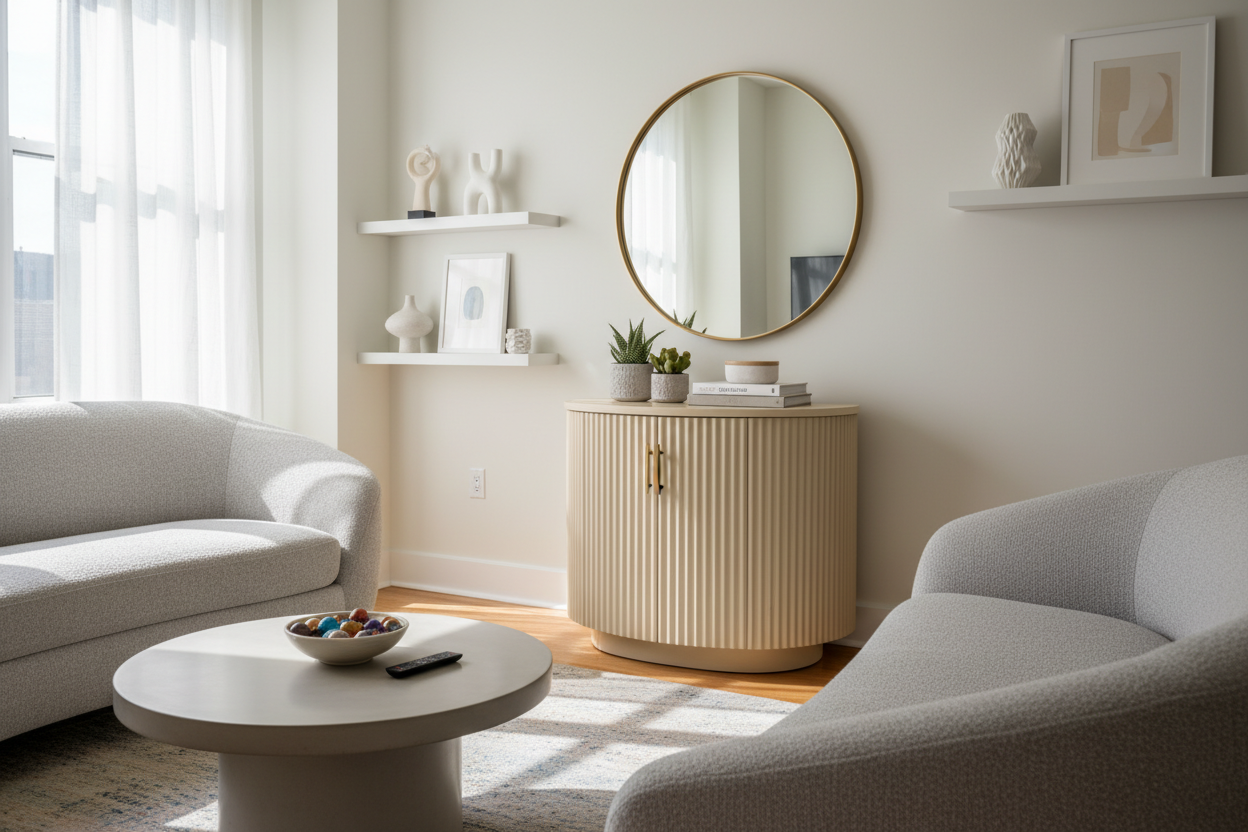
This realization was exactly why I regret my open shelves on the bottom half of the wall. Without doors, every bit of household clutter is on full display. A much smarter move is to install deep cabinets on the bottom and save the open shelving for the top third of the wall. If you aren't ready to commit to permanent millwork, you can anchor a solid wood modern sideboard against the wall and install floating shelves above it. This gives you that heavy, 'built-in' base with plenty of hidden storage while keeping the airy look up top.
Closed storage also protects your stuff. My lower shelves became a magnet for dog hair and vacuum cleaner scuffs. Having solid doors down low keeps the visual noise at zero and protects your sanity when you need to clean the room in five minutes flat.
Faking the Custom Look Without the Millwork Price Tag
You don't need to spend $5,000 to get the architectural interest of built-ins. In fact, if you're a renter or just don't want to commit to a permanent wall structure, freestanding pieces are your best friend. The secret to 'faking it' is scale. You want pieces that feel substantial and tall enough to draw the eye upward.
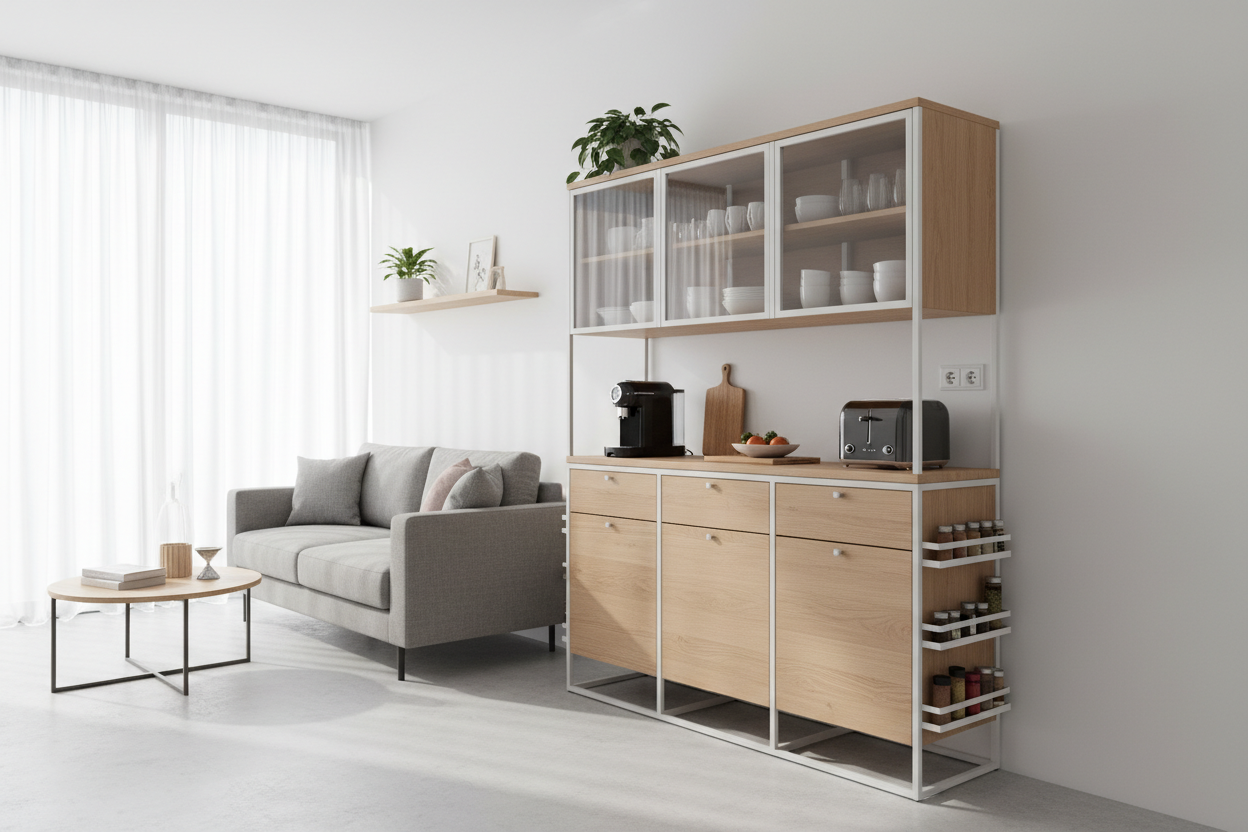
I’ve seen incredible setups where people line up three identical units to create a seamless wall of storage. Using something like a tall white storage cabinet with shelves gives you that verticality without the permanent construction. If you choose a unit with a mix of drawers and open tiers, you've already solved the 'hidden storage' problem I mentioned earlier. Just make sure you anchor these to the wall—safety first, especially if you have kids or a cat that thinks it's a mountain goat.
Another pro tip: add crown molding to the top of freestanding bookcases and paint them the exact same color as your walls. It tricks the eye into thinking the furniture is part of the house's bones. It’s a $100 hack that looks like a $2,000 upgrade.
My Go-To Formula for Styling Built In Shelves Living Room
Once you have your shelves—whether they are custom or freestanding—the styling is what makes or breaks them. My rule is the 'Rule of Thirds.' One-third books (vertical and horizontal), one-third objects (vases, art, sculptures), and one-third empty space. Yes, empty space. If you jam every square inch with 'stuff,' the room will feel claustrophobic.
Group your items by texture rather than just color. Mix a matte ceramic vase with a metallic frame. If you're struggling to find pieces that look cohesive, browse a curated living room storage collection to see how different materials like wood, metal, and glass play together. I also suggest using baskets for the lower open shelves if you didn't take my advice on the cabinet doors. Woven baskets can hide a multitude of sins while adding a nice organic texture to the room.
Keep your largest items on the bottom shelves and the lighter, airier pieces at eye level. It grounds the look and prevents the unit from feeling top-heavy. And please, for the love of all things holy, don't turn your book spines inward to show the white pages. You’re a human being, not a furniture showroom.
The Final Verdict: Are Custom Built-Ins Worth It?
Built-ins are a fantastic investment if—and only if—they serve your lifestyle. If you are a minimalist who loves to curate and doesn't mind the upkeep, go for the floor-to-ceiling look. But for the rest of us who have junk, pets, and a life, the hybrid approach is the only way to go. Don't let a Pinterest photo dictate how much time you spend dusting. Design for the life you actually have, not the one you think you'll start living once the shelves are installed.
FAQ
How deep should built-in shelves be?
For a standard living room, 12 inches is the sweet spot. It’s deep enough for most coffee table books and decor without eating up too much of your floor space. If you go deeper, things tend to get lost in the shadows at the back.
What is the best material for built-in shelves?
If you're painting them, MDF is actually great because it won't warp or shrink like solid wood. However, if you want a stained wood look, go with furniture-grade plywood with solid wood edging. Avoid cheap particle board; it will sag under the weight of books within a year.
How do I make my shelves look expensive?
Lighting is the secret. Adding battery-operated puck lights or hardwired LED strips to the underside of each shelf makes even a budget bookcase look like a million bucks. Also, avoid 'tiny' decor. One large, meaningful vase looks much more high-end than ten small thrift store knick-knacks.

Leave a comment
This site is protected by hCaptcha and the hCaptcha Privacy Policy and Terms of Service apply.