

















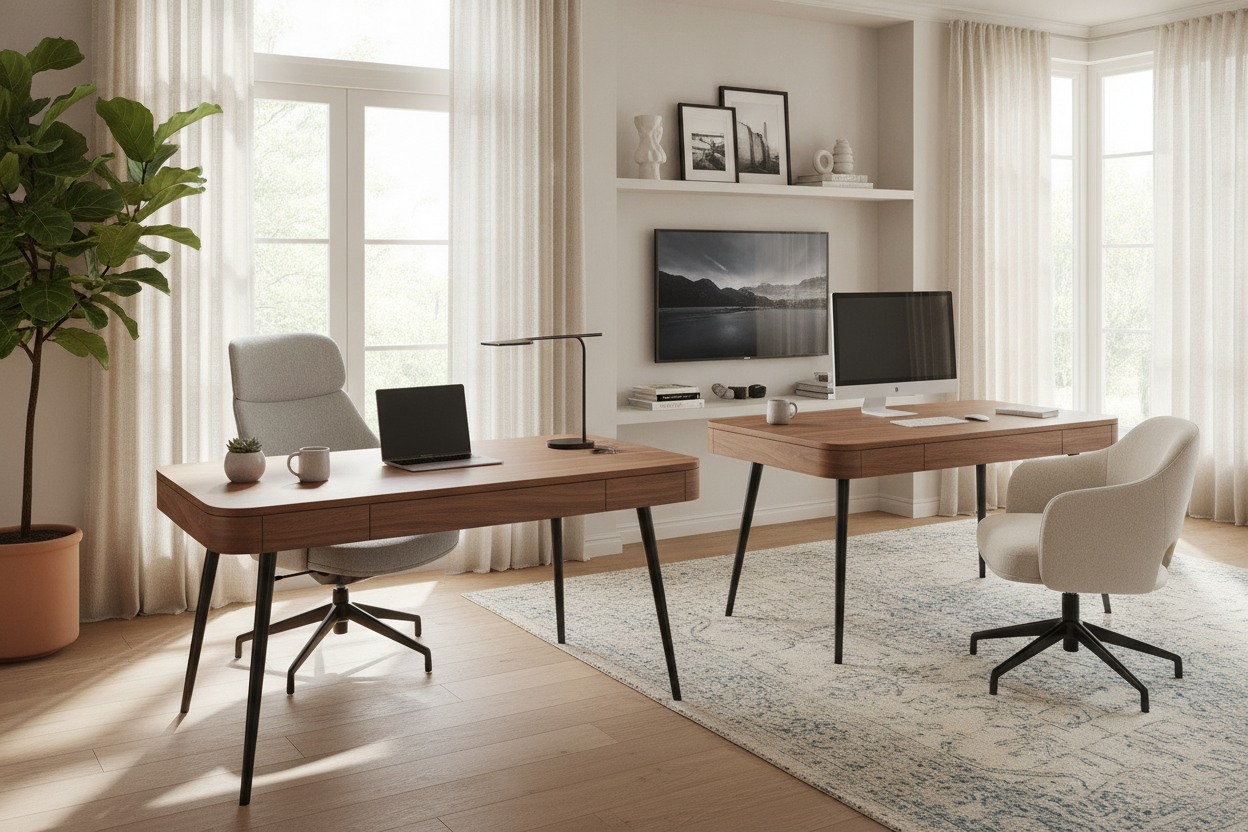
I spent three years working on a 1960s teak vanity. It looked incredible in photos, but by 3 PM every Tuesday, my lower back felt like it was being interrogated by a mob boss. Finding comfortable desks that don't scream 'mid-level manager at a paper company' is surprisingly hard. You want a home that feels like a home, not a corporate satellite office.
Quick Takeaways
- Avoid 'apron' desks that leave zero room for your thighs.
- Prioritize a depth of at least 24 inches for monitor distance.
- Real wood or high-density MDF beats hollow-core particle board every time.
- Look for adjustable feet to kill the 'wobble' on uneven floors.
The Aesthetic Trap: Why Pretty Office Desks Usually Hurt
We have all fallen for it. You see a stunning console table with spindly legs and a marble top, and you think, 'That would be a gorgeous desk.' Fast forward a month and you are booking a chiropractor. The problem with most pretty office desks is that they were never designed for a human to sit at for eight hours. They are designed to hold a lamp and a stack of books.
Most 'aesthetic' furniture has a drawer unit or a decorative apron that sits right where your knees need to go. If you have to lower your chair to fit your legs under the desk, your elbows end up at your ears. If you raise your chair, you are hunched over like a gargoyle. It is a lose-lose situation. I have tested dozens of these 'lifestyle' desks, and the lack of vertical clearance is almost always the dealbreaker. You need at least 25 inches of clear space from the floor to the bottom of the desk surface to avoid the knee-knock.
What Actually Makes Comfortable Desks... Comfortable?
Comfort isn't just about a soft chair; it is about the geometry of the workspace. A desk is a tool, not just a surface. When you are upgrading your home office, you have to look at the 'unsexy' specs. First, look at the edge of the desk. Is it a sharp, 90-degree angle? If so, it is going to dig into your forearms and cut off circulation within twenty minutes. Look for a 'waterfall' edge or a slightly rounded radius.
Then there is the depth. A lot of high-quality home office desks are surprisingly shallow, around 20 inches. That is fine if you are writing a letter by hand, but if you have a 27-inch monitor, your eyes are going to be screaming. You want enough depth so your screen is at least an arm's length away. I personally won't touch a desk that is less than 24 inches deep. It is the difference between feeling cramped and having room to breathe.
Finding High-Quality Home Office Desks That Don't Ruin the Vibe
The secret to finding quality home office desks is looking at the materials. If the desk weighs 30 pounds and comes in a flat box from a big-box retailer, it is probably made of paper honeycomb or cheap particle board. These desks vibrate when you type. That micro-vibration is a silent killer for focus and wrist comfort. You want mass. Solid wood, plywood cores, or heavy-duty steel frames provide the stability needed for a 'dead' typing surface.
You can find cool desks for home office setups that use industrial materials like powder-coated steel paired with warm walnut or oak. This gives you that 'designed' look without the flimsiness of a budget desk. I always check the weight capacity—if a desk can't hold at least 150 lbs, it is probably not going to survive a year of daily use without sagging in the middle.
The Narrow Executive Desk Compromise
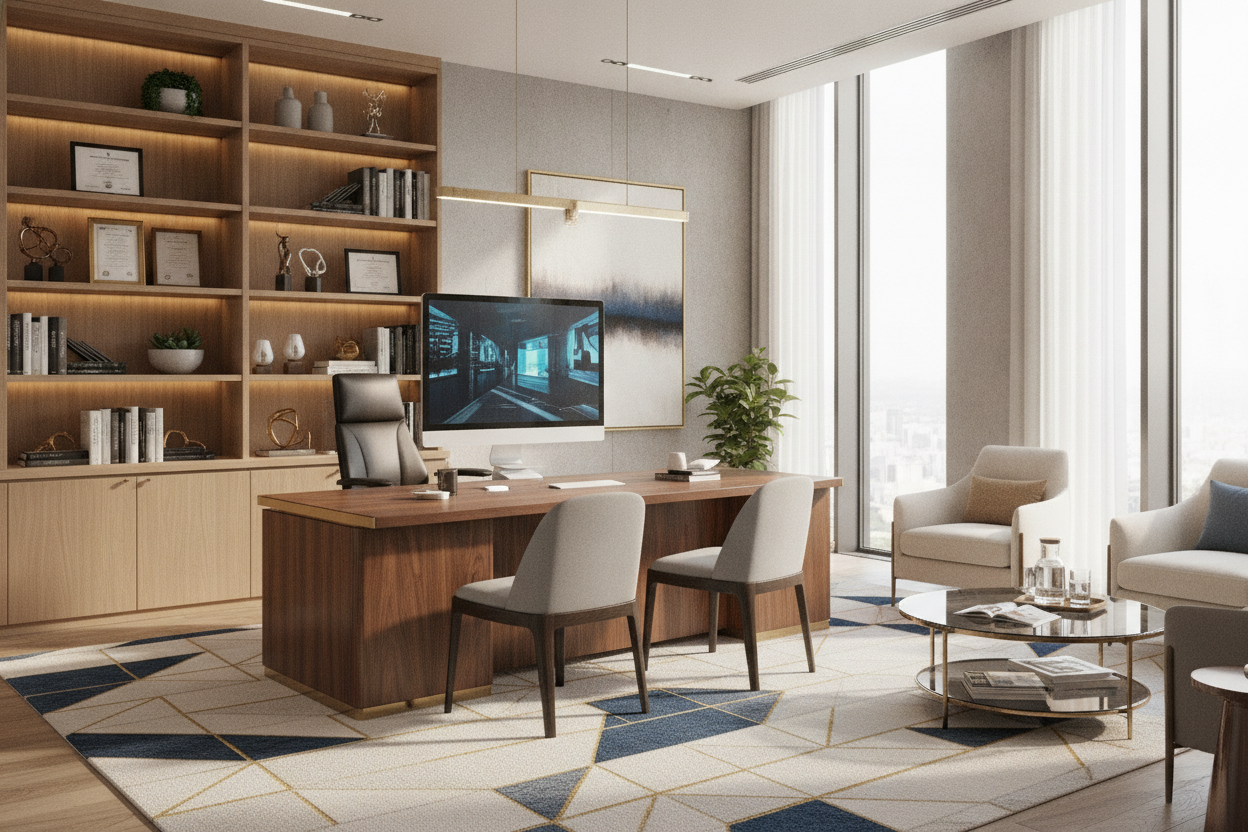
If you are working in a tight space, like a bedroom nook, you might think you are stuck with a tiny writing desk. Enter the narrow executive desk. These are awesome desks because they take the storage and presence of a traditional executive desk but trim the fat. Instead of being 36 inches deep, they are usually 24 to 26 inches.
This allows you to have drawers for your clutter—because a cluttered desk is never comfortable—while still fitting into a standard room layout. I once used a 48-inch wide narrow executive desk in a studio apartment, and it felt like a command center without making me feel like I was sleeping in my office. Look for models with 'cord management' cutouts so you aren't fighting a nest of cables every time you move your mouse.
Are Standing Desks the Ultimate Comfort Hack?
I used to be a standing desk skeptic. I thought they looked like hospital equipment. But the reality is that quality desks for home office use are increasingly focusing on movement. Being able to change your height by even half an inch can relieve the pressure on your lower back. The key is finding one with a sit stand up desk with memory preset controller.
Without memory presets, you spend half your day fiddling with the height, never quite finding that 'perfect' spot again. With them, you hit a button and the desk moves to your exact ergonomic requirement. It takes the guesswork out of the equation. Plus, modern electric frames can be paired with custom wood tops, so you get the health benefits without the 'tech-bro' aesthetic.
3 Final Red Flags Before You Pull the Trigger
Before you buy, run through this mental checklist. First: The Shake Test. If there are no cross-bars or heavy-duty leg plates, that desk is going to wobble like a Jenga tower. Second: The Apron Depth. If the distance from the top of the desk to the bottom of the support beam is more than 4 inches, you will hit your legs. Third: Assembly Complexity. If the manual is 40 pages long, the structural integrity relies on 100 tiny screws—which usually means it won't stay tight for long.
If you are still on the fence, I highly recommend checking out an ultimate buying guide for 2024 to see how different brands stack up in terms of long-term durability. Don't settle for a desk that looks good but makes you miserable.
Personal Experience: My $600 Mistake
I once bought a 'designer' desk made of reclaimed wood. It was beautiful. It smelled like a forest. It also had a surface so uneven that my mouse wouldn't track properly, and the legs were so thin that the whole thing swayed when I typed fast. I ended up having to use a massive desk mat just to level it out. I eventually sold it for half what I paid. Now, I prioritize a dead-flat surface and a heavy frame over 'character' every single time.
FAQ
What is the ideal height for a comfortable desk?
For most people, 29 inches is the standard, but if you are shorter or taller, that might not work. Ideally, your elbows should be at a 90-degree angle when typing. This is why adjustable desks are such a win.
How deep should a desk be for two monitors?
You want at least 27 to 30 inches of depth if you are running dual monitors. Anything shallower and the screens will be too close to your face, causing eye strain and making the desk feel cluttered.
Is solid wood better than MDF for a desk?
Solid wood is more durable and can be refinished, but high-quality MDF (Medium Density Fiberboard) is actually more stable and won't warp or crack with temperature changes. Avoid 'particle board,' which is the cheap, crumbly stuff.

Leave a comment
This site is protected by hCaptcha and the hCaptcha Privacy Policy and Terms of Service apply.