

















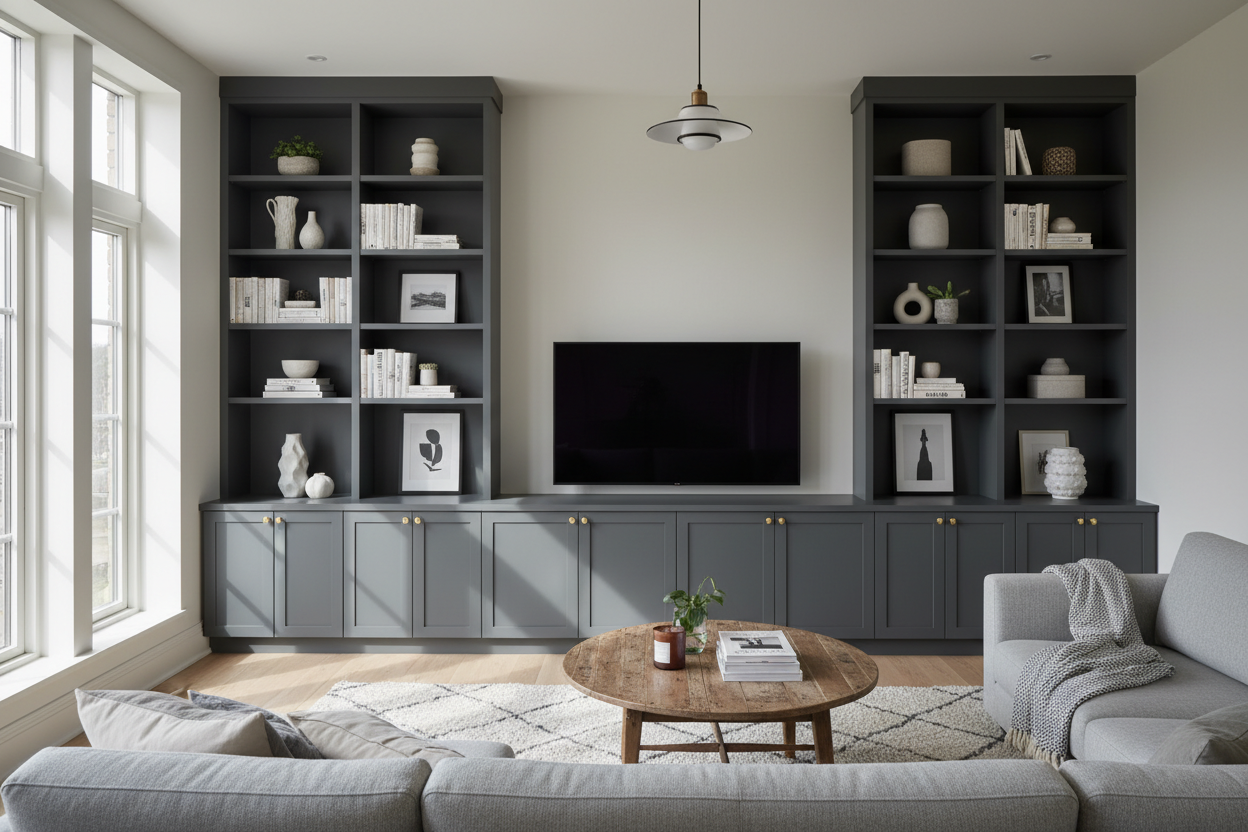
We have all stared at a blank wall in our lounge, envisioning floor-to-ceiling millwork, only to be brought back to earth by a carpenter's quote that rivals the cost of a small car. This is a classic design dilemma: balancing the desire for bespoke architectural details with a realistic budget. The solution lies in a strategic approach to ikea built-in cabinets living room layouts. With the right planning and finish work, these modular units can mimic high-end joinery, offering both the sophisticated silhouette you crave and the functional storage you need.
Quick Decision Guide: Key Features for Built-Ins
- Core Series Selection: Choose Billy for book-heavy libraries, Besta for media consoles, or Pax for deep, concealed storage.
- Vertical Integration: Ensure you have enough ceiling clearance to install crown molding, which is essential for the "built-in" visual.
- Material Prep: Standard IKEA finishes are melamine or foil; they require specific shellac-based primers (like BIN) if you plan to paint them.
- Hardware Upgrades: Swap standard knobs for heavy brass or matte black pulls to immediately elevate the tactile experience.
- Safety Anchoring: Tall units must be secured to studs, not just for safety, but to prevent shifting that cracks caulk lines.
Selecting the Right Architectural Base
The success of your project depends entirely on selecting the correct chassis for your specific needs. Not all ikea living room built ins are created equal regarding weight capacity and depth.
The Billy vs. Besta Debate
For a traditional library aesthetic, the Billy series is the standard due to its shallow depth (11 inches). However, as a designer, I often steer clients toward the Besta system if the primary goal is housing electronics or hiding clutter. The Besta is deeper (15 inches) and offers better cable management solutions. If you are attempting an ikea built in living room layout that spans an entire wall, consider mixing depths: use deeper base cabinets for weight visuals and shallower shelving above to keep the room feeling open.
The Art of Scribing and Trim
The difference between a dorm room bookshelf and luxury millwork is the elimination of gaps. In professional joinery, we call this "scribing." When installing your units, you must account for the fact that your floors and walls are rarely perfectly level or plumb.
To achieve that seamless look, you should never push the cabinet flush against the side wall. Instead, leave a 2-inch gap and cover it with a filler strip scribed to the wall's contour. Finish the top with substantial crown molding and the bottom with a continuous baseboard that matches the rest of the room. This effectively "marries" the furniture to the architecture.
Elevating Materials and Finishes
Standard IKEA doors can sometimes feel lightweight or plasticky. To combat this, focus on texture and light absorption. If you are keeping the original finish, opt for matte options over high-gloss, which tends to show fingerprints and scratches readily.
For a truly custom ikea living room built in, consider purchasing only the cabinet boxes (carcasses) from IKEA and sourcing doors from third-party manufacturers who specialize in custom fronts. This allows you to introduce shaker styles, cane webbing, or quarter-sawn walnut veneers that IKEA simply does not offer. This hybrid approach creates a high-value focal point without the custom cabinetry price tag.
My Personal Take on ikea built-in cabinets living room
I want to share a lesson learned the hard way during a renovation in a pre-war apartment. We designed a stunning wall of Billy bookcases intended to look like original 1920s architecture. We did everything right visually—crown molding, baseboards, filler strips.
However, I underestimated the "sag" factor. We loaded the 31-inch wide shelves with heavy art books and vintage architectural digests. Within six months, the shelves had a visible bow. It ruined the clean, linear aesthetic we worked so hard for. Since then, my non-negotiable rule for clients is this: if using Billy units for heavy books, buy the narrower 15-inch units or reinforce the wider shelves with a solid wood lip on the front edge. It adds rigidity and actually makes the shelf look thicker and more expensive. It’s a small structural detail that saves the design longevity.
Conclusion
Creating a bespoke environment doesn't always require a bespoke budget. By treating modular units as raw building blocks rather than finished products, you can curate a space that feels intentional and permanent. With precise trim work and thoughtful styling, your new storage wall will not just hold your belongings—it will hold the room together.
Frequently Asked Questions
Can I paint IKEA laminate cabinets successfully?
Yes, but you cannot use standard wall paint directly. You must scuff-sand the surface first and use a shellac-based primer (like Zinnser BIN) to bond to the laminate. Once primed, you can apply high-quality cabinet enamel.
How do I make the built-ins look like they reach the ceiling?
If the cabinets are shorter than your ceiling, build a simple 2x4 wooden box frame on top of the cabinets to bridge the gap. Attach drywall or plywood to the face of this box, paint it to match, and install crown molding at the very top.
Which IKEA series is best for a TV wall?
The Besta series is superior for TV walls because it is modular, allowing for various configurations of drawers and doors, and is designed specifically with ventilation and cable management for media components.

Leave a comment
This site is protected by hCaptcha and the hCaptcha Privacy Policy and Terms of Service apply.