

















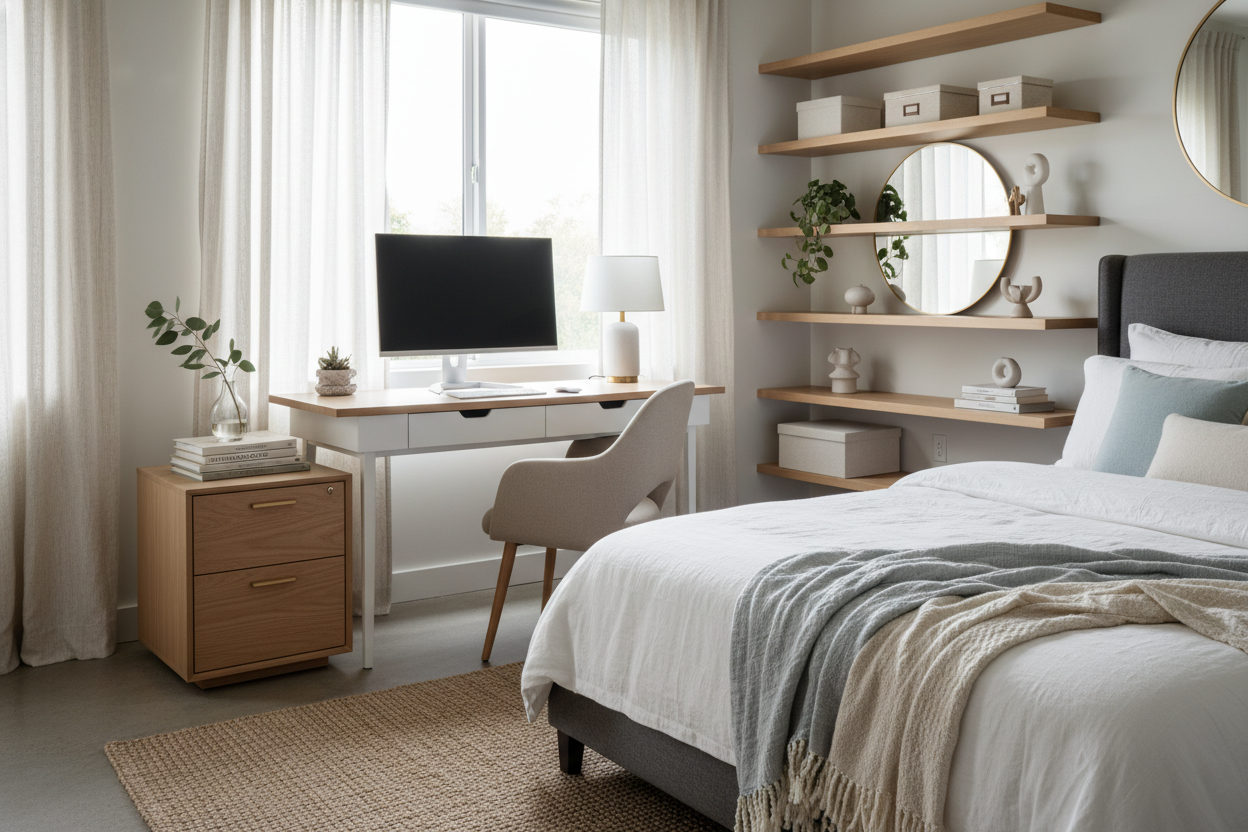
Integrating a workspace into your sanctuary is one of the most delicate balancing acts in interior design. The challenge isn't just fitting a desk in a corner; it is ensuring that the visual noise of deadlines and emails doesn't encroach on your rest. When selected carefully, bedroom office furniture can bridge the gap between high productivity and deep relaxation, creating a room that serves dual purposes without feeling cluttered or chaotic.
Key Features to Look For
- Visual Weight: Opt for desks with slender legs or floating designs to maintain an open, airy feel.
- Material Warmth: Choose natural woods or upholstered textures over cold industrial metals to match the bedroom's softness.
- Concealed Storage: Ensure the piece has drawers to hide laptops and cables, effectively turning 'off' the office mode at night.
- Scale and Proportion: The desk should never dominate the bed; it should act as a supporting character in the room's narrative.
The Art of Zoning: Layout and Placement
The placement of your office and bedroom furniture dictates the energy of the room. As a designer, my first rule is to position the desk so you are not facing the bed while working. Facing the bed induces lethargy; facing away promotes focus. Conversely, when you are in bed, you shouldn't be staring directly at a blinking computer tower.
If space allows, place the desk behind a floating headboard or in a nook. For smaller footprints, consider replacing a nightstand with a compact writing desk. This consolidates the footprint while maintaining functionality.
Selecting Materials: Cohesion is Key
To prevent the space from looking like a corporate cubicle invaded your sleeping quarters, the finish of your office furniture for bedroom use must harmonize with your existing decor. If you have a linen upholstered bed frame, a stark white laminate desk will feel jarring.
Wood Tones and Textures
Solid wood, such as walnut or white oak, brings warmth and durability. However, be mindful of mixing too many wood grains. If your dresser and bed are heavy mahogany, introduce a desk in a complementary painted finish (like charcoal or sage) or a metal-and-glass silhouette to break up the heaviness.
Ergonomics Meets Aesthetics
The chair is often the hardest piece to get right. A massive, high-back executive chair ruins the serenity of a bedroom. Instead, look for 'resimercial' designs—chairs that possess the ergonomic mechanics of office wear (lumbar support, swivel) but are wrapped in residential fabrics like velvet, boucle, or high-quality leather.
Lighting: Task vs. Ambient
Lighting defines the mood. Your bedroom relies on ambient, warm lighting (2700K), while office work requires cooler, focused task lighting (3000K-4000K). Avoid relying solely on the overhead ceiling fixture. Use a directional architectural table lamp on the desk. This creates a 'pool of light' that keeps your focus contained to the workspace, leaving the rest of the room in shadow during late-night work sessions.
My Personal Take on Bedroom Office Furniture
I learned a hard lesson about surface finishes early in my career. I once specified a stunning, high-gloss black lacquer desk for a client's master suite. It looked incredible in the mood board and on installation day. However, bedrooms generate significantly more dust and lint than dedicated offices due to bedding and textiles.
Two weeks later, the client called to say the desk looked perpetually dirty. Every speck of dust from the duvet showed up on that glossy black surface, and the fingerprints were a nightmare. We ended up swapping it for a matte, wire-brushed oak desk. The texture hid the dust perfectly and felt much warmer to the touch on cold mornings. Now, I always advise clients to test the 'touch' of the furniture—if it feels cold or high-maintenance, it doesn't belong where you sleep.
Conclusion
Merging work and rest requires a thoughtful approach to scale, texture, and layout. By selecting pieces that prioritize visual quietness and residential comfort, you can build a space that supports your career goals during the day and wraps you in comfort at night.
Frequently Asked Questions
How do I hide my computer monitor in a bedroom office?
The best approach is to use a desk with a flip-top compartment or a dedicated armoire desk. If that isn't an option, simply draping a linen throw over the monitor when not in use can soften the technological look.
Can I use a dining chair as a desk chair to save space?
For short bursts of work (under 2 hours), a dining chair is acceptable. However, for full workdays, this will lead to back strain. Look for a dining-style chair that has hidden ergonomic features or a seat cushion with high-density foam.
What is the minimum depth for a functional bedroom desk?
To comfortably fit a laptop and a notepad without feeling cramped, aim for a depth of at least 20 to 24 inches. Anything shallower is strictly a console table and will frustrate you during actual work.


Leave a comment
This site is protected by hCaptcha and the hCaptcha Privacy Policy and Terms of Service apply.