

















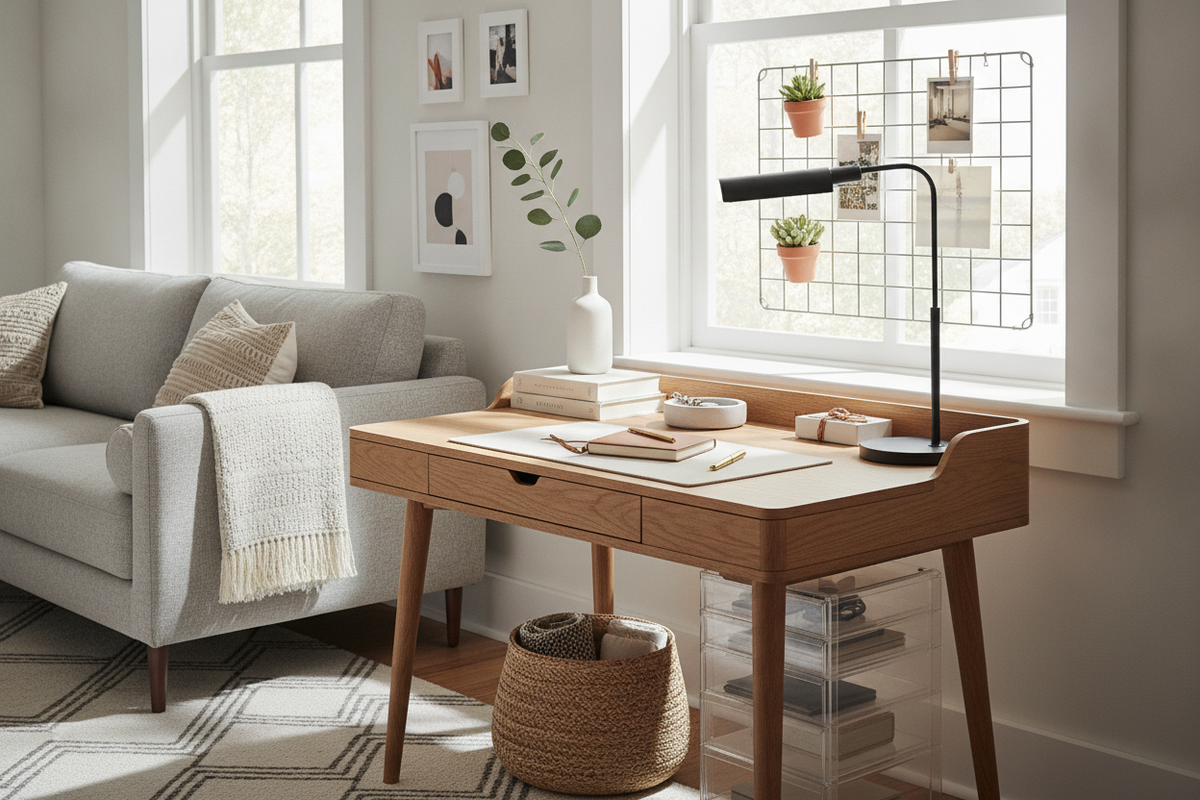
Principles of Small Desk Decor: Balancing Aesthetics and Function
Learning how to decorate a small desk requires a shift from mere ornamentation to purposeful curation. When working with compact surface dimensions, every single object must justify its footprint. The core challenge of compact workstation design is maintaining an open, uncluttered work zone while still infusing personal warmth and character into the room.
Achieving this balance begins with preserving negative space. Leaving breathing room around your computer monitor, keyboard, and writing zone prevents visual overwhelm and allows decorative accents to stand out naturally. By prioritizing visual lightness, streamlined silhouettes, and deliberate placement, you can discover how to decorate your desk at home without sacrificing the practical utility required for daily tasks.
Vertical Layering: Expanding Visual Style Beyond the Tabletop
One of the most effective techniques when learning how to decorate office desk at home layouts is vertical expansion. When horizontal square footage is limited, the wall space directly behind and above the workstation provides an expansive canvas for aesthetic expression and storage integration.
Utilizing Above-Desk Wall Space and Floating Shelves
Incorporating wall-mounted ledges, hanging grids, or pinboards allows you to elevate framed artwork, ceramic vessels, and motivational prints completely off the primary desk surface. Exploring smart above-desk storage solutions enables you to blend decorative display niches with practical shelving. Hanging a floating shelf several inches above monitor height establishes an elevated focal point for trailing pothos, ceramic candle holders, or small sculptural accents while keeping the desktop pristine.
Monitor Risers and Under-Tier Styling
A low-profile monitor stand or riser introduces an immediate two-tier architecture to compact desks. The top surface raises your screen to a comfortable viewing height while providing a small platform for a sleek clock or miniature succulent. Meanwhile, the hollow under-tier creates a dedicated parking spot for sliding your keyboard and mouse pad away at the end of the day, instantly transforming the desk into a clean, styled surface.
Curating Dual-Purpose Decor: Practical Accessories That Look Elevated
The secret to mastering how to decorate desk at home setups is selecting accessories that fulfill a functional role while delivering high visual value. Decorative items should not simply occupy space; they should streamline your workflow or organize your daily tools.
Textiles and Surfaces: The Impact of Desk Pads and Mats
A quality desk mat made from vegan leather, felt, or linoleum serves as an immediate visual anchor. It demarcates your central work zone, cushions your forearms, and introduces tactile texture. A muted sage, camel, or slate grey mat establishes a cohesive color base that visually unifies your monitor, mouse, and stationery, making the entire surface feel tailored rather than crowded.
Sculptural Lighting and Minimalist Cable Concealment
Bulky traditional table lamps consume valuable desk surface. Opting for a slim clamp-on task light or an architectural architect-style lamp directs illumination precisely where needed without demanding base space. Pairing thoughtful lighting with under-desk cable management trays and matching wire sleeves eliminates tangled cord clutter, preserving clean sightlines that make small spaces feel noticeably larger. If you are also styling dedicated corporate work areas, exploring techniques for decorating a compact office workspace can offer complementary perspectives on maintaining polished professionalism.
Micro-Zoning Strategies for Different Compact Desk Layouts
Compact desks come in various configurations, and your decorative approach should adapt to the underlying furniture geometry. Dividing the surface into intentional micro-zones ensures that decorative items never intrude on high-activity movement zones.
Decorating Corner and L-Shaped Compact Workstations
Corner workstations present unique spatial dynamics. The deep central apex is often difficult to reach comfortably for typing, which makes it the ideal anchor for decorative styling. Positioning a sculptural lamp, a tall botanical arrangement, or a rotating pen cylinder in this corner creates visual depth without encroaching on primary elbow room. Selecting a minimalist corner desk with built-in storage further maximizes utility by combining deep surface angles with integrated lower compartments.
Harmonizing Open Tabletops with Adjacent Storage Furniture
If your setup features a narrow writing table or floating console, tabletop clutter accumulates rapidly. The most effective styling solution is offloading secondary supplies to adjacent furniture pieces. Pairing a simple desk with a dedicated multi-drawer storage desk unit creates closed compartments for paperwork, tech peripherals, and stationery. With functional necessities stored neatly behind doors and drawer fronts, your visible tabletop remains an intentional showcase for curated books, sleek trays, and calming accents.
Material Palettes, Textures, and Greenery for Small Spaces
Creating an aesthetically pleasing compact desk relies heavily on a restrained, harmonious material palette. Mixing too many disparate finishes in a tight area can create visual discord.
- Monochromatic Foundations: Warm whites, soft greys, and light woods keep the workspace feeling airy and open.
- Tactile Contrast: Introduce depth through textured ceramic pen cups, brushed brass clips, or woven storage baskets rather than loud patterns.
- Compact Botanicals: Small plants such as air plants, low-light ferns, or trailing ivies inject natural energy and organic curves into angular workstation setups.
- Catchall Trays: Small stone or wooden dishes gather stray paperclips, thumb drives, and keys into a single styled cluster rather than scattered loose items.
Daily Maintenance Framework: Keeping Your Curated Setup Clutter-Free
Even the most artfully decorated small desk can quickly lose its charm if daily habits allow loose papers and coffee mugs to accumulate. Establishing a brief, intentional reset routine at the conclusion of each workday ensures your aesthetic styling remains intact.
- Clear Active Paperwork: File current project notes into adjacent folders or vertical desktop sorters.
- Return Loose Tools: Place writing utensils back into their designated cups or trays.
- Dock Peripherals: Slide keyboards under risers and stow charging cables in their clips.
- Wipe Down the Pad: A quick dusting of the desk mat maintains crisp, clean surfaces for the next morning.
By treating your compact desk as a unified ecosystem of intentional decor, vertical layers, and thoughtful storage, you create a workspace that inspires creativity and delivers calm focus throughout your day.

Leave a comment
This site is protected by hCaptcha and the hCaptcha Privacy Policy and Terms of Service apply.