

















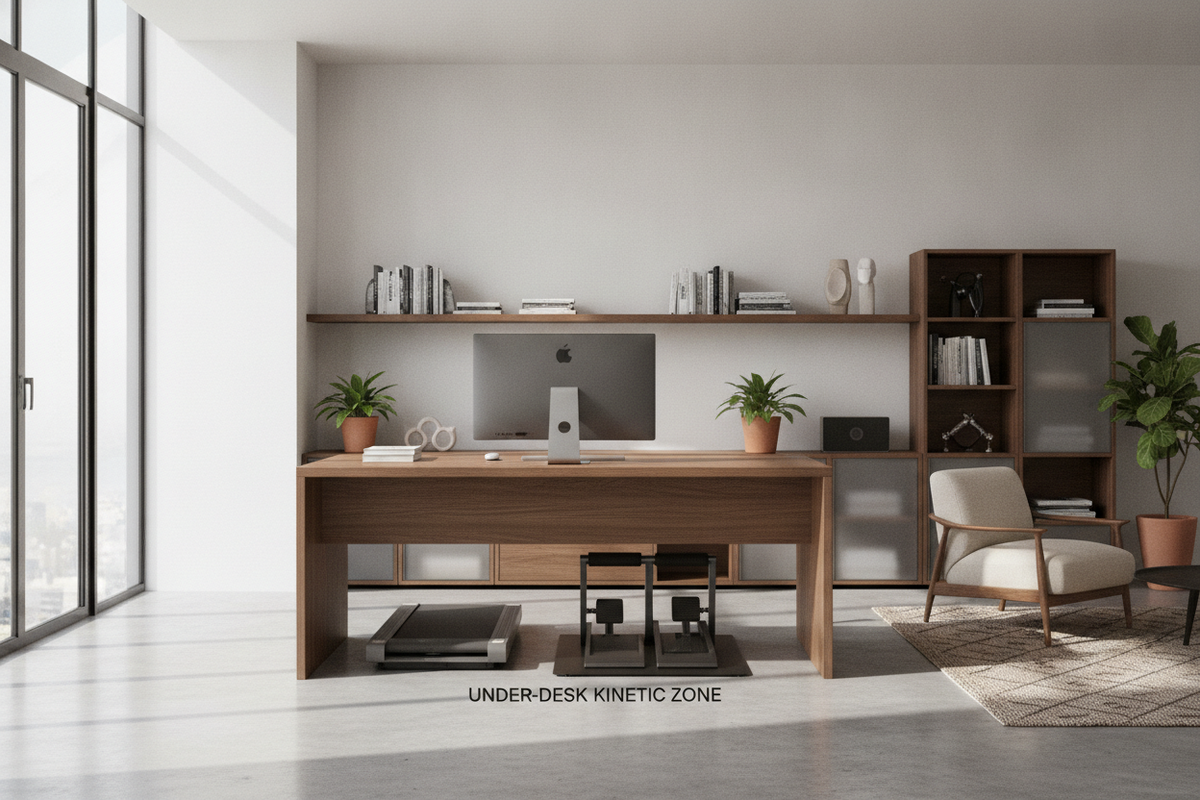
The Exercise Desk Concept: Balancing Active Movement and Ergonomic Workstation Layouts
Modern professionals increasingly look for ways to introduce gentle, continuous physical activity into extended desk sessions. An exercise desk setup transforms a conventional workstation into a dynamic zone where typing, researching, and communicating can happen alongside measured physical movement. Integrating fitness desk accessories into an everyday office arrangement requires thoughtful planning around furniture proportions, legroom volume, and task ergonomics.
Rather than treating physical activity and professional computer tasks as competing priorities, a well-planned workstation accommodates both without compromising focus or posture. When establishing an active layout, the primary structural goal is preserving a natural reach zone for your keyboard, mouse, and display while leaving unobstructed clearance for kinetic tools beneath the surface. Exploring the comprehensive work desk office guide can help clarify fundamental furniture requirements before introducing specialized motion gear into your room.
Core Categories of Desk Exercise Equipment and Spatial Demands
Different forms of desk exercise equipment introduce unique dimensional and mechanical factors to an office. Choosing the right device depends on desk height adaptability, available floor surface, and the nature of your daily workflow.
Under-Desk Pedal and Elliptical Units for Seated Work
Seated motion devices, including compact pedal cyclers and low-profile mini ellipticals, are engineered to sit directly inside the knee-well of a standard desk. These units enable continuous leg motion while the torso remains anchored in a standard office chair. Because the movement path can cause vertical knee displacement, the clearance between your thighs and the lower edge of the desktop or pencil drawer serves as the primary limiting factor. Low-angle elliptical paths tend to produce less upward knee movement than circular pedal units, making them practical under slightly lower desk frames.
Walking Pads and Treadmill Bases for Standing Workstations
Flat walking treadmills and slim pads are paired with height-adjustable or elevated standing desks. These continuous belt platforms rest along the floor centerline, requiring sufficient floor depth behind the desk frame to accommodate step length and dismounting safety margins. Setting up a standing walking surface calls for a sturdy, wobble-free desktop frame that can maintain monitor stability while you walk at a steady, measured pace.
Compact Resistance and Mobility Tools for Cubicles and Small Offices
In shared commercial environments or smaller cubicles where motorized equipment might introduce acoustic or spatial challenges, passive tools offer an alternative. Under-desk foot rockers, dynamic balance boards, seated resistance bands, and isometric footrests provide subtle opportunities for ankle mobility and postural adjustments without demanding electrical outlets or large footprints.
Dimensional Clearances and Furniture Fit: Knee-Well and Foot-Zone Geometry
The successful pairing of an exercise desk setup with room furniture hinges on precise dimensional planning. A standard seated desk often features lower crossbars, central support rails, or integrated modesty panels that can restrict forward foot reach.
- Vertical Knee Clearance: Ensure adequate open height between the highest point of your pedal stroke or stride and the underside of the desktop surface.
- Knee-Well Width: Verify that the span between side pedestals or frame legs accommodates both the equipment housing and natural leg splay during movement.
- Surface Depth: Choose a desktop deep enough to position screens at a comfortable viewing distance while keeping the kinetic unit properly centered below.
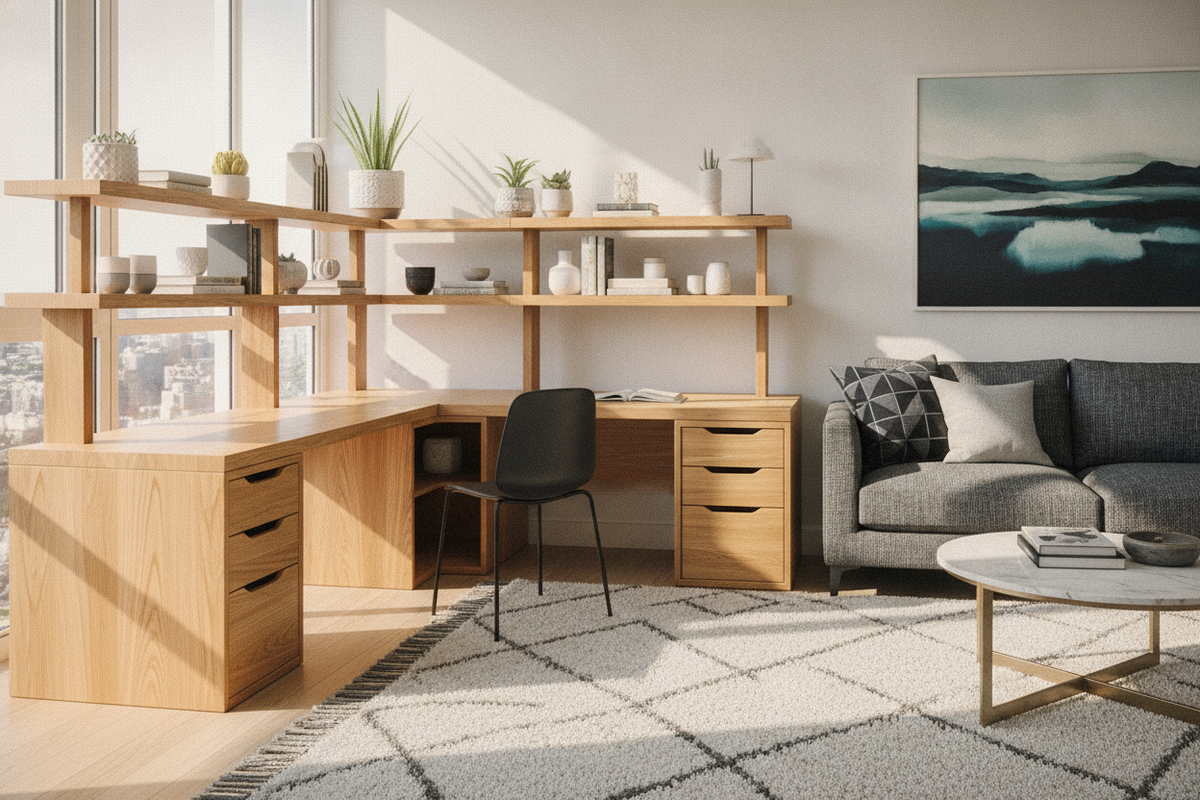
For rooms where spatial flexibility is critical, opting for an expansive corner workstation like this office desk product provides generous open space beneath one wing while reserving adjacent surfaces for stationary organization.
Workstation Stability, Surface Vibration Dampening, and Monitor Placement
Rhythmic movement naturally introduces subtle vibrations that can travel upward through desk legs to monitor mounts and keyboard surfaces. Unchecked monitor wobble can strain visual tracking during reading or precision mousing tasks.
To mitigate kinetic transfer, place dense high-density rubber or polyurethane equipment mats beneath walking pads and pedal bases. These mats absorb minor mechanical hums and protect delicate floor surfaces from pressure marks. Additionally, prioritize heavy-gauge steel desk frames with wide ground feet or dual-column motorized legs. Securing displays on heavy-duty, clamp-on monitor arms with integrated tension joints ensures screens remain steady even when your lower body is in active motion.
Cable Routing, Peripheral Management, and Storage Integration
Integrating powered equipment beneath a desk introduces power cords, control cables, and remote tethers into an area already occupied by computer wiring. Loose cables around moving pedals or tread tracks present snagging risks and visual clutter.
Route all equipment cables along outer leg channels using hook-and-loop straps or adhesive conduit channels, keeping the central kinetic foot zone entirely free of hanging wires. When physical sessions conclude, having a dedicated storage location prevents walking pads and accessories from becoming tripping hazards. Integrating dedicated cabinetry, such as a matching office desk product, allows you to store secondary accessories, resistance bands, and footwear neatly out of sight when hosting video calls or returning to stationary desk work.
Decor Harmony and Professional Office Layout Alignment
An active office does not need to resemble a commercial gym. Maintaining an elevated aesthetic requires selecting equipment with matte, neutral finishes that blend with existing wood tones, metal accents, and upholstered seating.
Position walking pads along natural room sightlines so they do not block primary walkways or door swings. If your workspace serves as an executive suite or client-facing environment, consider reviewing the principles in this office work jobs guide to balance high-end interior finishes with discreet wellness components.
Workday Workflow Cadence: Transitioning Between Active and Stationary Modes
A functional exercise desk configuration supports seamless transitions throughout the business day. Alternating between seated analytical work, upright standing tasks, and active low-intensity movement intervals keeps the workday engaging without causing mental fatigue or physical disruption.
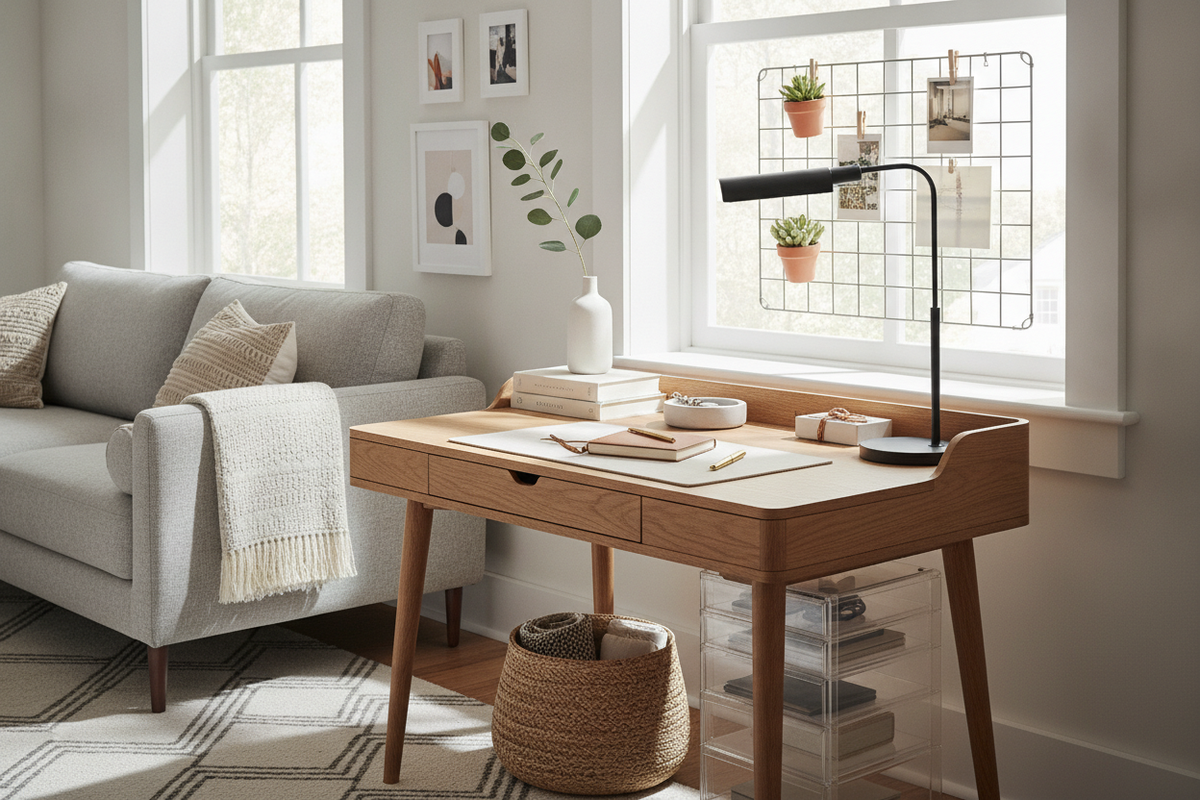
Organizing your desktop surfaces with dedicated zones for stationery, hydration, and input devices ensures that shifting your workstation between seated, standing, and walking modes takes only seconds. You can explore curated styling methods in this desk office work guide to maintain a polished, functional desktop regardless of how often you transition between active movement and quiet focus.

Leave a comment
This site is protected by hCaptcha and the hCaptcha Privacy Policy and Terms of Service apply.