








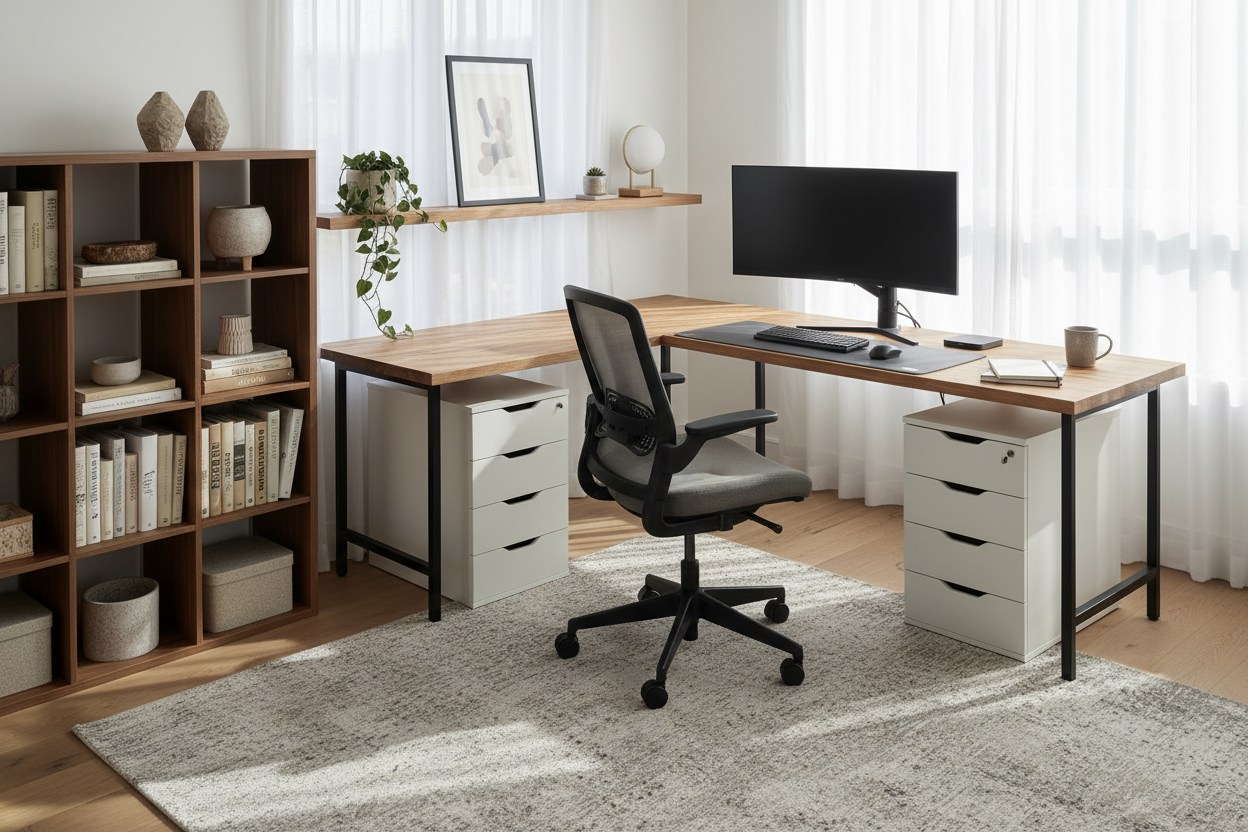
Walking into a home office that feels disjointed can immediately stifle creativity. The challenge many homeowners face isn't just finding a surface to work on; it is creating a cohesive environment where function meets sophisticated design without the custom joinery price tag. This is where a strategic approach to a desk set ikea offers becomes invaluable. With the right eye for modularity and finish, you can bypass the "flat-pack" aesthetic and achieve a workspace that feels intentional, grounded, and tailored to your specific workflow.
Quick Decision Guide: Selecting Your System
Before heading to the warehouse, consider these core factors to ensure your selection endures beyond the current trend cycle:
- Material Composition: Distinguish between honeycomb paper filling (lightweight, echoey) and particleboard or wood veneer (dense, durable).
- Modularity: Prioritize systems like the ALEX or MITTBACK series that allow you to swap legs for storage units.
- Depth Requirements: Standard desks are often 23 inches deep; for multi-monitor setups, seek countertops (25+ inches) for better focal ergonomics.
- Visual Weight: Balance heavy storage bases with lighter, open-frame legs to keep the room feeling spacious.
Elevating the Standard: Materiality and Texture
As a designer, I often advise clients to look past the default combinations displayed on the showroom floor. An ikea desk set is rarely sold as a single, immutable box; rather, it is a kit of parts waiting to be curated. To achieve a luxury aesthetic, focus on the tabletop material.
Veneer vs. Laminate
While white laminate is clean, it can feel clinical and show wear quickly. Opting for a wood veneer top adds immediate warmth and tactile quality. The natural grain variation provides a visual anchor in the room, making the desk feel like a permanent fixture rather than a temporary solution. If you must go with a solid color, matte finishes generally read as more expensive than high-gloss options, which tend to highlight fingerprints and dust.
Space Planning and Visual Balance
The placement of your desk set dictates the flow of the entire room. A common error is pushing a heavy desk against a wall in a small room, which creates a "dead" visual zone.
The Silhouette Strategy
If your space is compact, avoid solid panel legs. Instead, mix and match. Use a drawer unit on one side for necessary storage and a trestle leg or open metal leg on the other. This asymmetry creates negative space, allowing light to pass through and making the footprint appear smaller than it is. This is crucial for maintaining an airy atmosphere in multi-purpose rooms.
Ergonomics: Beyond the Chair
A beautiful desk is useless if it causes fatigue. Standard dining height is often too high for typing, yet many generic desks default to this 29-30 inch range. When selecting adjustable legs (like the OLOV), you have the luxury of dialing in the height to your specific elbow clearance. Ensure your setup allows your feet to rest flat on the floor with your knees at a 90-degree angle. If you choose a thicker countertop hack, remember to account for that extra inch of thickness when calculating your chair height.
Lessons from My Own Projects
I want to share a candid reality from a recent project in a Brooklyn brownstone. We utilized a popular drawer-and-countertop combination to create a 10-foot workspace for a couple. While it looked stunning in photos, the practical application revealed a nuance often overlooked: sagging.
We used a particleboard top that spanned roughly 50 inches between the drawer units without a center support leg. Within six months, I noticed a visible dip in the center—no more than a few millimeters, but enough to annoy me. Furthermore, the "hollow" sound of placing a ceramic mug down on the honeycomb-structure tops (like the Lagkapten) felt cheap compared to the solid thud of a denser material.
My advice? Always buy the center support leg (ADILS) if your span exceeds 30 inches, even if you think you don't need it. And for the drawer units, buy a roll of clear silicone bumpers. Placing these between the drawer unit and the tabletop prevents the top from sliding around without needing to screw it in permanently, allowing you to reconfigure the layout later without leaving unsightly holes.
Conclusion
Designing a workspace is about more than utility; it is about creating an environment that respects your time and energy. By thoughtfully selecting components and prioritizing material quality, you can curate a desk set that serves as a sophisticated foundation for your daily endeavors. Treat these pieces as architectural elements, and your home office will thank you.
Frequently Asked Questions
How can I make my IKEA desk set look more expensive?
Focus on hardware and lighting. Swapping out standard drawer pulls for brass or leather hardware instantly elevates the piece. Additionally, using cable management trays to hide cords creates the clean, seamless look associated with high-end custom furniture.
Is the honeycomb paper filling durable enough for daily use?
For laptop work and writing, yes. However, if you plan to mount heavy monitor arms or clamp-on accessories, the pressure can crack or dent the hollow structure. For heavy setups, stick to solid wood, veneer, or high-density particleboard tops.
Can I cut an IKEA countertop to fit a specific alcove?
Yes, but with a caveat. Most veneer countertops come with "edge banding" strips to cover the raw cut side. You must use a fine-tooth saw blade and tape the cut line to prevent chipping the veneer. If you are using a hollow-core top, you cannot cut it, as it will expose the internal paper structure and lose structural integrity.


Leave a comment
This site is protected by hCaptcha and the hCaptcha Privacy Policy and Terms of Service apply.