

















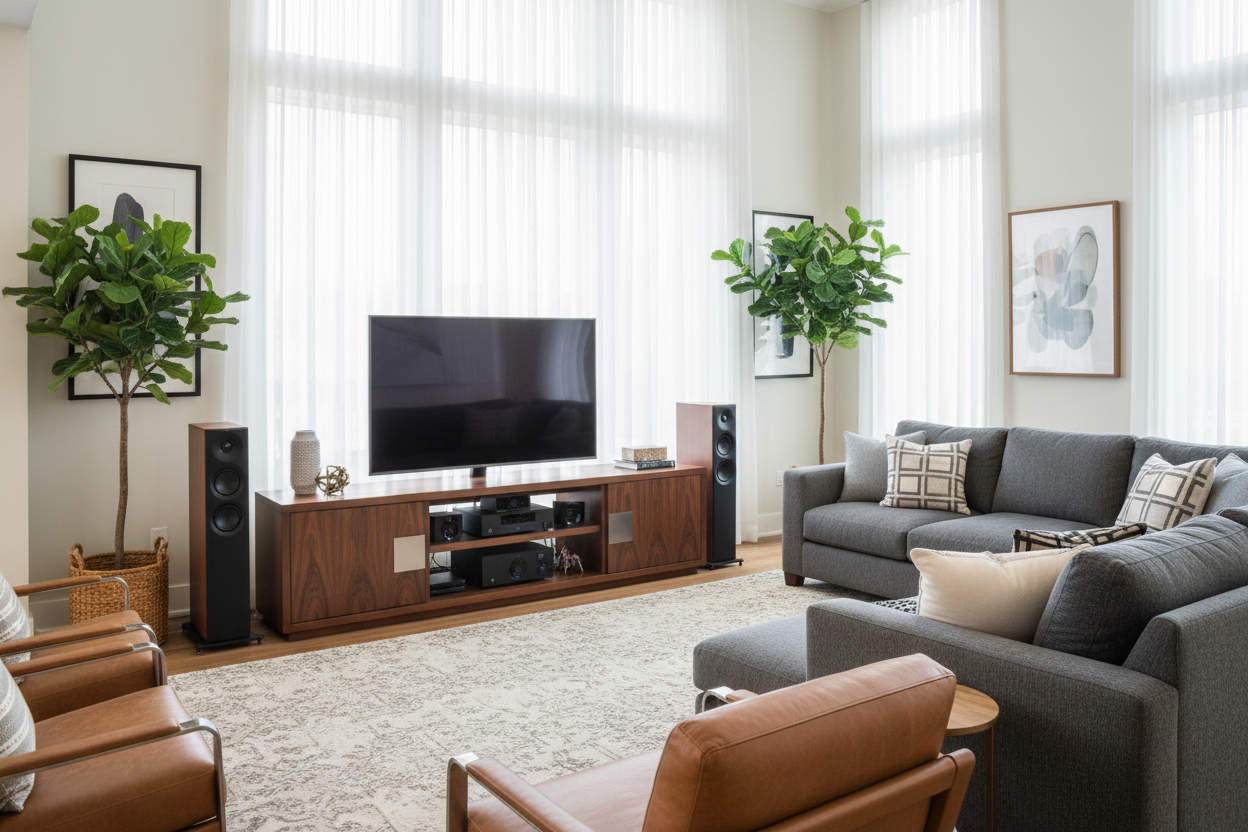
We've all seen it: a beautifully designed living room dominated by a massive, tangled web of black cords dangling beneath a newly mounted television. Or worse, a sleek flat-screen balanced precariously on a piece of furniture that looks completely out of proportion. Choosing the right home theatre tv stand is often an afterthought, but it is the anchor of your entire viewing experience.
A well-chosen media unit does more than just hold a screen. It manages visual clutter, protects expensive electronics from early failure, and grounds the room's design. In this guide, I will walk you through exactly what to look for—from ventilation requirements to visual weight—so you can make a purchase that actually serves your space and lifestyle.
Quick Decision Guide
- Width matters: Your stand should be at least two to three inches wider than your television on either side to maintain visual balance and prevent a top-heavy look.
- Check the depth: Standard AV receivers require at least 18 to 20 inches of depth, plus room for cable clearance in the back. Standard sideboards are usually too shallow.
- Prioritize ventilation: Closed cabinets look tidy, but without slotted doors or rear vents, your electronics will overheat and fail prematurely.
- Account for eye level: The center of your TV screen should sit exactly at eye level when you are seated, which dictates the ideal height of your stand.
Space Planning & Layout
Nailing the Proportions
One of the most common mistakes I see in North American family rooms is a TV that dwarfs the furniture beneath it. If you have a 75-inch screen, a tiny 60-inch stand will make the room feel anxious and unbalanced. When planning a home theatre entertainment center, always scale the furniture to the wall, not just the TV. If you have a long, empty wall, consider a low, elongated home theatre console to fill the negative space without adding unnecessary bulk to the room.
Accommodating the Tech
Before you even look at finishes, inventory your gear. Soundbars, gaming consoles, amplifiers, and streaming boxes all need a specific home. A dedicated home theater media center will have adjustable compartments for these items. If you are designing a dedicated viewing space, a larger movie room entertainment center might be necessary to house massive center-channel speakers and heavy subwoofers.
Material & Build Quality
Ventilation is Non-Negotiable
You might find a gorgeous mid-century credenza, but if it lacks rear cutouts, it is not a functional home theater furniture cabinet. Amplifiers and gaming consoles generate significant heat. Look for a modern home theater cabinet with slatted wood, acoustically transparent fabric, or perforated metal doors. These materials allow air to circulate and infrared remote signals to pass through seamlessly.
Durability for Daily Use
In high-traffic family rooms, the best home theater cabinet is one that can take a beating. Solid wood offers incredible longevity, but high-quality engineered wood with a durable veneer is often more resistant to warping from the localized heat of electronics. Pay attention to the hinges and drawer glides; soft-close hardware is a must for any home theater storage cabinet to prevent rattling during heavy bass scenes.
Style & Coordination
Your home theater furniture tv stand shouldn't look like a commercial server rack. The goal is to integrate the technology into your existing decor. If your style is transitional, look for a home theater wall cabinet with shaker-style doors and a rich walnut or warm oak finish. For contemporary spaces, floating home theater system cabinets free up floor space and create a clean silhouette. When reviewing home cinema designs entertainment center layouts, remember that dark matte finishes help the furniture recede into the background, allowing the screen to remain the true focal point.
Lessons from My Own Projects
A few years ago, I designed a custom home theater cabinet box for a client's suburban basement remodel. We chose a stunning, solid white oak piece with heavy, solid doors to hide all the home theater storage. It looked absolutely flawless in the project photographs.
Within two weeks, their high-end AV receiver shut down completely. I learned the hard way that solid wood doors trap heat like an oven. We had to retrofit the cabinet with an internal whisper-fan system and cut exhaust vents into the top panel—an expensive fix that could have been easily avoided. Now, whenever I specify home theater stands furniture, I insist on breathable panels or louvered doors. Function has to lead the way when heavy-duty electronics are involved.
Frequently Asked Questions
How deep should a theater room media cabinet be?
Most standard living room consoles are around 15 inches deep, which is too shallow for serious audio-visual gear. Look for a cabinet that is at least 20 to 22 inches deep to accommodate AV receivers, plug clearances, and adequate airflow behind the units.
Can I use a regular sideboard instead of a media stand?
You can, but it requires modification. A standard dining sideboard won't have the necessary cable management holes or ventilation. If you go this route, be prepared to drill holes in the back panel and potentially remove the back entirely behind heat-generating devices.
How do I hide the wires in my home theater setup?
Choose a stand with a dedicated cable management channel. Use zip ties or velcro straps to bundle power cables separately from audio/video cables to prevent signal interference. A stand with a solid back panel featuring strategic, rubber-grommeted cutouts will hide the wall outlets and keep the mess completely out of sight.


Leave a comment
This site is protected by hCaptcha and the hCaptcha Privacy Policy and Terms of Service apply.