

















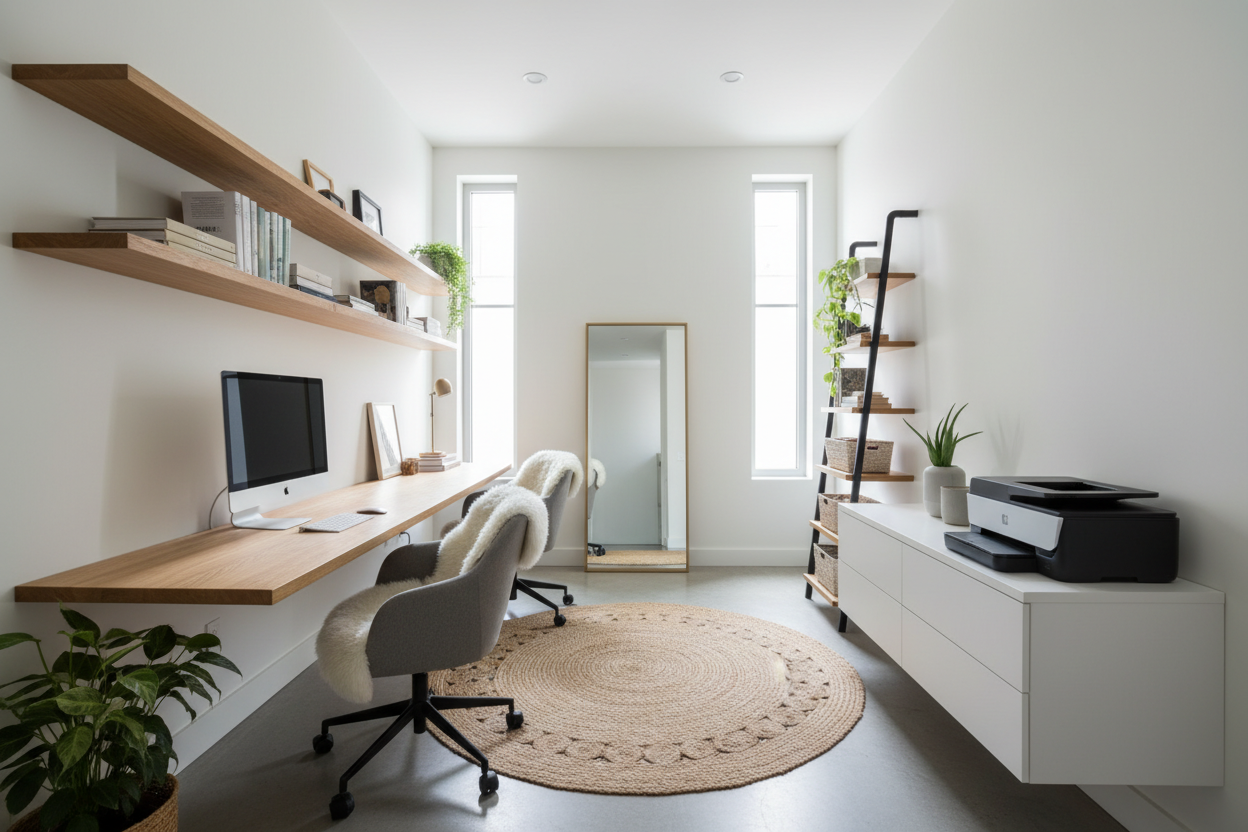
We have all been there: trying to squeeze a productive workday into a room that was clearly designed as a nursery, a walk-in closet, or an awkward alcove. When your chair bumps the wall every time you stand up, it is incredibly hard to feel inspired. If you are exhausted by a cramped workspace, finding the right home office layout ideas for small office environments is essential. In this guide, I will walk you through how to arrange your furniture to maximize square footage, maintain proper clearances, and create a room that actually breathes.
Quick Decision Guide
- Float the desk cautiously: In rooms under 100 square feet, pushing the desk against a wall or window is usually necessary to maintain a minimum 36-inch walkway for your chair.
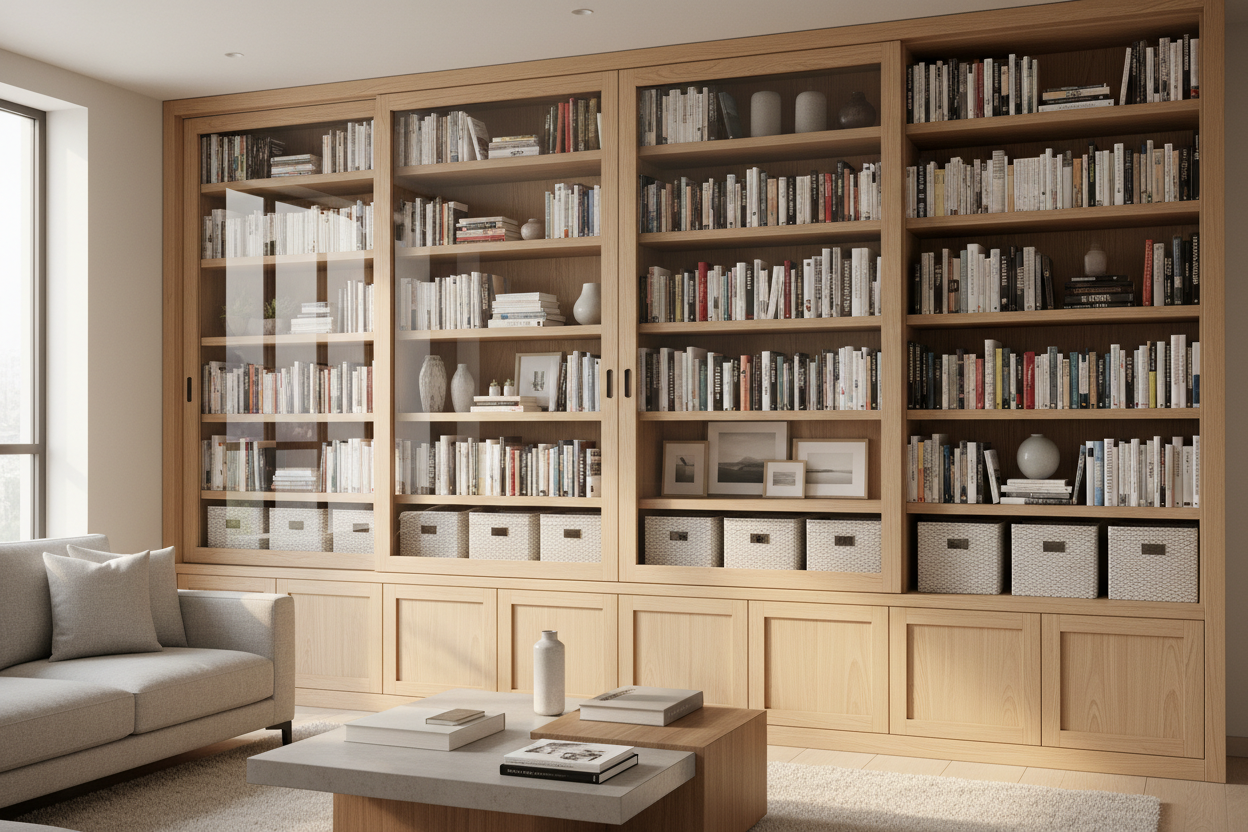
- Utilize vertical real estate: Swap wide filing cabinets for tall, narrow shelving units to draw the eye up and save precious floor space.
- Mind the visual weight: Choose desks with open legs rather than heavy, solid modesty panels to make the room feel larger.
- Prioritize ergonomics over aesthetics: A beautiful vintage dining chair will ruin your back; invest in a proper task chair, even if it disrupts the design slightly.
Space Planning: Making Every Inch Count
When dealing with limited square footage, standard layout rules have to bend. The primary goal is establishing a clear traffic path. You need at least 36 inches of clearance behind your desk to pull your chair out comfortably without scraping the drywall or feeling trapped.
Navigating Awkward Proportions
One of the most common challenges I see in suburban homes is the long narrow home office layout. In these bowling-alley spaces, placing a desk in the center cuts the room in half and creates an immediate bottleneck. Instead, create distinct zones. Place a slim, rectangular desk at the far end facing the door to command the room, or anchor it along one of the long walls with a narrow gallery wall above it to balance the awkward proportions.
Choosing the Right Furniture Silhouette
Small rooms demand furniture with a lighter footprint. Massive executive desks made of solid mahogany are beautiful, but they will swallow a tiny room whole.
Desks That Breathe
Look for writing desks with slim metal or tapered wood legs. Negative space—the empty area under and around your furniture—tricks the brain into perceiving a larger room. If you need storage, opt for a desk with shallow pencil drawers rather than heavy side pedestals. Use wall-mounted floating shelves or tall, slender bookcases for your heavier items like binders and printers.
Designer's Honest Take
Early in my career, I designed a 9x9 foot office for a client in Toronto. They insisted on a deep, L-shaped corner desk. I agreed, thinking we could make it work with the right styling. Once it was delivered, the room instantly felt like a corporate cubicle. The desk technically fit the dimensions, but it trapped the user in a corner with zero breathing room.
We ended up swapping it for a sleek, wall-mounted floating desk. It opened up the floor plan beautifully, but I will be completely honest: managing the cables was an absolute nightmare. With no back panel to hide the mess, I spent hours zip-tying monitor cords and power strips to the underside of the desk. Floating and open-leg furniture looks incredible in small spaces, but you have to be prepared to wage war on your computer cables.
Frequently Asked Questions
Where should a desk be placed in a small office?
Ideally, place your desk facing the door or a window. If space is incredibly tight, anchoring it against the longest solid wall opens up the center of the room, preventing a cramped feeling.
How do I make a small home office look bigger?
Maximize natural light, use a cohesive light color palette, and choose furniture with exposed legs. Keeping the floor visible creates the illusion of more square footage.
Is an L-shaped desk good for a small space?
Usually, no. L-shaped desks consume a massive amount of floor space and dictate the entire layout. Stick to a straight rectangular desk unless you have very specific multi-monitor requirements that demand the extra depth.

Leave a comment
This site is protected by hCaptcha and the hCaptcha Privacy Policy and Terms of Service apply.