

















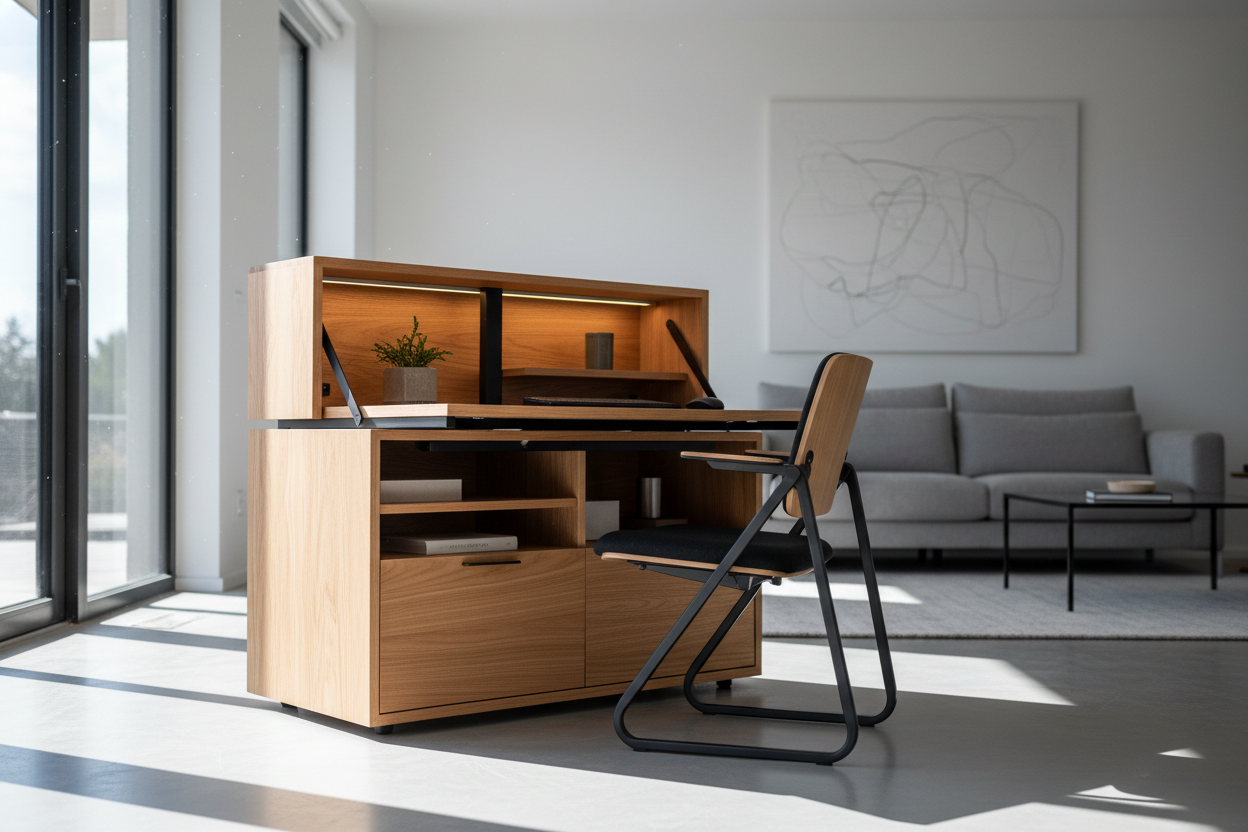
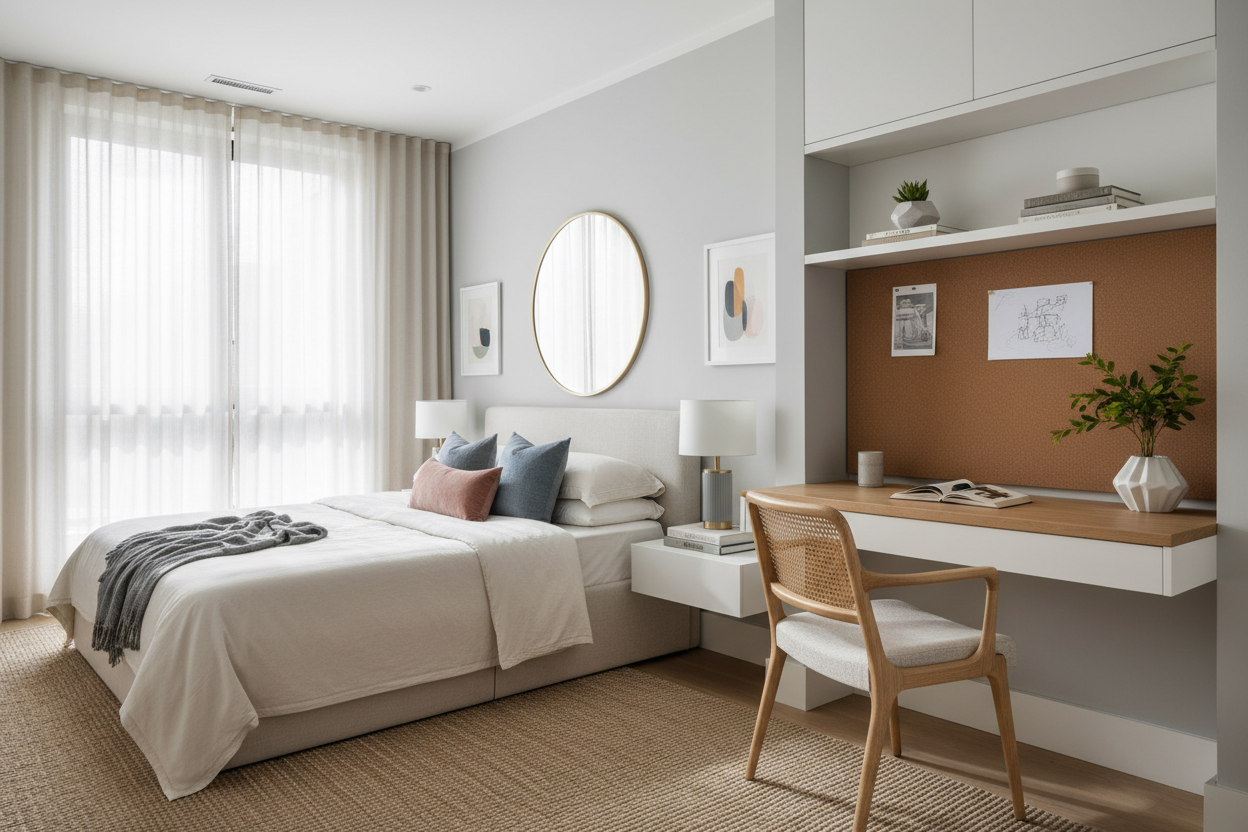
It usually starts with a dining room table covered in paperwork, or a corner of the bedroom that slowly accumulates monitors and tangled cords. Finding a dedicated workspace in a typical North American home often means sacrificing a guest room or compromising your living room's aesthetic. When space is tight, a home office in a box promises the ultimate solution: a fully functional workstation that folds away into a tidy, unassuming cabinet at the end of the day.
But before you purchase an all-in-one desk armoire or fold-out credenza, you need to look past the clever marketing photos. Many of these units struggle to balance ergonomics with aesthetics, leaving you with a beautiful cabinet that is painful to work at. In this guide, we will break down how to evaluate the build quality, plan for the physical footprint, and choose a piece that actually functions for a standard eight-hour workday.
Quick Decision Guide
- Check the knee clearance: Many fold-out desks feature shallow drop-down leaves that leave your knees bumping against interior shelving. Look for at least 24 inches of clearance depth.
- Verify the hinge weight capacity: The hinges supporting a drop-down work surface must hold the weight of your arms, laptop, and monitors. Opt for heavy-duty metal piano hinges over standard cabinet hardware.
- Account for the open footprint: A cabinet might only be 20 inches deep when closed, but require 60 inches of floor space once the desk is extended and a chair is pulled out.
- Prioritize cord management: A true workspace needs dedicated, pre-drilled cable routing. Without it, you cannot close the cabinet without unplugging your equipment.
Space Planning and Layout
The primary appeal of concealed workspaces is their minimal visual weight when closed. However, the biggest mistake buyers make is failing to plan for the unit's fully deployed footprint. You are not just fitting a cabinet into your room; you are fitting a desk and a rolling chair.
The 36-Inch Clearance Rule
When placing your unit in a living room or bedroom, you need to maintain proper traffic flow. Once the desk surface is extended, you must leave a minimum of 36 inches behind the chair for comfortable seating and movement. If placing the unit behind a sofa, ensure the negative space between the back of the sofa and the open desk does not create a frustrating bottleneck.
Comfort and Ergonomics
Furniture that tries to do two things at once often does neither perfectly. The challenge with a concealed desk is achieving the correct ergonomic proportions while maintaining the silhouette of standard living room cabinetry.
Table Height and Monitor Depth
Standard desk height is roughly 29 to 30 inches from the floor. Many fold-out credenzas sit slightly higher to accommodate lower storage drawers, which can cause shoulder strain if you are typing all day. Additionally, the interior depth dictates how far back you can push your monitor. If the internal shelving is too shallow, your screen will sit too close to your face, causing eye fatigue. Always measure your current monitor base before assuming it will fit inside.
Style and Coordination
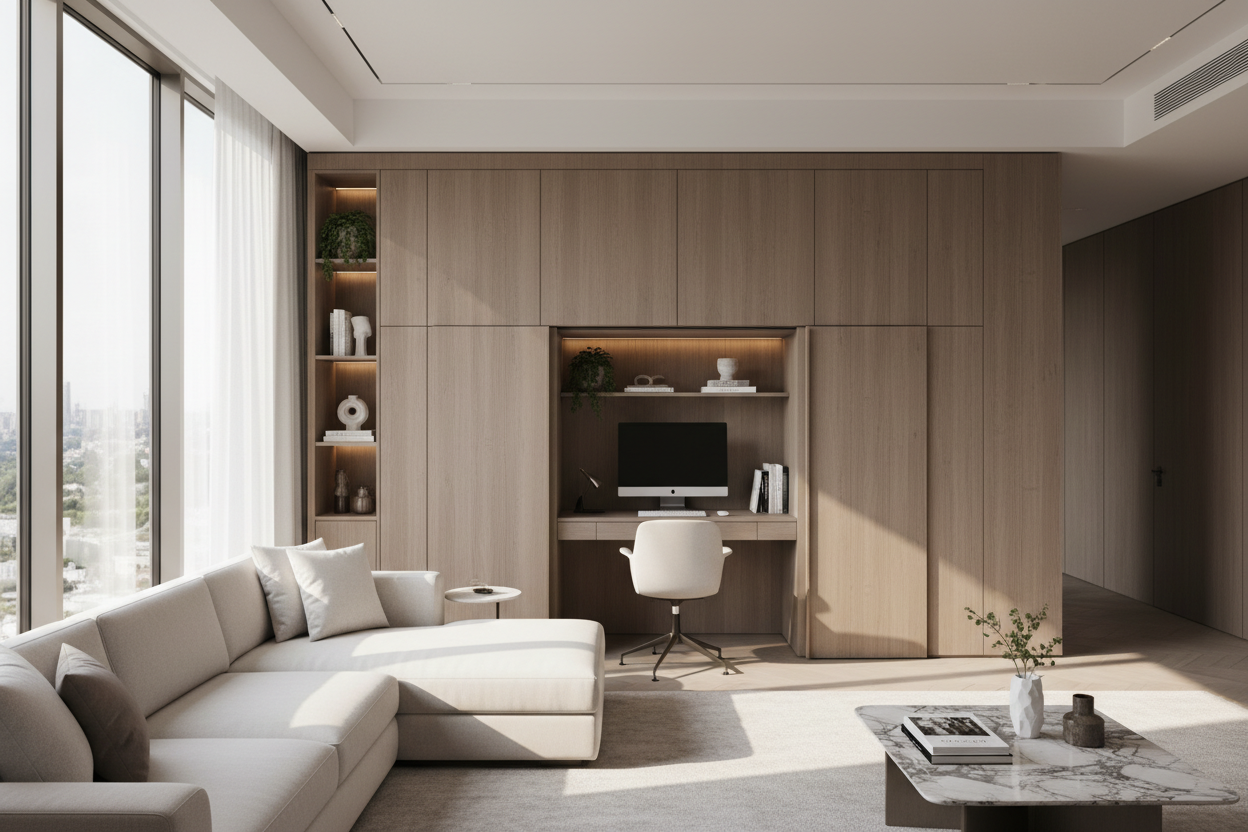
If your workspace is going to live in your primary living area, it needs to blend seamlessly with your existing decor. A bulky, laminated MDF cabinet will immediately draw the eye and cheapen the room's aesthetic.
Texture Layering and Visual Weight
Treat your home office box like a functional piece of cabinetry rather than a desk. If your living room features lighter, transitional pieces, a massive dark espresso armoire will feel visually heavy and out of place. Opt for finishes that complement your media console or coffee table. Fluted wood details, woven cane doors, or subtle metallic hardware can help the piece masquerade as a high-end bar cabinet or storage chest.
A Designer's Honest Take
A few years ago, I specified a beautiful mid-century style fold-out desk for a condo project in downtown Vancouver. The walnut veneer was stunning, and when closed, it looked exactly like a premium storage credenza. But I learned the hard way that drop-down desk leaves have their structural limits.
My client was a heavy typer who naturally leaned his body weight into the desk. Within six months, the hinges started to warp, and the desk surface developed a noticeable downward slant. We had to reinforce the entire unit with custom steel brackets. It taught me to always check the static weight capacity of the work surface. If a manufacturer does not list the weight limit for the drop-down leaf, consider that a major red flag.
Frequently Asked Questions
How do I manage cables in a fold-out desk?
Look for units with built-in grommets and a false back panel. You want to be able to plug a power strip into the wall, route it into the cabinet, and plug all your devices in internally. This allows you to close the doors without unplugging your laptop.
Are these units suitable for multiple monitors?
Usually, no. Most concealed desks are designed for a single laptop or one monitor. The interior width and depth rarely accommodate dual 27-inch screens. If you require a multi-monitor setup, a traditional open desk is a much better choice.
What is the best material for durability?
Solid wood is ideal but heavy and expensive. High-quality plywood with a real wood veneer offers the best balance of stability and aesthetics. Avoid particleboard or low-grade MDF, especially for the moving parts and hinges, as the screws will inevitably strip out over time.

Leave a comment
This site is protected by hCaptcha and the hCaptcha Privacy Policy and Terms of Service apply.