

















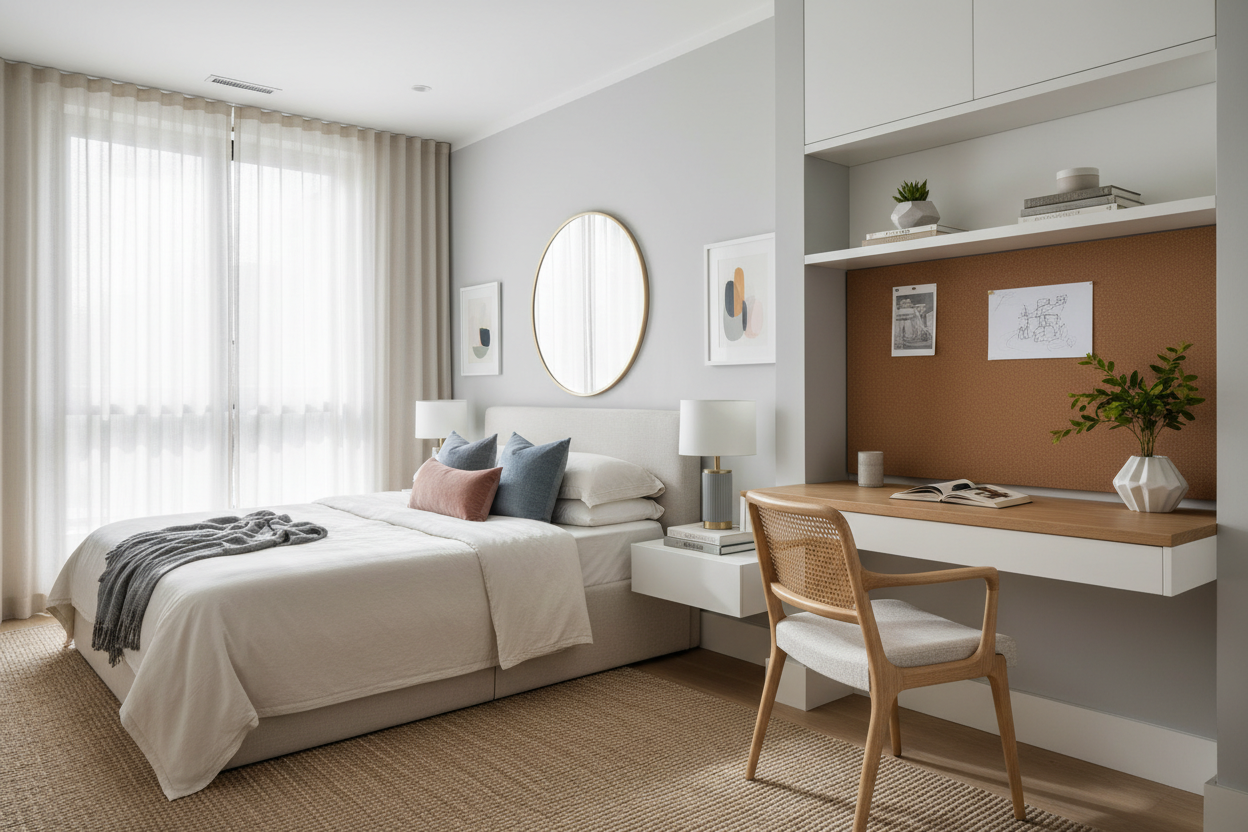
The greatest challenge in modern interior architecture is maintaining the sanctity of the sleep environment while accommodating the necessity of a workspace. Blurring the lines between rest and productivity can lead to a cluttered mind and a cluttered room. However, when executed with intention, the right home office ideas bedroom configurations can actually enhance the functionality of your suite without sacrificing its tranquility. This guide navigates the delicate balance of form and function to help you reclaim your square footage.
Key Features for a Bedroom Workspace
- Visual Separation: The ability to conceal or visually minimize technology when the workday ends.
- Scale and Proportion: Choosing a desk silhouette that doesn't dominate the room's footprint.
- Acoustics: Utilizing soft furnishings and rugs to dampen the sound of typing and calls.
- Lighting Control: Layering task lighting with warm ambient light to shift moods.
- Ergonomics: detailed selection of seating that supports posture without looking industrial.
Mastering the Layout: The Office Area in Bedroom
Positioning is everything. The most common error I see is placing the desk directly facing the bed. This creates a psychological loop where you see work while trying to sleep, and sleep while trying to work. Instead, orient the office area in bedroom layouts toward a window or perpendicular to the sleeping zone. If space allows, floating the desk off a wall can create a command position, but in tighter quarters, utilizing a niche or alcove is preferable.
Materiality and Finishes
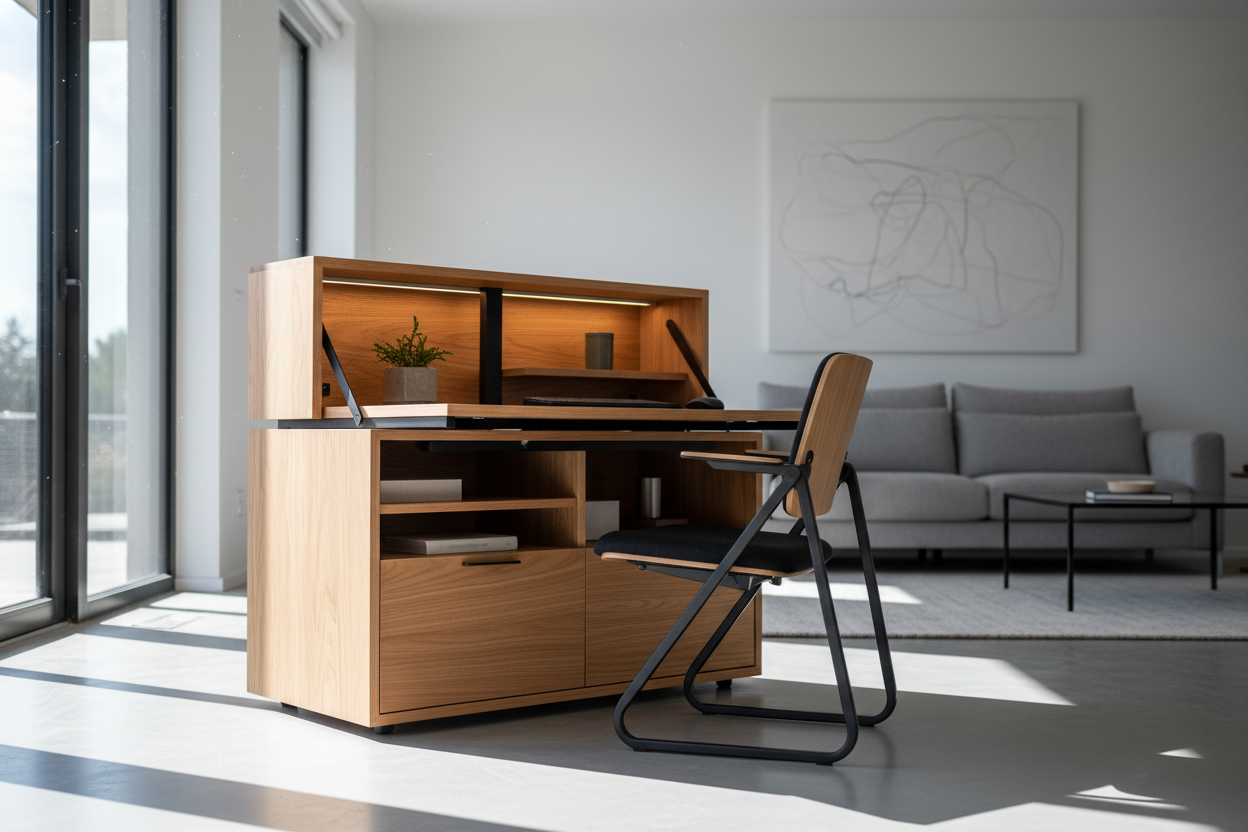
In a bedroom setting, we want to avoid the sterility of laminate or cold steel often found in corporate cubicles. Opt for natural materials that age gracefully. A solid walnut or white oak desk introduces warmth and texture. If you must use metal, look for brushed brass or matte black finishes rather than high-polish chrome, which can feel too clinical for a relaxation space. The tactile experience of the furniture surface matters here; a leather desk blotter can bridge the gap between a hard writing surface and the softness required of a bedroom.
The Chair Dilemma: Aesthetics vs. Ergonomics
There is often a temptation to buy a dining chair for the bedroom desk to maintain the "look." As a specialist, I advise against this if you work more than two hours a day. The compromise lies in high-end ergonomic chairs upholstered in residential fabrics—think bouclé, velvet, or high-grade linen—rather than standard black mesh. Alternatively, look for chairs with a mid-century modern silhouette that hides the adjustment levers and hydraulic lifts beneath the seat pan.
Lighting: The Transition from Day to Night
Your lighting plan must serve two masters. During the day, you need directional task lighting (around 4000K color temperature) for focus. However, once you clock out, that light must vanish. I recommend articulating sconces or a high-quality desk lamp with a heavy dimmer. Avoid overhead pot lights directly above the desk if possible, as they cast shadows. Instead, rely on a dedicated lamp that acts as a sculptural element when not in use.
Lessons from My Own Projects
I recall a specific project for a client in a high-rise who insisted on a glass desk to keep the space feeling "airy." While it looked stunning in the initial photos, we ran into a practical nightmare within a week: cable management. Glass hides nothing. Every power cord and ethernet cable was visible, creating visual noise that ruined the calm vibe of the master suite.
I had to pivot quickly, designing a custom cable shield upholstered in the same fabric as their headboard to run along the back legs of the desk. It taught me a valuable lesson I now apply to every bedroom office: always prioritize closed storage and cable concealment over perceived visual lightness. If you can see a blinking router light from your pillow, the design has failed.
Conclusion
Integrating a workspace into your sleeping quarters doesn't mean compromising on luxury. By selecting materials that harmonize with your existing decor and prioritizing visual quiet, you can create a space that supports your career during the day and your recovery at night.
Frequently Asked Questions
What is the minimum depth for a bedroom desk?
For a laptop setup, 20 inches is the absolute minimum to maintain ergonomics. However, 24 inches is ideal to allow for a monitor and keyboard without feeling cramped against the wall.
How do I hide my monitor when not in use?
Consider a secretary desk with a fold-down front or a localized folding screen. Alternatively, simply draping a linen cover over the monitor can soften the black rectangle effect.
Can I use a rug in the office area?
Yes, and you should. A low-pile rug defines the zone and protects your flooring from chair casters. Ensure the rug is large enough that the chair stays on it even when pushed back.

Leave a comment
This site is protected by hCaptcha and the hCaptcha Privacy Policy and Terms of Service apply.