

















Architectural Styles and Visual Cohesion in Home Office Furniture Desks
Selecting a home office furniture desk requires balancing daily task requirements with the overall interior character of your home. Unlike commercial cubicles designed for uniformity, residential workstations must harmonize with surrounding flooring, lighting, and wall treatments. Exploring nice desks for home office setups involves identifying how core aesthetic archetypes interact with existing residential architecture.
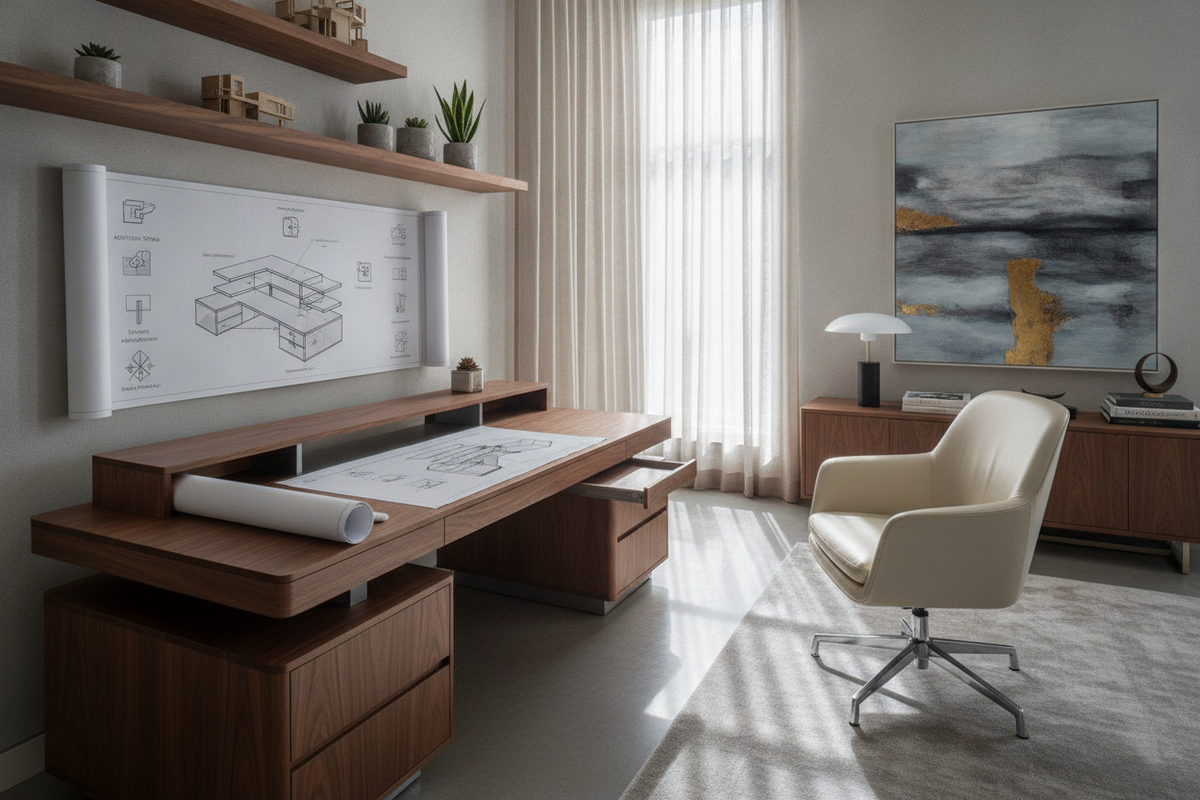
Contemporary minimalist silhouettes emphasize clean sightlines, open leg frames, and unobtrusive drawer profiles. These designs suit open-concept living rooms or modern bedrooms where a bulky workstation might overpower the visual flow. In contrast, transitional and executive styles incorporate substantial side panels, decorative mouldings, and integrated storage towers, delivering a grounded presence suited for dedicated studies. When evaluating beautiful home office desks, selecting an intentional office desk style ensures that your workspace complements adjacent shelving, accent chairs, and ambient lighting. For a deeper perspective on matching workspace design to your daily workflow, consult this detailed office desk guide.
Spatial Footprint Tiers: Proportioning Workstations to Room Geometry
Room proportions and perimeter clearance dictate how comfortably a workstation integrates into a layout. When browsing nice home office desks, planning around functional spatial tiers prevents cramped walkways and ensures adequate room for chair movement.
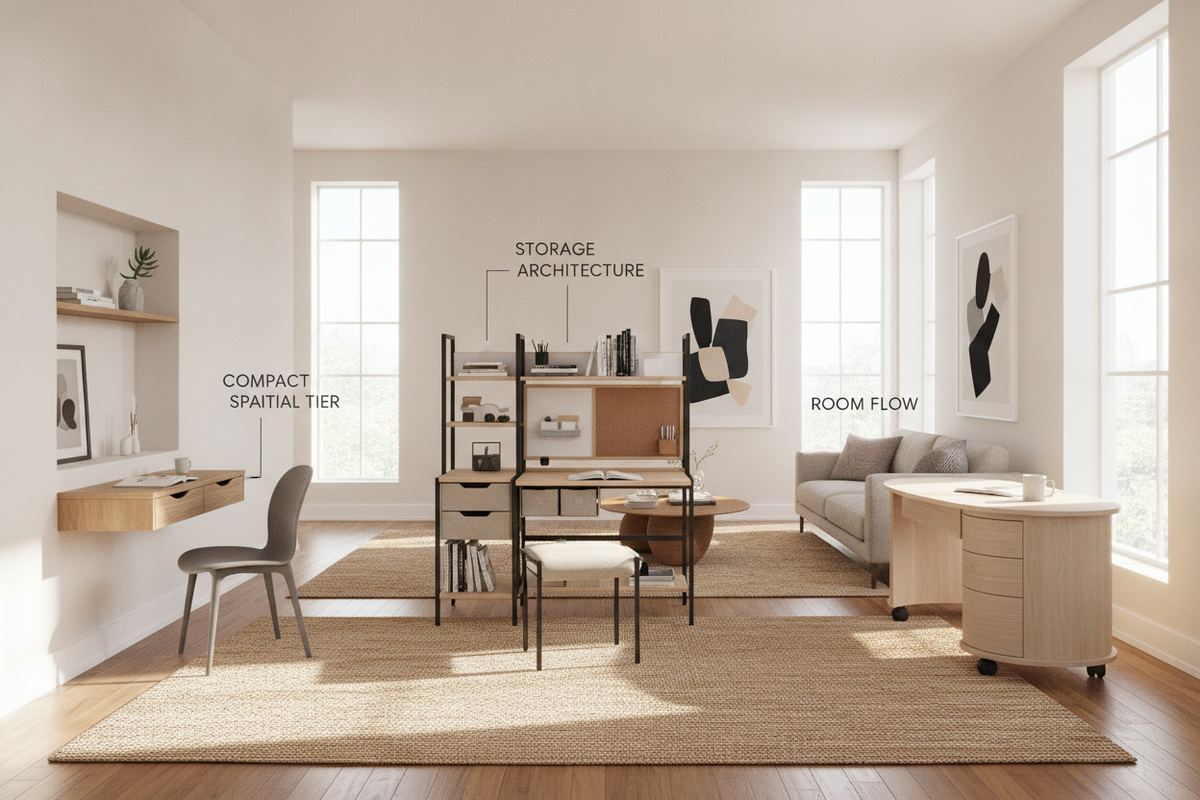
- Compact Alcove Workstations: Designed for multi-use guest rooms, quiet hallway recesses, or small bedrooms, these units focus vertical utility upward through shelving while keeping floor depth modest.
- Standard Linear Wall Runs: Placed flush against straight interior walls, linear rectangular desks provide ample lateral workspace for dual displays, task lighting, and writing peripherals without obstructing door swings.
- Corner and L-Shaped Configurations: Maximizing underutilized room corners, an L-shaped layout segregates primary computing tasks from secondary paperwork zones. If your floor plan accommodates corner placement, exploring an integrated office desk product offers expanded desktop surface area while preserving central room circulation.
Beyond the surface footprint itself, factor in generous clearance behind the desk edge to allow ergonomic task chairs to recline and roll without contacting baseboards, radiators, or curtains.
Storage Architecture: Built-In Pedestals, Hutches, and Perimeter Cabinetry
An effective home office furniture desk must accommodate daily technology, paperwork, and organizational tools without creating desktop clutter. Evaluating storage architecture before you shop home office desk models prevents the need for mismatched auxiliary bins later.
Integrated storage generally falls into three structural configurations:
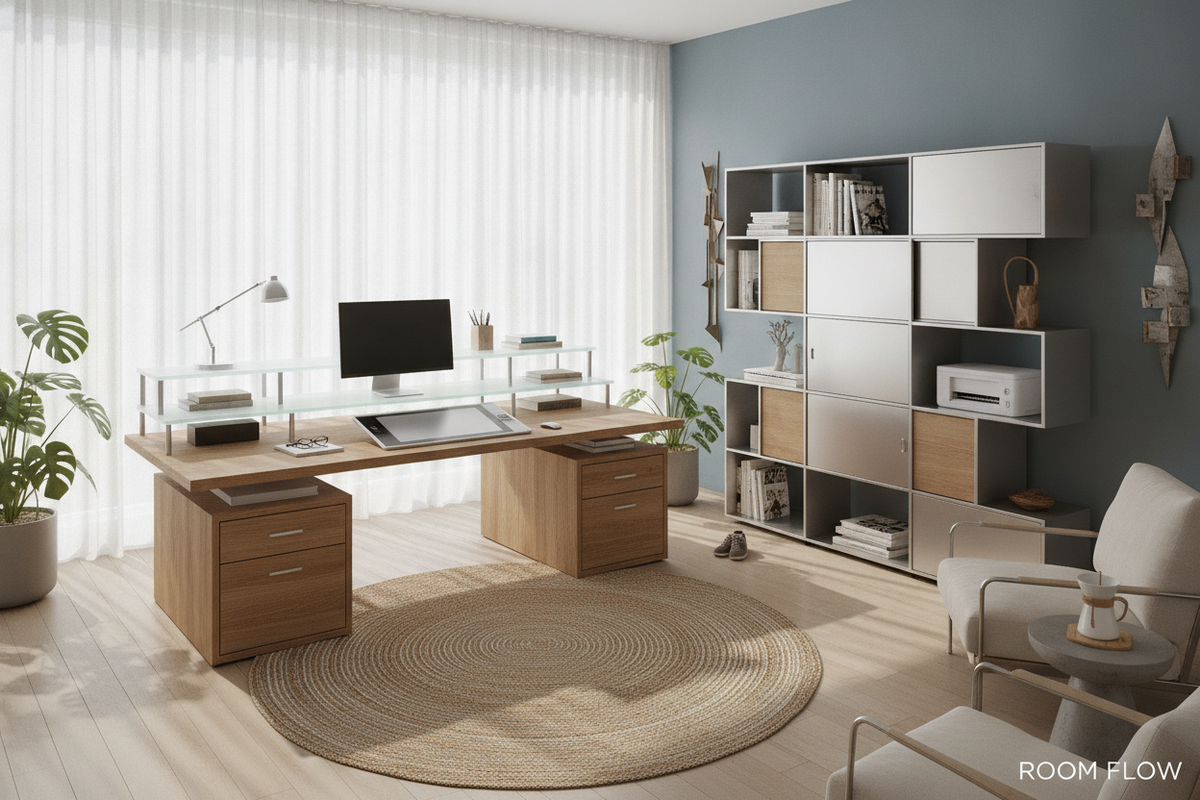
- Under-Desk Pedestals: Fixed or modular drawer banks keep stationery, external hard drives, and private documents tucked beneath the main work surface while preserving legroom on the opposite side.
- Overhead Hutches and Open Shelves: Vertical hutch systems leverage wall height to store reference binders, decorative accents, and task lamps, keeping the main desktop clear for immediate projects.
- Credenza and Cabinet Combos: For heavy storage requirements, pairing desk surfaces with concealed cupboards provides housing for printers, paper reams, and filing boxes. You can examine a dedicated office desk product that incorporates enclosed shelving and multi-drawer pedestals into a cohesive unit.
Material Selection, Surface Durability, and Cable Management
The daily durability of an office workstation depends heavily on structural substrates, protective exterior laminates, and smart cable routing pathways. Daily mouse movement, warm laptop surfaces, and occasional beverage condensation require resilient desktop treatments.
Engineered wood panels finished with high-pressure melamine or smooth laminate coatings provide scratch resistance and simplified wipe-down maintenance. Metal structural supports and powder-coated steel legs introduce structural rigidity while creating an open aesthetic. Integrating thoughtful desktop accessories and cord management channels helps maintain an orderly environment. To learn more about curating desktop accessories and organization pieces, explore this helpful desk style office guide.
Cable grommets, modesty panel channels, and adhesive under-desk raceways prevent cords from tangling around your feet, preserving both visual elegance and workspace safety.
Strategic Buying Framework and Assembly Staging Protocols
Before completing your purchase, review room access pathways, assembly requirements, and structural hardware. To avoid common ordering pitfalls, consult this insightful office desk guide prior to making your final decision.
- Measure Doorways and Entry Clearances: Verify that flat-pack cartons or pre-assembled components can navigate interior hallways, stairwells, and tight door corners.
- Inspect Joinery and Hardware: Look for steel cam-lock connectors, full-extension drawer glides, and adjustable leveling feet designed to balance the desk on uneven area rugs or hardwood planks.
- Stage Your Assembly Area: Clear a soft, carpeted or blanket-lined assembly zone to prevent cosmetic scratches on panels during construction.
- Fasten Wall Anchors: For tall desks featuring overhead hutches or heavy vertical shelving, secure safety wall brackets into wall studs to ensure long-term stability.
Frequently Asked Questions About Choosing a Home Office Furniture Desk
What desktop depth is ideal for dual-monitor setups?
A desktop with moderate to generous depth accommodates monitor stands and keyboard trays while preserving a comfortable focal distance for your eyes.
How do I choose between an L-shaped desk and a straight rectangular desk?
Straight rectangular desks suit shared spaces and standard wall runs, whereas L-shaped desks provide distinct functional zones and make efficient use of open room corners.
How can I protect hardwood floors from desk legs and office chairs?
Use felt floor protector pads under stationary desk feet and place a smooth floor mat beneath rolling task chairs to minimize surface scuffs.

Leave a comment
This site is protected by hCaptcha and the hCaptcha Privacy Policy and Terms of Service apply.