

















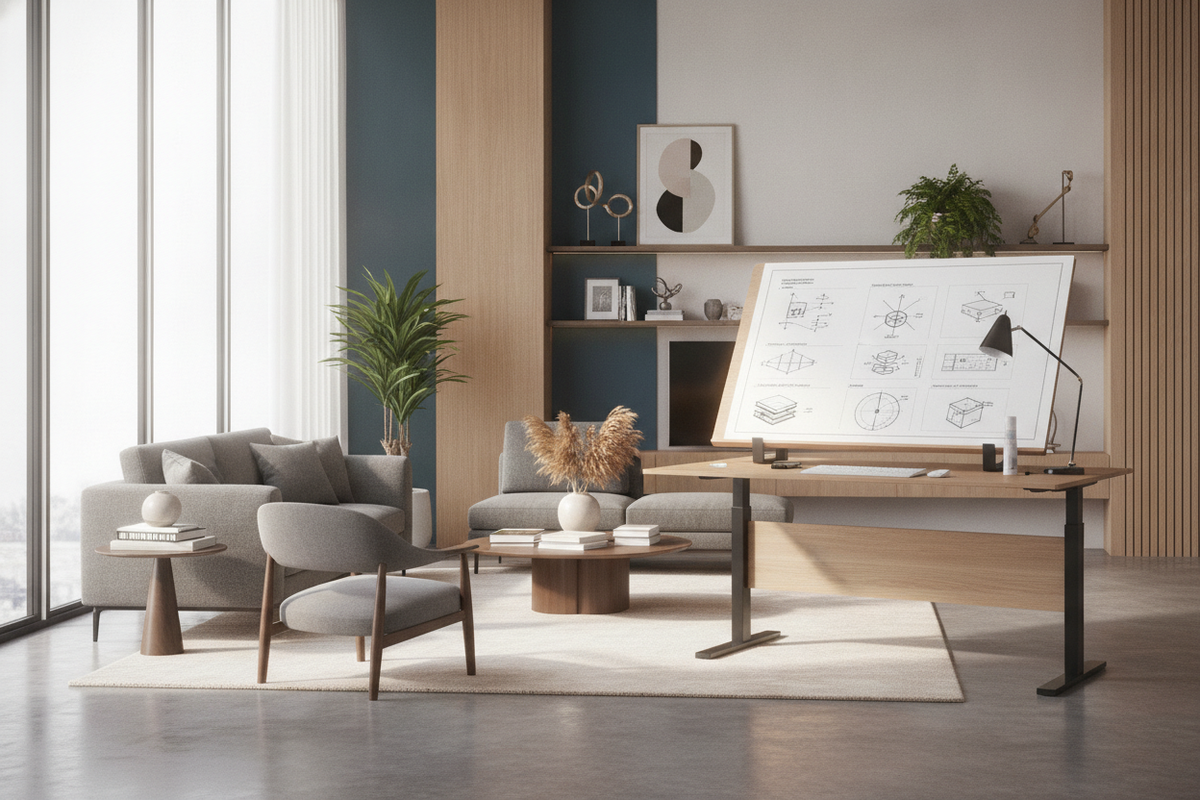
Architectural Fundamentals of a Heavy Duty Standing Desk
Selecting a workstation capable of accommodating multi-monitor arrays, heavy desktop computer chassis, studio monitor speakers, and dense reference materials requires looking far beyond surface aesthetics. A dependable heavy duty standing desk relies on reinforced structural frame architecture, substantial steel gauge thickness, and solid floor-contact geometry. Standard office desks frequently exhibit micro-wobble and lateral sway at higher elevations because their leg columns lack sufficient cross-sectional rigidity or baseline support width.
When evaluating a standing desk heavy duty frame, examine the thickness of the tubular steel staging segments, the welded joint precision, and the physical span of the floor feet. A broad, elongated foot assembly creates an expansive center of gravity, distributing dynamic downward force evenly across hard surfaces or carpeted flooring. Connecting sturdy under-frame mounting plates with an expansive model like an adjustable standing desk product ensures that dynamic elevation transitions remain smooth, fluid, and predictable even under dense equipment loads.
Furthermore, motor synchronization across dual-lifting columns plays a fundamental role in sustained operational smoothness. In high-payload environments, synchronized motorized drive mechanisms ensure that both vertical columns rise and descend in exact mechanical harmony, eliminating diagonal binding, mechanical friction, and unnecessary wear along internal lift tracks.
Dimensional Footprint Tiers and Surface Thickness
The physical span and structural composition of your desktop surface directly dictate its resistance to deflection over extended periods. An expansive executive workstation holding heavy monitor arms requires a dense, resilient tabletop core, such as high-density composite fiberboard or solid hardwood. Inadequately supported or lightweight surfaces can gradually bow inward along the central span when heavy computing hardware rests midway between lift columns, causing structural strain across the mounting frame.
For spaces that require a versatile shift between a traditional sit down desk arrangement and a dynamic heavy duty adjustable desk format, selecting the right tabletop depth helps establish comfortable viewing distances for large displays. Integrating a versatile mid-format option, such as an adjustable standing desk product, maintains optimal focal depth without letting peripheral equipment cantilever excessively beyond the perimeter of the primary steel frame.
Surface Core Density and Edge Support
Desktop thickness should always correspond to the overall surface area. Broad desktop spans demand reinforced core density to resist flex from clamp-on monitor arms, which concentrate downward and rotational pressure on small sections of the tabletop edge. Beveled or reinforced perimeter edges further reduce localized point stress, protecting both the tabletop finish and the underlying frame assembly from mechanical fatigue.
Kinetic Stability: Column Stages, Crossbeams, and Load Distribution
Height-adjustable frames generally utilize either two-stage or three-stage telescoping columns. In a dedicated heavy duty sit stand desk, three-stage column designs provide wider internal overlap between nested steel segments across both low seated heights and tall standing elevations. This structural overlap minimizes joint play, resisting lateral deflection and torsional twist when the workstation reaches its upper operational range.
Structural rigidity is further enhanced through under-desk crossbeam engineering. Dual telescoping crossbeams bridge the two lift columns directly underneath the tabletop, stabilizing the assembly against horizontal movement. Strategic weight placement remains equally vital: positioning heavier items, such as primary computer towers or multi-display mounting posts, in close proximity to the vertical column axes rather than along the extreme outer edges significantly reduces dynamic torque on the motorized lift mechanisms.
Cable Routing and Peripheral Weight Management
Dynamic vertical movement introduces unique cable tension and balance considerations. As a desk transitions between seated and standing positions, unmanaged cords can snag on nearby furniture or pull taut, creating asymmetric drag against the motorized lifting system. High-capacity under-desk cable management trays and raceways keep power strips, transformer bricks, and connection lines secured directly to the moving chassis.
- Position central power distribution strips along the under-desk crossbeam to distribute electrical hub weight evenly.
- Group monitor cords and peripheral cables inside flexible spine tracks or expandable fabric sleeves that flex smoothly through full height ranges.
- Distribute secondary hardware evenly between the left and right sides of the desktop surface to maintain balanced kinetic lift equilibrium.
- Ensure sufficient cable slack is present at the lowest elevation to prevent pulling or disconnects when the desk rises to full standing height.
Integrated Storage Architecture: Credenzas, Pedestals, and Adjustable Shelving
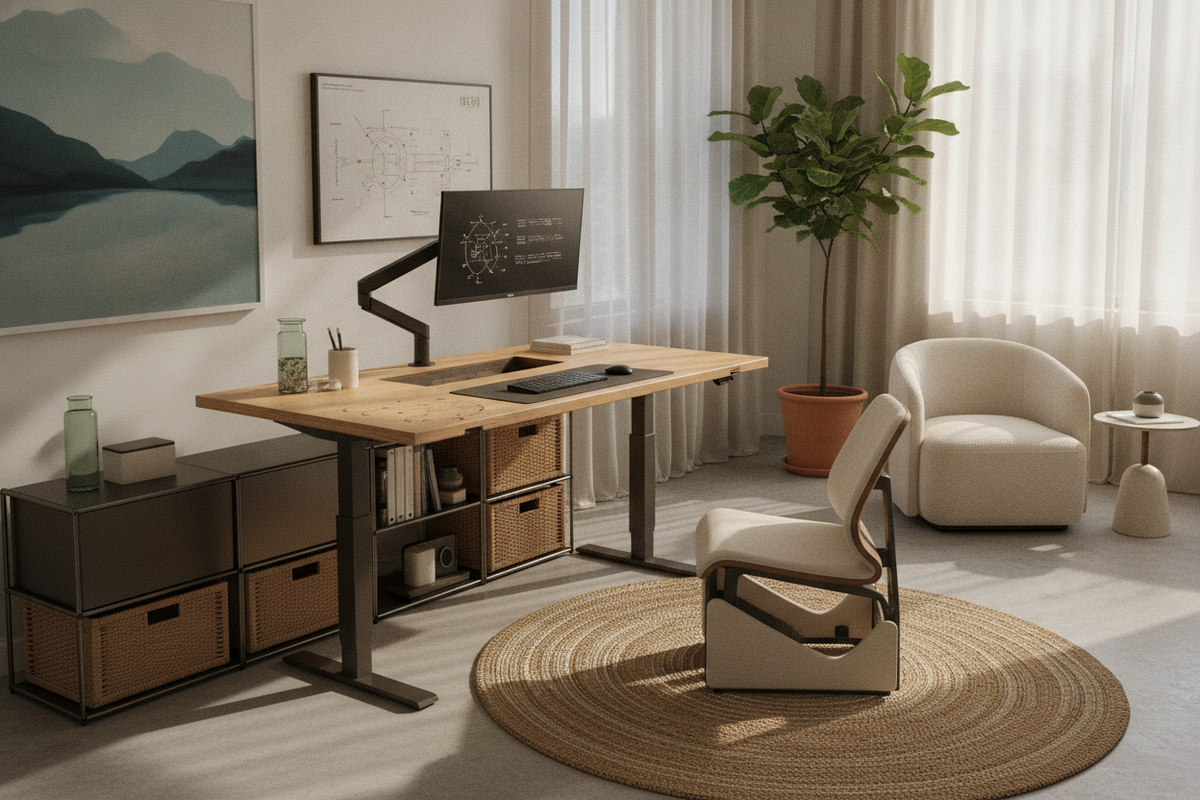
While heavy-duty adjustable frames can manage substantial equipment arrangements, maintaining an uncluttered active work surface preserves vertical lift efficiency and promotes visual clarity. Flanking your workstation with low-profile mobile filing pedestals or freestanding credenzas transfers static storage requirements away from the moving desktop. Compact under-desk pedestals slide comfortably beneath the desk surface during seated work without restricting leg clearance.
For extensive document libraries, heavy reference manuals, and auxiliary equipment, integrating complementary organization from an adjustable collection establishes dedicated zones for stationary items. This modular zoning approach keeps essential work tools within comfortable reaching distance while allowing the motorized workstation to adjust freely throughout the day without risk of colliding with surrounding storage furniture.
Room Flow and Structural Integration Across Home Workstations
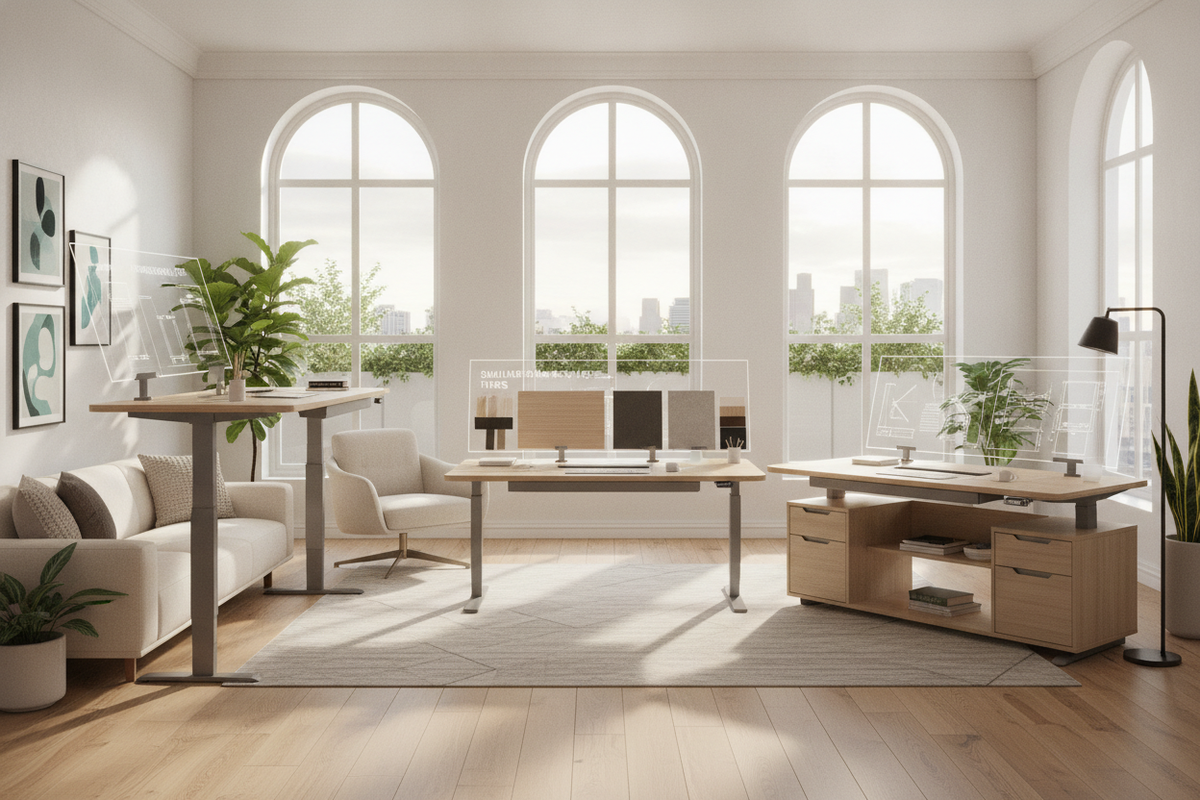
Positioning a commanding height-adjustable desk within a home office, professional suite, or open-concept living area calls for thoughtful spatial planning. Placing the desk perpendicular to natural light sources reduces direct screen reflections, while maintaining clear perimeter clearance ensures the frame rises and lowers without grazing walls, window sills, or surrounding casework.
Much like the structural positioning guidelines discussed in a heavy duty stand guide, integrating substantial furniture pieces requires aligning workstation geometry with existing architectural lines. Establishing dedicated pathway clearances and anchoring the desk alongside complementary perimeter storage creates a balanced, highly functional workspace built for sustained daily performance.

Leave a comment
This site is protected by hCaptcha and the hCaptcha Privacy Policy and Terms of Service apply.