

















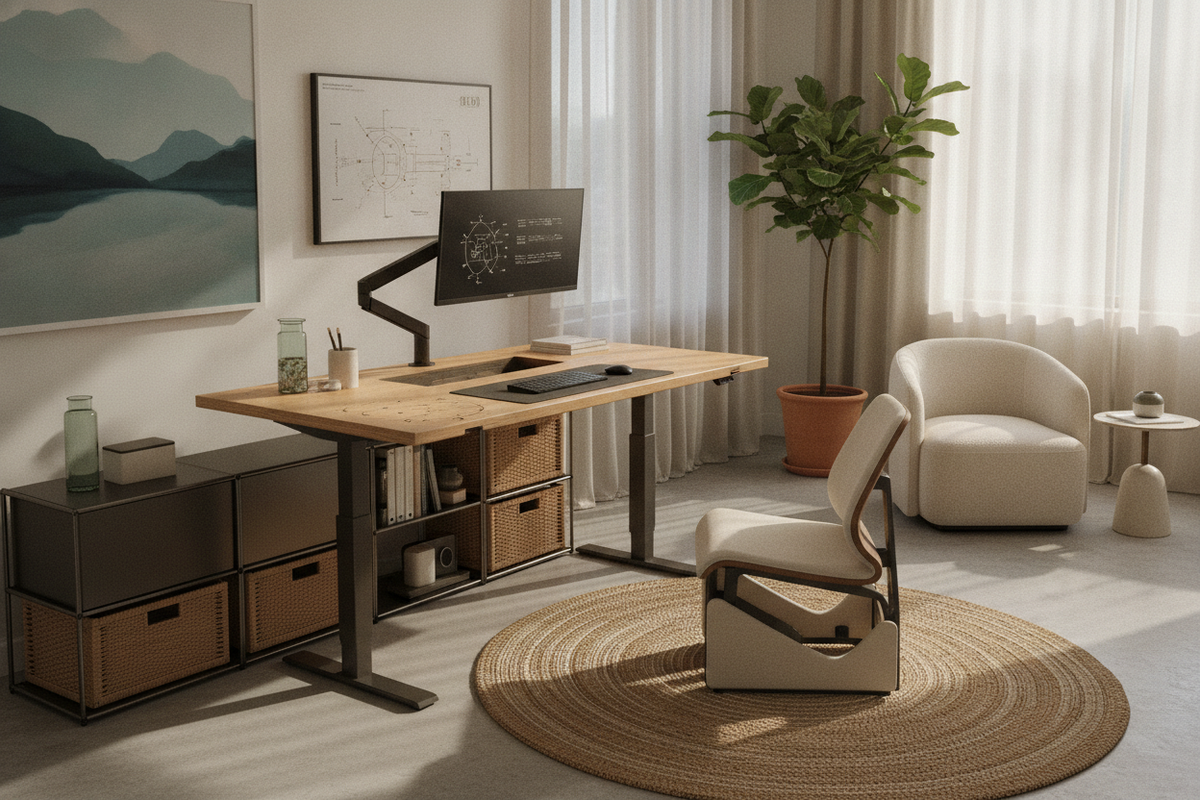
Creating an effective workspace requires moving past the concept of a desk as merely a flat surface. A genuinely healthy desk functions as a tailored workstation ecosystem where structural geometry, reach ergonomics, material stability, and organizational systems converge to support daily productivity and comfortable physical alignment.
Defining the Healthy Desk: Beyond Static Surface Mechanics
Traditional workstation design often treats desks as static platforms designed solely to hold equipment. In contrast, a dynamic workstation approach recognizes that long hours of seated or standing focus demand responsive spatial planning. The core objective of a healthy desk is to minimize unnecessary physical strain, accommodate natural posture variations, and foster sustained mental focus.
When a desk is proportioned correctly for the user and the surrounding room, routine tasks feel intuitive rather than restrictive. Ample surface clearance, proper height alignment, and dedicated zones for essential tools allow the body to maintain comfortable postures. Simultaneously, clear spatial organization reduces visual distractions, helping preserve workflow stamina throughout demanding work sessions.
Dimensional Categories: Matching Surface Proportions to Body and Room
Selecting the right desk scale involves balancing room constraints with individual equipment demands. Desks generally fall into distinct footprint categories, each serving specific workflow styles:
- Compact Footprints: Well-suited for dedicated home office corners or multipurpose spaces. These surfaces prioritize essential tech setups, such as a laptop alongside a single compact monitor, while preserving open floor area.
- Standard Working Surfaces: Ideal for dual-monitor arrangements, document review, and standard peripheral placement without crowding the primary work zone.
- Expansive Executive Dimensions: Designed for complex multi-tasking setups, secondary drafting areas, and integrated desktop storage modules that require generous horizontal clearance.
Equally critical is the clearance beneath the surface. Unobstructed lower vertical and lateral space ensures that legs can shift freely, accommodating varied foot rests, dynamic seated postures, or movement accessories without colliding with crossbars or modesty panels.
Ergonomic Reach Zones and Desktop Spatial Layout
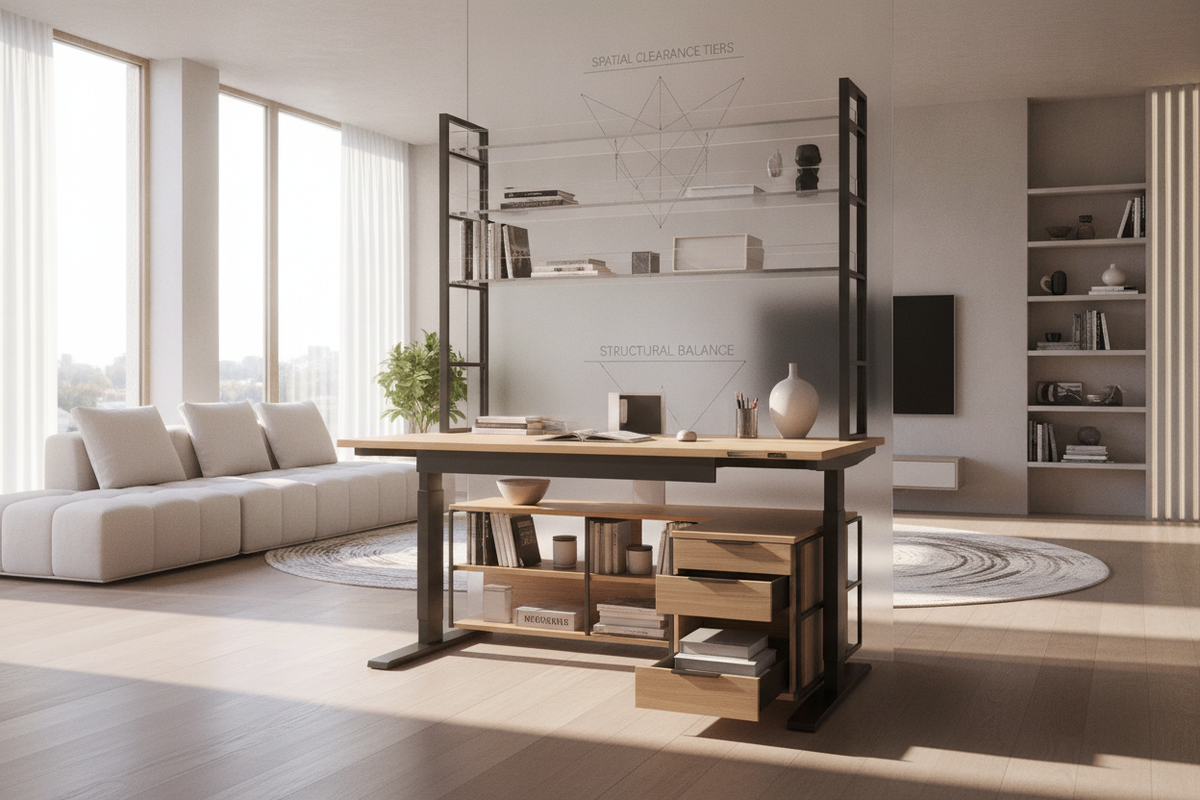
Arranging equipment on the desktop based on frequency of use prevents repetitive overreaching, shoulder tension, and awkward torso twisting. Structuring the surface into concentric movement tiers creates an efficient workflow landscape:
- Primary Zone: The immediate semi-circle area directly within an easy forearm sweep. Keyboards, mice, and active writing tools belong here to allow relaxed elbow positioning near the torso.
- Secondary Zone: The area reachable with extended arms without leaning the torso forward. Position secondary screens, reference materials, desk lamps, and frequently accessed organizers within this perimeter.
- Tertiary Zone: The outer periphery of the desk, ideal for ambient lighting, decorative elements, power hubs, and passive storage holders that require only occasional access.
Elevating display screens to match natural, horizontal sightlines further complements this zoning, preventing forward head tilt and promoting neutral spinal alignment.
Material Selection and Structural Stability Dynamics
Physical wellness at a desk depends heavily on structural integrity. A workstation that wobbles or flexes under routine typing creates subtle, distracting vibrations that disrupt concentration. Evaluating frame materials and tabletop compositions ensures consistent stability:
- Steel Framing: Robust metal leg assemblies and reinforced cross-bracing provide rigid support, preventing lateral sway during active typing or dynamic height adjustments.
- Engineered Surface Finishes: High-density composite boards paired with resilient laminate coatings resist scratches, moisture, and daily wear, offering smooth, reliable work surfaces that are simple to clean.
- Forearm Contact Profiles: Desktops with smooth edge banding or gently beveled perimeters prevent sharp pressure points against wrists and forearms during extended typing sessions.
Integrated Storage Architecture for Clutter-Free Productivity
A healthy desk environment extends beyond the tabletop to include nearby organizational architecture. When accessories and paperwork accumulate on the active surface, usable reach zones shrink, forcing uncomfortable posture adjustments.
Integrating complementary storage solutions restores spatial balance. Mobile pedestals tucked neatly beneath the surface keep daily office supplies close at hand without consuming leg space. Coordinating side credenzas, hutches, and low bookcases provide dedicated housing for archives and larger peripheral devices. Built-in wire management trays and grommets further protect the visual and physical environment by routing cables away from foot zones and surface boundaries.
Room Layout Frameworks and Long-Term Maintenance
Positioning the workstation properly within the room optimizes lighting and movement flow. Placing a desk perpendicular to natural light sources prevents direct monitor glare while ensuring access to daylight. Maintaining generous walkways around the desk perimeter prevents the home office from feeling cramped and facilitates easy transitions in and out of the seating area.
For additional layout strategies that reinforce daily workflow rhythms, consult our healthy guide to spatial organization. Finally, establish a simple maintenance routine by periodically checking and tightening assembly hardware, ensuring that your healthy desk remains sturdy, balanced, and supportive over years of continuous use.

Leave a comment
This site is protected by hCaptcha and the hCaptcha Privacy Policy and Terms of Service apply.