

















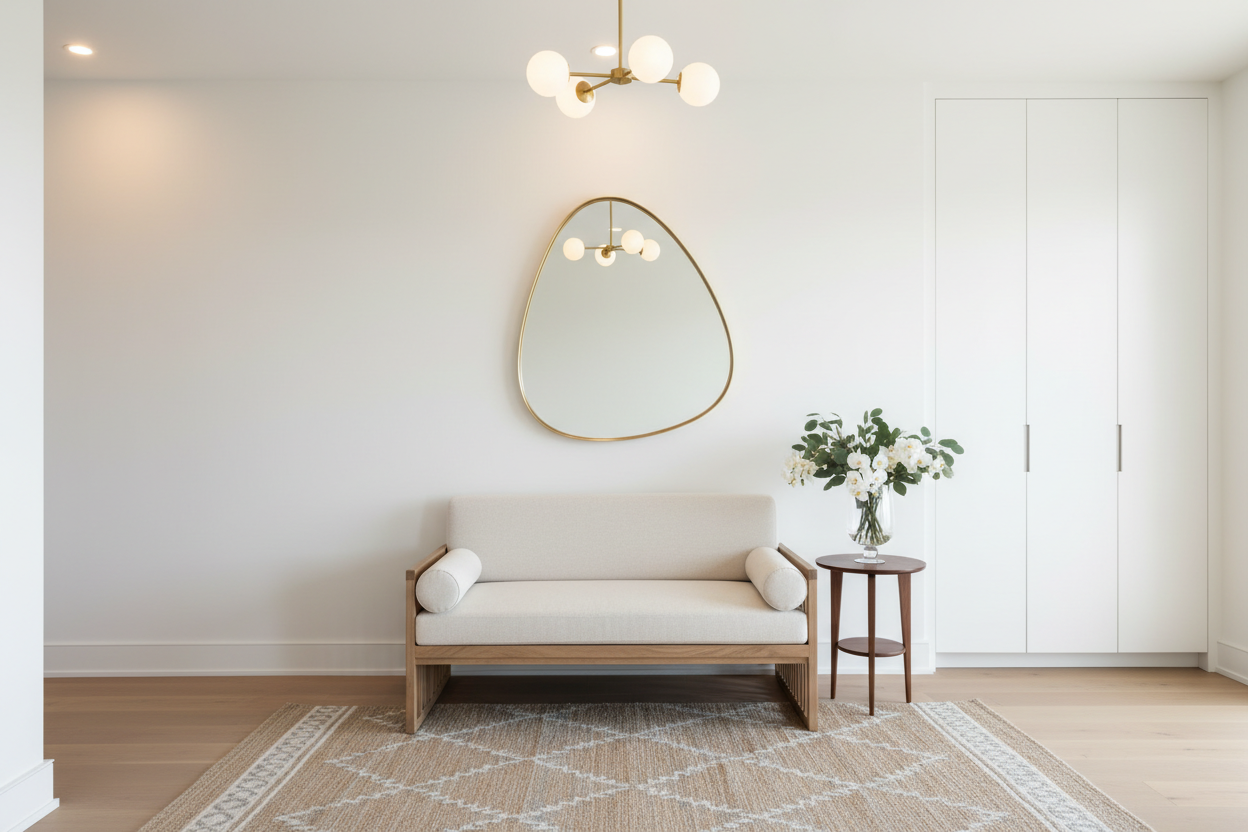
The entryway is the handshake of your home. It creates the immediate psychological shift from the outside world to your personal sanctuary. Yet, this space often becomes a chaotic dumping ground for mail, keys, and muddy boots. The solution isn't just about cleaning up; it is about anchoring the space with a piece of furniture that bridges utility and art. A well-chosen bench acts as that anchor.
Choosing the right seating for this transitional space requires balancing durability with visual appeal. You aren't just picking a spot to tie your shoes; you are selecting a statement piece that defines the aesthetic of your entire home. Whether you are working with a sprawling mudroom or a narrow corridor, the right design choices can turn a utilitarian pass-through into a design moment.
The Power of Minimalism and Light
Many homeowners gravitate toward lighter palettes to make small foyers feel expansive. A modern white entryway bench is often the hero in these scenarios. White reflects natural light, making cramped vestibules feel airier and more welcoming. However, the success of a white bench relies heavily on material choice. A high-gloss lacquer finish offers a sleek, contemporary vibe and wipes down easily, while whitewashed wood provides texture and warmth without sacrificing that clean, Scandinavian appeal.
I learned this lesson the hard way in my first apartment. The hallway was narrow and devoid of windows. I initially placed a heavy, dark oak chest there, and it immediately sucked the energy out of the room. Swapping it for a streamlined, white bench with open legs completely transformed the vibe. It suddenly felt like there was room to breathe the moment I walked in the door.
Merging Storage with Style in the Mudroom
For families, the entryway is a high-traffic zone that demands robust solutions. A modern mud bench needs to be more than just a pretty face; it has to withstand wet coats, grit, and heavy bags. The trend has shifted away from clunky, farmhouse-style lockers toward sleek, integrated designs. Floating benches with underneath storage bins are particularly popular because they keep the floor visible, maintaining a sense of openness.
When brainstorming modern mudroom bench ideas, consider mixed materials. Metal frames paired with solid wood seats offer industrial durability that ages well. If you have the budget for custom joinery, built-in benches that merge seamlessly with wall paneling create a sophisticated, architectural look. The goal is to hide the clutter while keeping daily essentials accessible.
Softening the Look with Upholstery
While wood and metal are practical, they can feel cold. Introducing a modern upholstered entryway bench brings immediate softness and luxury to the space. The tactile experience of sitting on velvet, boucle, or high-quality leather changes the nature of the entry—it invites you to pause rather than just rush through.
Durability remains a concern with fabric in high-traffic areas. If you opt for upholstery, look for performance fabrics treated to resist stains and moisture. Crypton fabrics or commercial-grade leathers are excellent choices because they can handle the occasional wet umbrella or dirty paw print without ruining the furniture. A tufted design can add depth and visual interest, preventing a solid-colored bench from looking flat.
Navigating Narrow Hallways
Not everyone has a dedicated foyer. In many urban homes, the entry is simply a slice of the corridor. A hallway bench modern design principles favor is typically shallow in depth—often 12 to 14 inches—to ensure traffic flow isn't impeded. Backless benches are superior here as they don't visually break the vertical line of the wall.
Cantilevered designs or benches with slender, hairpin legs work best in these tight quarters. They provide the necessary function—a place to drop a bag or put on shoes—without dominating the floor plan. Pairing a slim bench with a large round mirror above it creates a focal point that distracts from the narrowness of the hall.
Sourcing and Material Quality
Finding the right piece often depends on your location and access to craftsmanship. For those hunting for a modern entryway bench Canada has a thriving market of local woodworkers and sustainable furniture brands that specialize in hardwoods like maple and walnut. Sourcing locally often means better adaptability to climate fluctuations, which is crucial for wood furniture placed near drafty doors.
Regardless of where you shop, check the joinery. A stylish entryway bench must support the weight of adults sitting down heavily after a long day. Wobbly legs or particleboard construction won't last a year in an active household. Solid wood or welded metal frames are non-negotiable for longevity.
Styling Your Entryway Bench
Once the furniture is in place, styling acts as the finishing touch. You don't want the bench to look like it's floating in a void. Ground the piece with a textured runner rug. If the bench has an open bottom, use uniform baskets made of felt, wire, or woven seagrass to organize shoes. This hides the visual noise of mismatched sneakers while keeping them within reach.
Add layers through accessories. A throw pillow or a draped blanket introduces color and pattern. However, keep it functional; too many pillows leave no room to sit. Wall hooks installed at varying heights above the bench can accommodate bags and coats for different family members, turning the wall into a vertical organizer that complements the horizontal line of the bench.
Final Thoughts on Entryway Design
Your entryway sets the expectation for the rest of your home. It doesn't need to be grand, but it should be intentional. By selecting a bench that fits the scale of your room and meets your specific storage needs, you solve the practical problem of clutter while upgrading your home's style. Whether you choose a sleek white surface, a rugged mudroom station, or a soft upholstered seat, the right bench turns a transition space into a destination.
Frequently Asked Questions
What is the ideal height for an entryway bench?
The standard height for a bench is between 18 and 20 inches. This is similar to a dining chair height, making it comfortable for the average adult to sit and tie their shoes. If you plan to use thick cushions, ensure the frame is slightly lower so the final sitting height doesn't exceed 21 inches.
How do I protect a fabric bench in a busy mudroom?
Focus on prevention by choosing performance fabrics like solution-dyed acrylics or treated microfiber which repel water and stains. Alternatively, you can apply a fabric guard spray like Scotchgard to untreated upholstery. For the highest durability, consider faux leather or vinyl, which can be wiped clean with a damp cloth.
How deep should a bench be for a narrow hallway?
For tight hallways, aim for a depth between 12 and 15 inches. This provides enough surface area to sit perched or rest a bag without encroaching on the walking path. Avoid benches with backs or armrests in these spaces, as they add unnecessary bulk.

Leave a comment
This site is protected by hCaptcha and the hCaptcha Privacy Policy and Terms of Service apply.