

















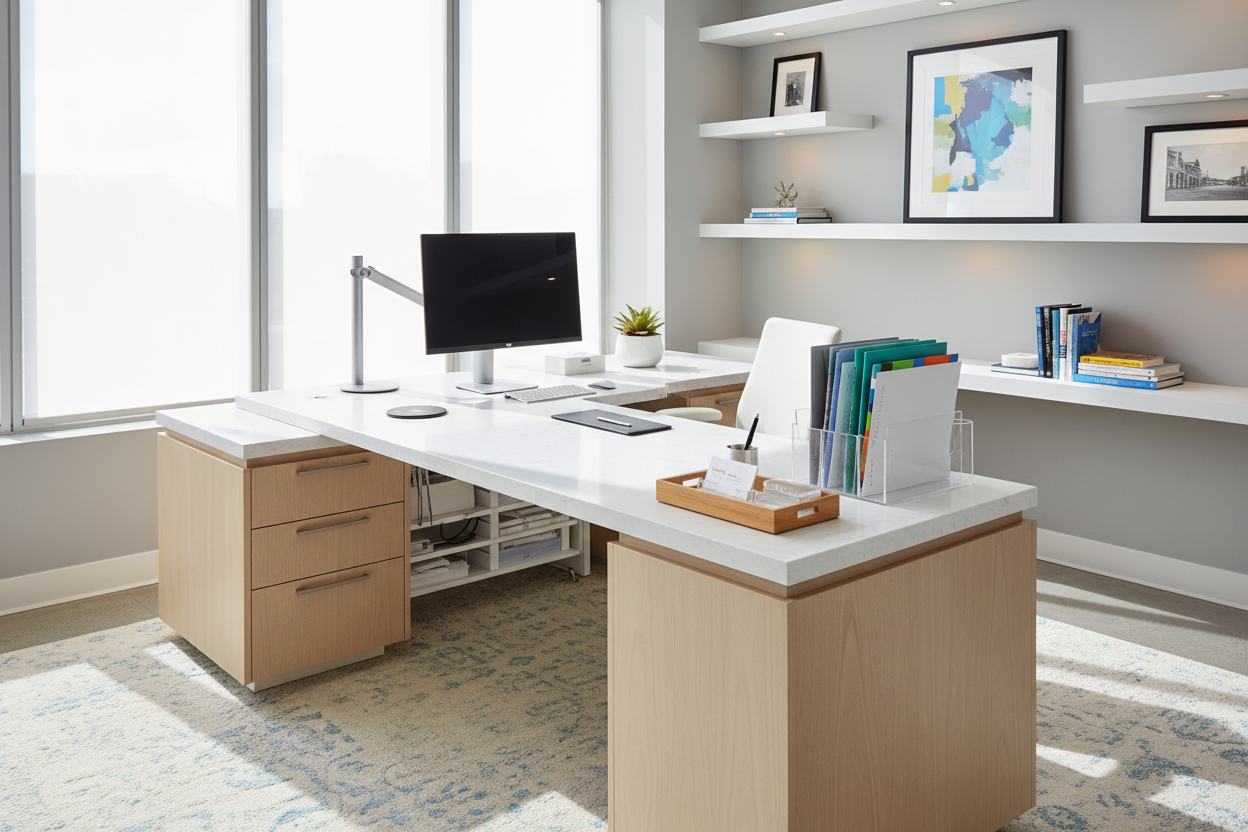
We have all experienced it: walking into a clinic where the reception desk is a chaotic landscape of shifting paper stacks, tangled wires, and frantic energy. As a designer, I see this not just as a mess, but as a breach of visual trust. Patients equate an orderly environment with clinical competence. If the front desk is disorganized, they subconsciously worry about the organization of their medical records. Implementing sophisticated medical office organization ideas is not merely about tidiness; it is about creating a seamless narrative of care, safety, and professionalism.
Key Features for Clinical Efficiency
- Workflow Zoning: distinct separation between patient intake, clinical procedures, and administrative tasks to prevent cross-traffic.
- HIPAA-Compliant Storage: Locking cabinetry and privacy screens that integrate seamlessly into the millwork rather than appearing as afterthoughts.
- Material Durability: High-pressure laminates and non-porous surfaces that withstand hospital-grade disinfectants without degrading.
- Vertical Utilization: Floor-to-ceiling cabinetry to maximize storage footprint in compact exam rooms.
- Acoustic Management: Soft-close hardware and sound-absorbing partitions to maintain patient confidentiality and calm.
Mastering Medical Office Desk Organization
The reception desk is the command center, and medical office desk organization requires a delicate balance between accessibility and discretion. In my design practice, I advocate for "zones of invisibility." This involves specifying desks with high transaction counters that hide the clutter of monitors and paperwork from the patient’s eye level while keeping them within arm's reach for the staff.
Invest in custom or modular millwork that features integrated cable management channels. Nothing ruins the aesthetic of a sleek, modern clinic faster than a nest of black wires cascading down a white desk. Furthermore, utilize under-desk pedestal storage for personal items, ensuring the surface remains strictly for active patient processing. The goal is a clean silhouette that communicates efficiency.
How to Organize a Small Medical Office
When square footage is at a premium, the strategy shifts to verticality and multi-functionality. Learning how to organize a small medical office effectively often means moving storage off the floor and onto the walls.
Wall-Mounted Systems
Avoid bulky filing cabinets that eat up floor space. Instead, opt for wall-mounted cabinetry with solid doors. Open shelving can look cluttered and gathers dust—a major negative in sterile environments. sleek, handle-less upper cabinets provide a streamlined look that makes small exam rooms feel more expansive.
Mobile Clinical Carts
For flexibility, consider high-quality medical carts on casters rather than fixed joinery for every room. This allows equipment to be shared between rooms, reducing the need for redundant inventory and freeing up static storage space for essentials.
Material Selection and Visual Balance
Organization extends to the visual texture of the room. A common mistake is using clear plastic bins which, while practical, create visual noise. I recommend opaque storage solutions in calming neutrals or wood grains that match the office's palette. When selecting materials for organizers, prioritize non-porous surfaces like acrylic or melamine over wicker or fabric, which can harbor bacteria and are difficult to sanitize.
My Personal Take on Medical Office Organization Ideas
I recall a project for a high-end dermatology clinic where the client insisted on open shelving to display skincare products behind the reception desk. It looked stunning in the renderings. However, three months post-installation, I visited for a walkthrough. The reality was starkly different. The shelves were half-stocked, dusty, and interspersed with stray paperwork and coffee cups. It looked neglected.
The lesson I learned—and one I always tell my clients now—is that open storage requires discipline that a busy medical staff rarely has time for. We ended up retrofitting the shelving with frosted glass doors. It hid the visual noise while still keeping the space feeling airy. It’s a small detail, but the difference in the "feeling" of cleanliness was palpable. Always design for the chaotic reality of a Tuesday morning, not just the photoshoot.
Conclusion
Transforming your practice isn't just about buying new bins; it's about rethinking how your space serves your staff and your patients. By integrating smart storage solutions and prioritizing durable, aesthetic materials, you elevate the entire patient experience. Start with one zone, perhaps the reception desk, and watch how order improves the flow of your entire day.
Frequently Asked Questions
What is the best material for medical office cabinetry?
Thermally Fused Laminate (TFL) or High-Pressure Laminate (HPL) are industry standards. They are durable, resistant to scratches and impact, and can withstand rigorous cleaning protocols without the finish peeling or fading.
How can I improve privacy in an open reception area?
Use acoustic panels and higher transaction counters. A counter height of 42 to 44 inches prevents patients from seeing documents on the desk. Additionally, introduce white noise machines to mask conversations and protect PHI (Protected Health Information).
Is it worth investing in custom millwork for organization?
Yes, especially for small spaces. Custom millwork allows you to utilize every inch of available space, including awkward corners or areas around structural columns, which pre-fabricated furniture often cannot accommodate.


Leave a comment
This site is protected by hCaptcha and the hCaptcha Privacy Policy and Terms of Service apply.