

















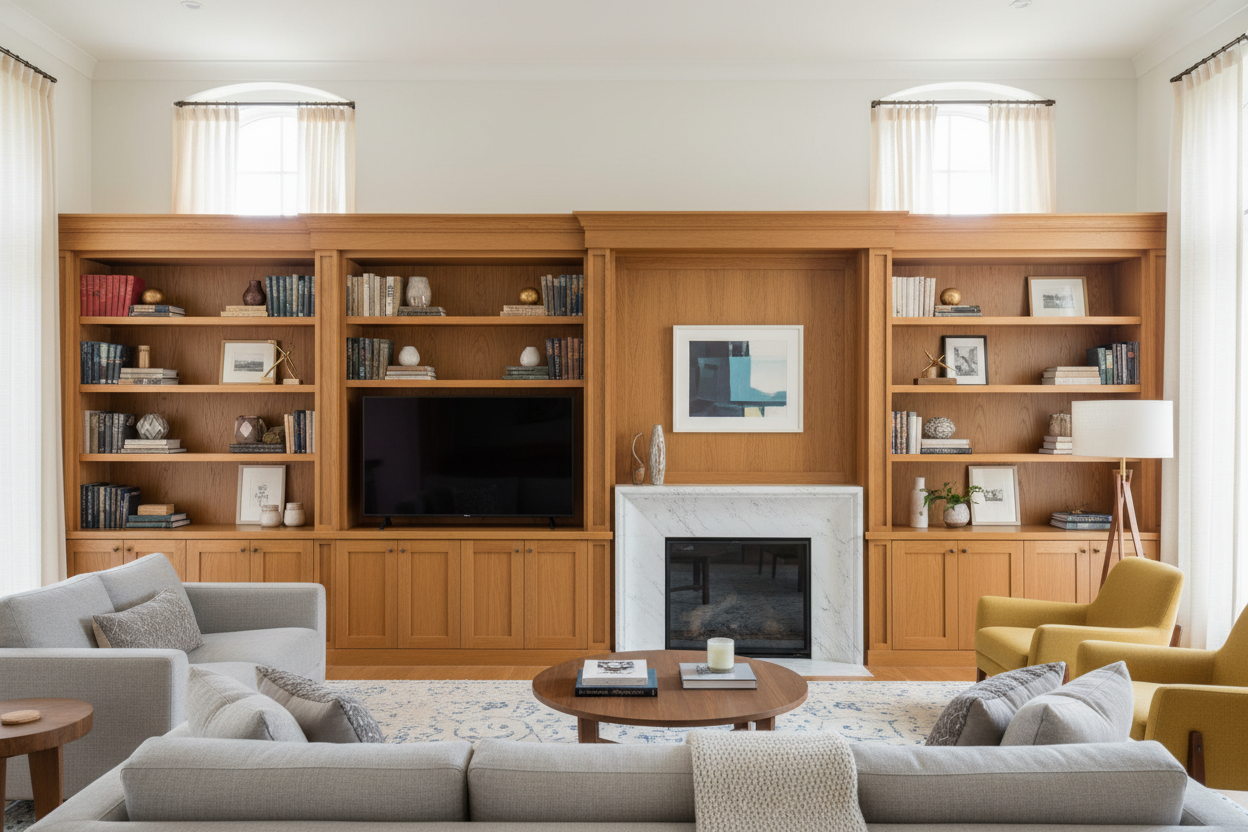
I remember walking into a client's living room last year—they'd just moved into a new apartment and had that classic 'sofa that looked amazing online but arrived looking tiny' situation. Their 72-inch sectional floated awkwardly in the 14x16 space, and the TV was perched on a basic stand that did nothing but hold electronics. The room felt lopsided, unfinished. The solution wasn't a new sofa, but rather introducing entertainment centers with shelves. That's when shelving transforms from mere storage to your secret weapon for visual harmony.
Quick Takeaways
- Shelves add vertical interest that balances horizontal furniture like sofas
- Integrated bookshelves need 12-14 inches depth for standard books; floating shelves work with 8-10 inches
- Always leave 36-inch walkways around your entertainment center for comfortable traffic flow
- For small rooms, choose light-colored wood or painted shelves to reflect light
- Style shelves using the rule of thirds—group items in clusters of three with varied heights
Why Shelves Transform Entertainment Centers From Functional to Fabulous
When you think about entertainment centers, you probably focus on the TV compartment or media storage. But here's what I've learned after furnishing over 200 homes: the shelves are where the magic happens. They're not just holding your books and knickknacks—they're creating architectural balance in a room that often has too much horizontal furniture. Your sofa, coffee table, and TV screen all sit at similar heights, creating a visual line that can make a space feel flat. Shelves break that line, drawing the eye upward and adding dimension.
I worked with a family who had a beautiful but massive 96-inch leather sofa. The room felt heavy and grounded. By adding an entertainment center with floor-to-ceiling bookshelves on either side of their 65-inch TV, we created vertical lines that balanced the sofa's horizontal presence. Suddenly, the room felt proportionate. The shelves also gave them space to display family photos and collections that made the room feel personal rather than showroom-perfect. As I often tell clients wondering about the value of investing in quality entertainment furniture, it's worth reading about Is A Tv Stand And Entertainment Center Worth The Space to understand how the right piece serves multiple functions.
The 3 Types of Entertainment Center Shelving Every Homeowner Should Know
Not all shelving works the same way. Based on your room's dimensions and your lifestyle, you'll want to choose between three main types. First, integrated bookshelves are built into the entertainment center itself—think of those classic units with cabinets below and symmetrical shelves flanking the TV. These work best in rooms with at least 12 feet of wall space, as they create a substantial focal point. The key is ensuring the shelves are deep enough (12-14 inches minimum) to actually hold books without them sticking out awkwardly.
Second, floating shelves mounted above or beside the TV create a modern, streamlined look. These work beautifully in smaller spaces or rooms with lower ceilings, as they don't visually weigh down the wall. Just remember: floating shelves typically hold 15-25 pounds per bracket, so they're better for decor than heavy book collections. Third, display niches are recessed shelves within the entertainment center itself—perfect for highlighting special items like art pieces or sound systems. These create depth and shadow play that adds sophistication. For integrated systems with multiple components, I often recommend exploring options like the Modern 3 Piece Entertainment Center With Overhead Cabinets, which combines different shelving types effectively.
Wood Entertainment Center With Bookshelves: Warmth vs. Function
There's something timeless about a wood entertainment center with bookshelves. The natural grain adds warmth that manufactured materials can't replicate. But not all wood is created equal. Solid hardwoods like oak or walnut have beautiful character but require more maintenance—they can warp in humid environments if not properly sealed. Engineered wood with veneers offers stability at a lower price point, but may not withstand heavy use as well.
I recently styled a mid-century modern living room with walnut shelves. The client wanted that rich, warm look but had two young children. We opted for a kiln-dried hardwood frame with a durable matte finish that could handle fingerprints and occasional bumps. For styling, I mixed their book collection (arranged by color in some sections, by height in others) with ceramic vases and a few family photos in simple black frames. The key with wood shelves is not to overcrowd them—let the beautiful material show through in places.
Small Entertainment Center With Bookshelves: Scale and Proportion Rules
In apartments or cozy living rooms, a small entertainment center with bookshelves needs to work extra hard. The biggest mistake I see? Choosing shelves that are too deep, making the room feel cramped. For spaces under 12x10 feet, look for units with shelves no deeper than 10 inches. This still holds most books and decor while maintaining precious floor space.
I helped a client in a 900-square-foot condo who thought she couldn't have any shelving. We found a 48-inch wide entertainment center with narrow, vertical shelves on one side only (not symmetrical). This created visual interest without overwhelming the wall. We painted the back of the shelves a soft blue that matched her accent wall, which made them recede visually and made the room feel larger. Remember: in small spaces, every inch counts. Measure twice, and always leave at least 4 inches between the top of your entertainment center and the ceiling to avoid a cramped feeling.
The Designer's Formula: How to Style Entertainment Center Shelves That Actually Look Good
Here's my step-by-step approach that never fails. First, clear everything off. Start with the largest items—usually books. Don't line them up perfectly. Stack some horizontally, stand others vertically. Vary the heights. Next, add what I call 'anchor pieces'—a medium-sized decorative bowl, a framed photo that's meaningful, a small plant. Place these using the rule of thirds: mentally divide each shelf into three sections and place your anchor in one of those intersections.
Now for color balancing. If you have a lot of dark books on one shelf, add a light-colored object nearby. I keep a tray of various-sized objects in neutral tones (cream ceramics, woven baskets, brass bookends) in my design kit for this exact purpose. Finally, leave negative space. About 30% of each shelf should be empty. This gives the eye places to rest and makes your collections feel curated rather than cluttered. For those interested in specific design aesthetics, understanding how shelving complements different styles is key—I explore this in my thoughts on Mid-Century Modern Entertainment Center design principles.
Wall Entertainment Center With Bookshelves: When to Go Vertical
Wall entertainment centers with bookshelves solve specific problems beautifully. First, they save floor space—crucial in rooms where every square foot matters. Second, they create dramatic focal points, especially when extending toward the ceiling. But they're not right for every situation. You need solid wall construction (plaster or drywall over studs, not just paneling) and should plan for professional installation if the unit is substantial.
I recently designed a living room where the clients wanted to highlight their 12-foot ceilings. A floor-based unit would have looked squat. Instead, we installed a custom wall unit with bookshelves that reached within 18 inches of the ceiling, painted the same color as the walls. This made the room feel taller and more grand. The shelves held their book collection and art pieces, while the lower cabinets concealed media equipment. The key measurement here: ensure there's at least 15 inches between the bottom shelf and the floor for cleaning access and visual lightness. If you're considering this route, I suggest browsing different Entertainment Center configurations to see what might work for your space.
Your Entertainment Center With Shelving Checklist: 5 Questions to Ask Before Buying
Before you make any purchase, walk through these questions. First: What are your actual measurements? Not just wall width, but also ceiling height (account for crown molding), and depth available (remember those 36-inch walkways). Second: What needs to be stored? Count your books, measure your media components, consider future purchases. Third: How does this style work with your existing furniture? Bring fabric samples and paint chips when shopping.
Fourth: What's your realistic budget including delivery and installation? I've seen too many clients forget these additional costs. Fifth: How flexible is this system for future changes? Can shelves be adjusted? Are components modular? For those looking at multi-functional pieces, the Ceder Wood Bar Pergola Entertainment Bar Center shows how entertainment centers can combine different features effectively while maintaining good shelving design.
FAQ
How much weight can entertainment center shelves typically hold?
It varies by construction. Solid wood shelves with proper supports can hold 30-50 pounds per linear foot. Engineered wood or particle board shelves typically manage 15-25 pounds. Always check manufacturer specifications, especially for wall-mounted units.
What's the ideal distance between shelves?
For books: 10-12 inches between shelves. For display items: 8-15 inches depending on what you're showing. Adjustable shelves are worth the investment—they let you customize as your needs change.
How do I prevent my shelves from looking cluttered?
Edit ruthlessly. Every few months, remove everything and only put back what you truly love or use. Group similar items together, and remember that negative space is your friend. If a shelf feels busy, remove one or two items.
Can I mix open shelves with closed storage in one unit?
Absolutely—and I often recommend it. The 70/30 rule works well: 70% closed storage for items you don't want visible (cords, gaming consoles, kids' toys), 30% open shelving for display. This balances visual interest with practical hiding spaces.
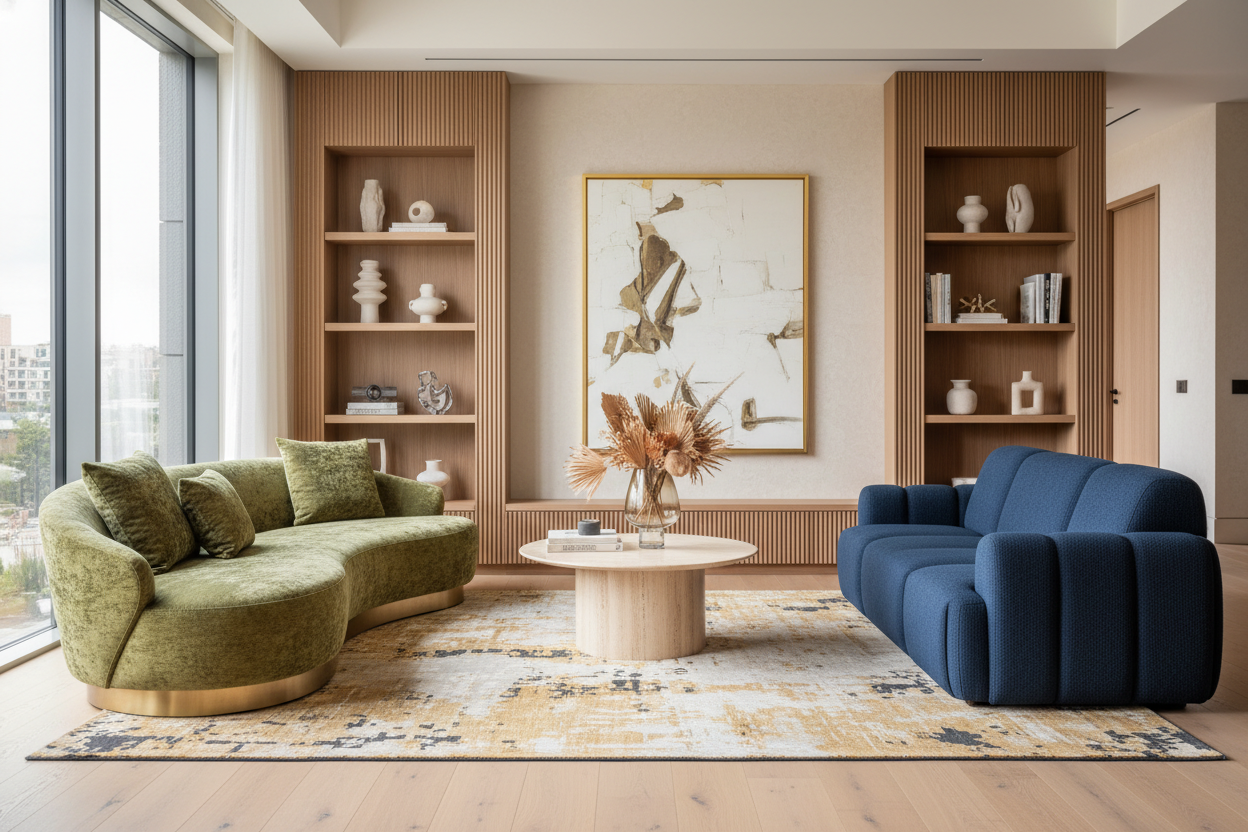

Leave a comment
This site is protected by hCaptcha and the hCaptcha Privacy Policy and Terms of Service apply.