

















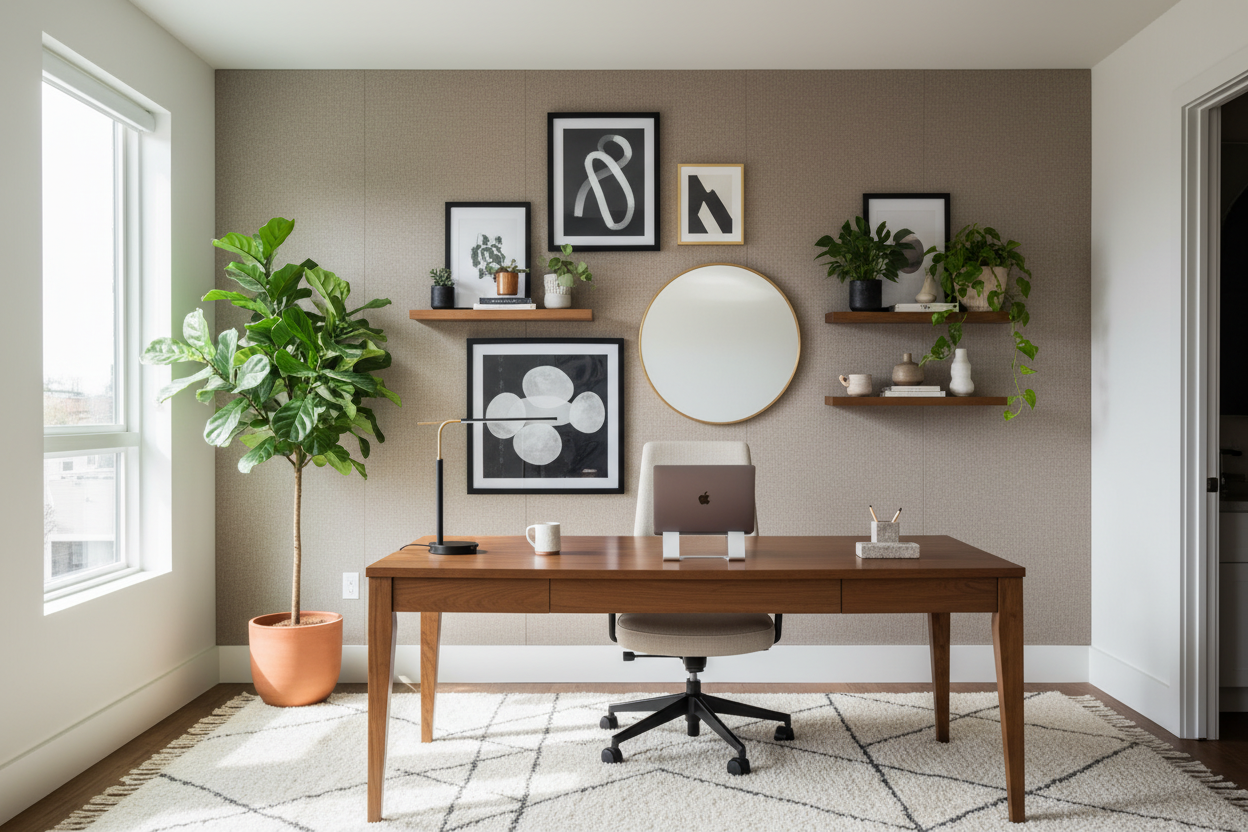
There is a distinct tension in home office design: the battle between a sterile, uninspiring blank slate and a cluttered, distracting mess. Most homeowners unintentionally lean towards the latter when trying to personalize their space. Effective desk wall decoration is not merely about filling a void; it is about curating a visual anchor that supports productivity while reflecting personal taste. When we design high-end studies, we treat the wall behind the desk as a functional canvas—one that must serve your workflow as much as it serves the room’s aesthetic.
Key Features to Look For
- Visual Weight & Scale: Ensure the decor occupies roughly two-thirds of the desk's width to maintain grounding without overwhelming the furniture.
- Acoustic Properties: Prioritize textured materials (canvas, wood slats, fabric) over glass to dampen sound and reduce echo during calls.
- Glare Control: Avoid high-gloss finishes or glass-framed art directly opposite windows to prevent eye strain from reflections.
- Functional Depth: If utilizing shelving, ensure a minimum clearance of 24 inches above the desk surface to preserve workspace ergonomics.
Mastering Visual Balance and Scale
The most frequent error I encounter in layout planning is the misalignment of scale. A petite frame floating above a substantial executive desk feels disconnected, while a massive, heavy shelving unit can make a sleek writing desk feel claustrophobic. The goal is cohesion.
To achieve a luxury look, think in terms of "visual anchoring." If you are using a gallery wall approach, treat the collection of frames as a single unit. This unit should visually connect with the desk below it, creating a vertical line of sight that draws the eye up without causing visual chaos. For a more minimalist approach, a single, large-scale piece of abstract art adds sophistication but must be hung low enough—typically 6 to 8 inches above the monitor or desk surface—to feel integrated rather than floating.
Materiality: Beyond the Visual
In professional interior design, we look beyond how a material looks to how it performs. Your wall decor desk setup has a significant impact on the room's acoustics. Hard surfaces bounce sound, which can make a home office feel cold and echoey—a disaster for video conferencing.
Textural Contrast
Introduce materials that soften the hard lines of technology. If your desk is glass or lacquered wood, opt for wall decor with organic texture. Woven wall hangings, matte canvas prints, or architectural wood slat panels add necessary warmth. This juxtaposition creates a "curated" feel rather than a "purchased" look.
Lighting Interaction and Ergonomics
Decor does not exist in a vacuum; it interacts with light. When selecting pieces for the area directly behind your monitor, consider the ambient light.
Highly reflective surfaces, such as mirrors or art framed behind polished glass, can create distracting hotspots when hit by task lighting or daylight. For a truly ergonomic setup, I always recommend matte finishes or non-reflective museum glass. This reduces eye strain, allowing the decor to recede when you need to focus and step forward when you take a break.
Lessons from My Own Projects
I learned the hard way that "Instagrammable" doesn't always mean "livable." Early in my career, I designed a home office for a client in a high-rise with floor-to-ceiling windows. To match the sleek aesthetic, I installed a series of high-gloss, black-and-white photography prints directly behind her monitor.
It looked stunning in photos. However, two weeks later, she called me complaining of headaches. The issue wasn't the art; it was the physics of light. Every afternoon, the sun hit the glass frames, creating a piercing glare that competed with her screen brightness. I had to swap them out for canvas pieces with a matte varnish. It was a subtle textural shift that completely resolved the eye strain while maintaining the monochrome palette. Now, I always check the sun path and monitor brightness before specifying glass-framed art in a direct line of sight.
Conclusion
Your workspace should be a sanctuary of focus, not a source of distraction. By selecting decor that balances scale, manages acoustics, and respects lighting conditions, you elevate the room from a simple utility space to a sophisticated design statement. Trust your intuition, but verify your choices against the practical needs of your workflow.
Frequently Asked Questions
How high should I hang art above my desk?
A good rule of thumb is to hang the bottom of the frame 6 to 10 inches above the top of your monitor or the desk surface. This ensures the art feels connected to the furniture rather than floating aimlessly near the ceiling.
Can I use shelves as decor without them looking cluttered?
Absolutely. The secret is negative space. Fill shelves only 50-60% capacity. Mix vertical items (books) with horizontal objects (trays, boxes) and leave "breathing room" so the wall color shows through, keeping the look airy.
What is the best wall decor for a small desk in a rental?
Lightweight, acoustic felt tiles or a large cork board with a finished frame are excellent choices. They add texture and function without requiring heavy drilling, and they help define the "office" zone in a multi-purpose room.


Leave a comment
This site is protected by hCaptcha and the hCaptcha Privacy Policy and Terms of Service apply.