

















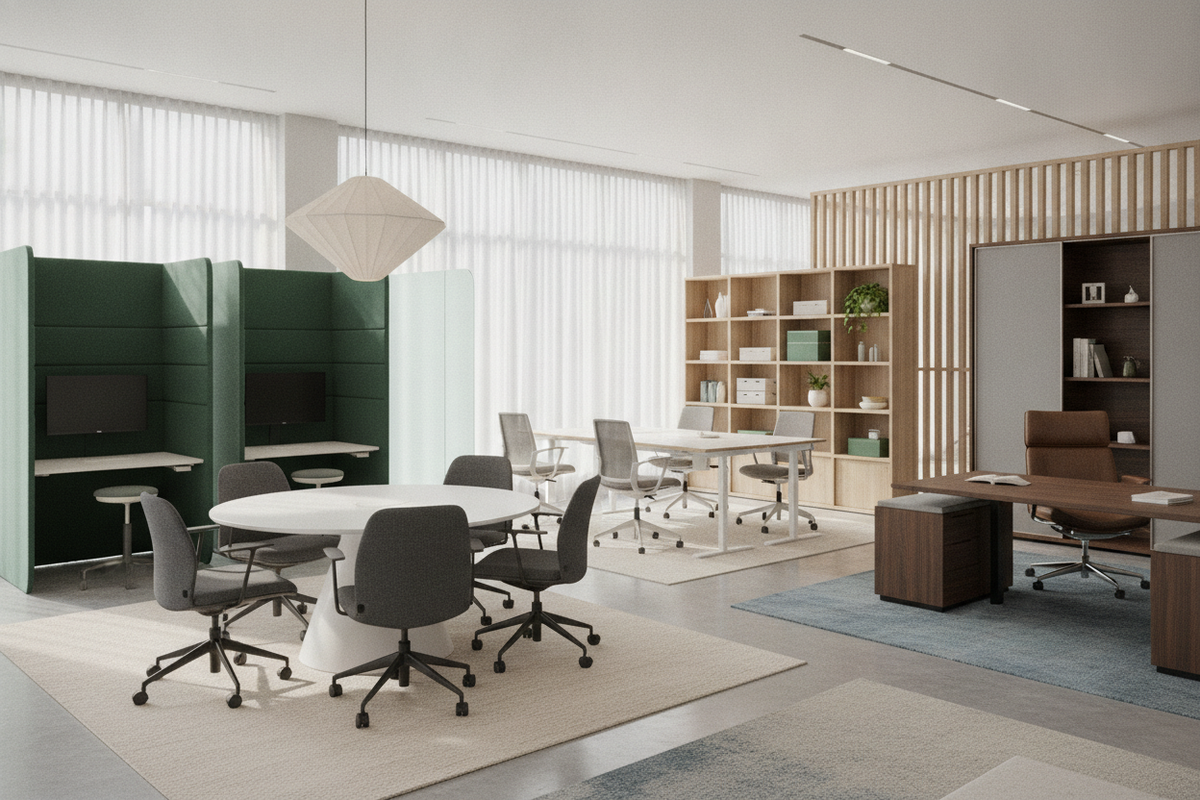
Understanding Retail Office Workstation Archetypes
Browsing retail office furniture environments reveals a wide spectrum of functional designs engineered for distinct work habits. Selecting the right workstation begins by identifying how your primary daily tasks align with specific desk archetypes, ranging from streamlined writing surfaces to comprehensive computing setups.
Minimalist writing tables emphasize open horizontal area with minimal structural obstruction, making them ideal for notebook journaling, laptop tasks, and casual administrative work. In contrast, dedicated computer workstations integrate structural accommodations for hardware peripherals, such as CPU cradles, wire channels, and lower shelving tiers. When evaluating expansive corner workstations and multi-surface setups for hybrid tasks, examining an office computer desk product demonstrates how dedicated return wings enhance workflow separation by dedicating one side to display screens and the other to analog paperwork.
Student study desks prioritize compact silhouettes with modest utility drawers, whereas executive models emphasize expansive tabletop depth, substantial modesty panels, and symmetrical dual-pedestal storage designed to anchor a dedicated private office.
Dimensional Sizing Tiers and Spatial Clearance Planning
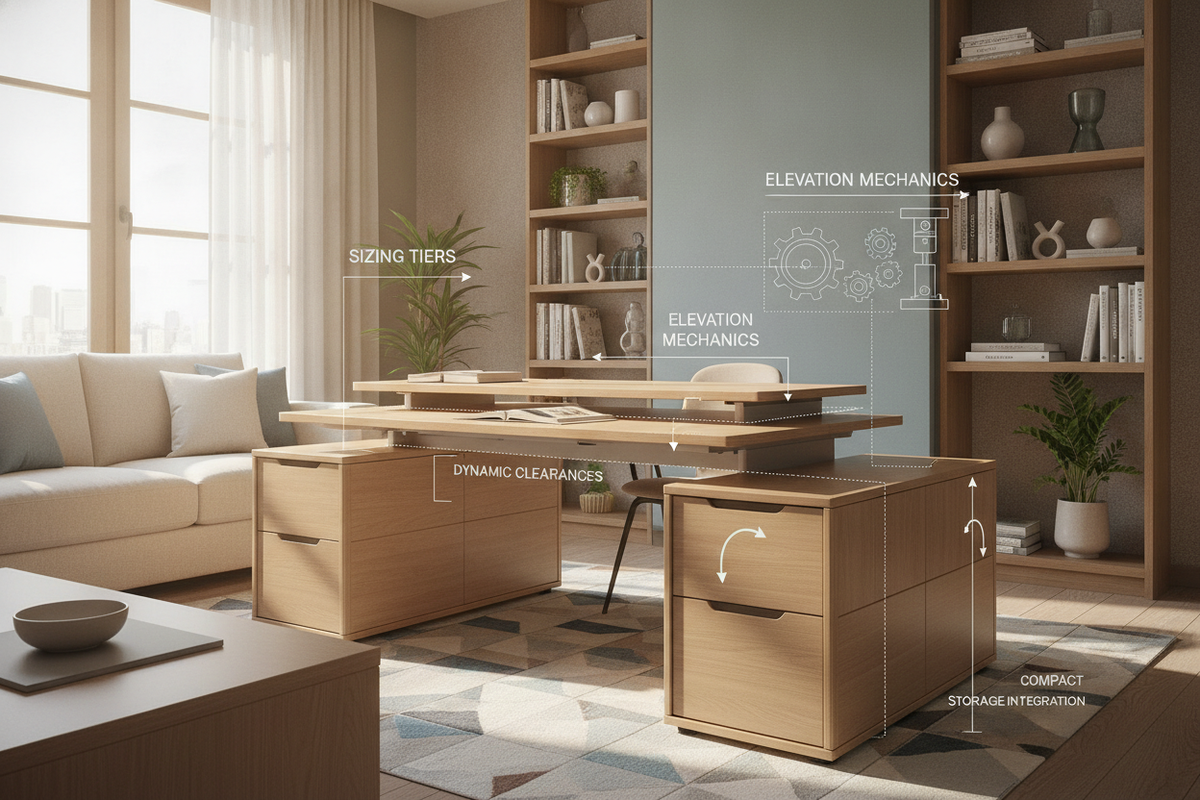
Proper spatial planning prevents overcrowding and maintains natural circulation paths throughout your room. Workstation footprints generally fall into three structural tiers, each suited to particular room scales and equipment requirements.
- Compact Footprint Tier: Designed for alcoves, shared bedrooms, and studio apartments, these narrow-profile desks maximize vertical utility while maintaining a shallow surface depth. For tight multi-use areas where open workstation silhouettes clutter the visual field, our computer desk office guide offers actionable insights on concealed and footprint-conscious layouts.
- Standard Mid-Size Tier: Balancing surface depth and room proportion, this category accommodates dual-monitor arms, desktop task lighting, and standard desk organizers without overwhelming mid-sized home studies.
- Executive and Expansive Tier: Intended for dedicated home offices, these large-format surfaces require generous perimeter clearance to allow free movement around side credenzas, guest seating, and door swings.
Beyond the surface dimensions, always account for the seating pushback zone behind the desk edge to ensure comfortable chair mobility, alongside sufficient knee-well width and height for natural posture.
Storage Architecture: Drawers, Hutches, and Keyboard Trays
Integrated storage architecture directly influences desktop organization and physical comfort. Choosing between open legroom and built-in cabinetry depends on your file archiving habits and peripheral setup.
Built-in pedestal drawers provide direct access to daily office supplies, hanging files, and personal hardware. If flexible floor arrangements are preferred, an open-frame table paired with standalone mobile pedestals lets you reposition storage units as equipment needs evolve. Pairing your core surface with coordinated shelving and cabinetry from a comprehensive office study collection ensures paperwork and equipment remain accessible without crowding desktop real estate.
For tasks requiring sustained typing, desks equipped with retractable keyboard trays preserve main desktop depth while positioning input devices closer to elbow height. Additionally, overhead vertical hutches utilize wall space above the main surface, keeping reference books, binders, and decor organized off the primary work plane. To complement foundational storage modules with ergonomic accessories and peripheral organization, review our desk have office guide.
Material Integrity and Structural Build Comparisons
The longevity, visual character, and maintenance requirements of an office desk depend largely on its structural composition. Comparing common furniture materials helps match the investment to your aesthetic and durability expectations.
Engineered wood cores clad in high-pressure laminate or melamine coatings represent a practical standard for modern office workstations. These surfaces resist everyday moisture rings, minor scuffs, and pen marks while offering uniform grain patterns and easy wipe-down cleaning. For workspaces demanding timeless natural materials and exceptional frame rigidity, investing in a solid wood desk product provides a durable, tactile focal point that ages gracefully over years of regular use.
Desks featuring powder-coated steel leg frames and perimeter under-rails deliver high structural rigidity with minimal visual weight, making them excellent candidates for industrial and contemporary interior styles.
Assembly, Cable Management, and Room Placement Strategies
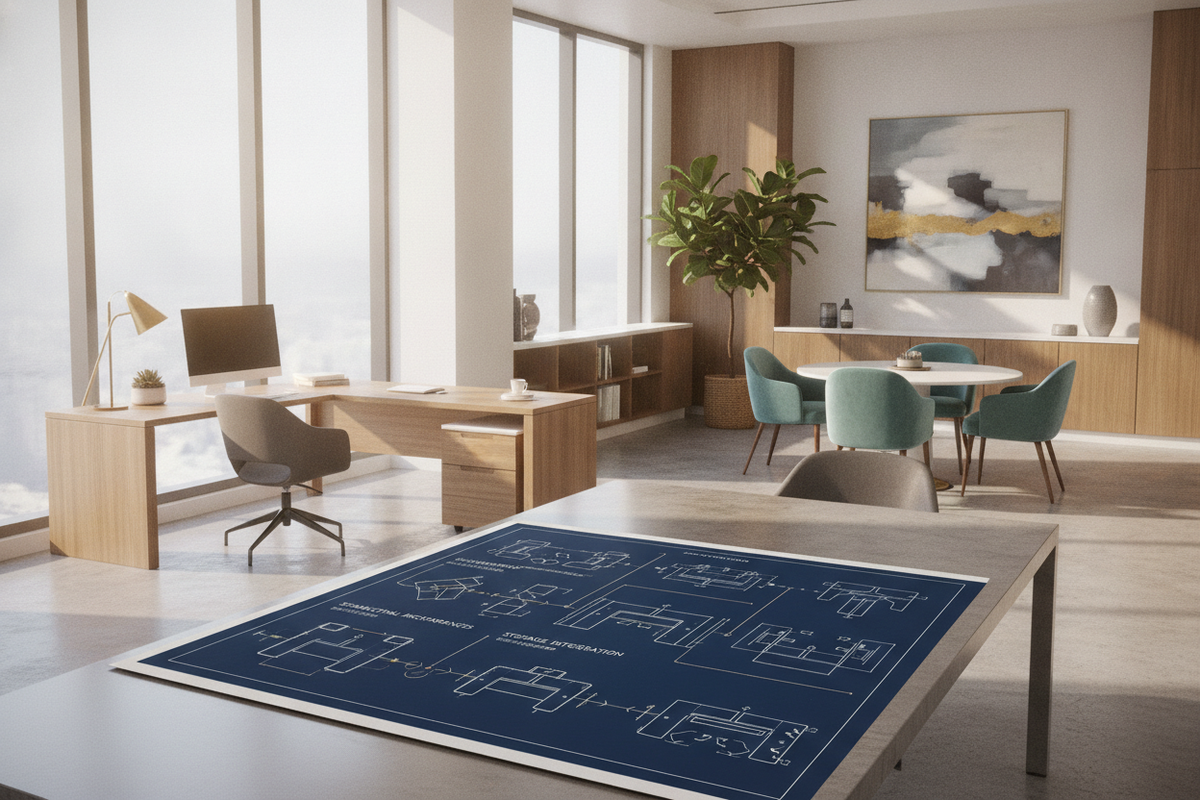
Proper assembly and strategic positioning transform a flat-pack retail desk into a stable, clutter-free productivity hub. Implementing systematic assembly practices ensures long-term frame stability.
- Component Sorting and Leveling: Organize all hardware fittings before starting, square the structural frame prior to final fastener tightening, and adjust threaded foot glides to eliminate wobbling on uneven flooring.
- Integrated Cable Routing: Utilize built-in desktop grommets, under-desk wire trays, and adhesive spine channels to route power cords and display cables away from foot resting areas.
- Natural Lighting Orientation: Position the desk perpendicular to windows whenever possible to capture natural side daylight while preventing direct sunlight glare across computer monitors.

Leave a comment
This site is protected by hCaptcha and the hCaptcha Privacy Policy and Terms of Service apply.