

















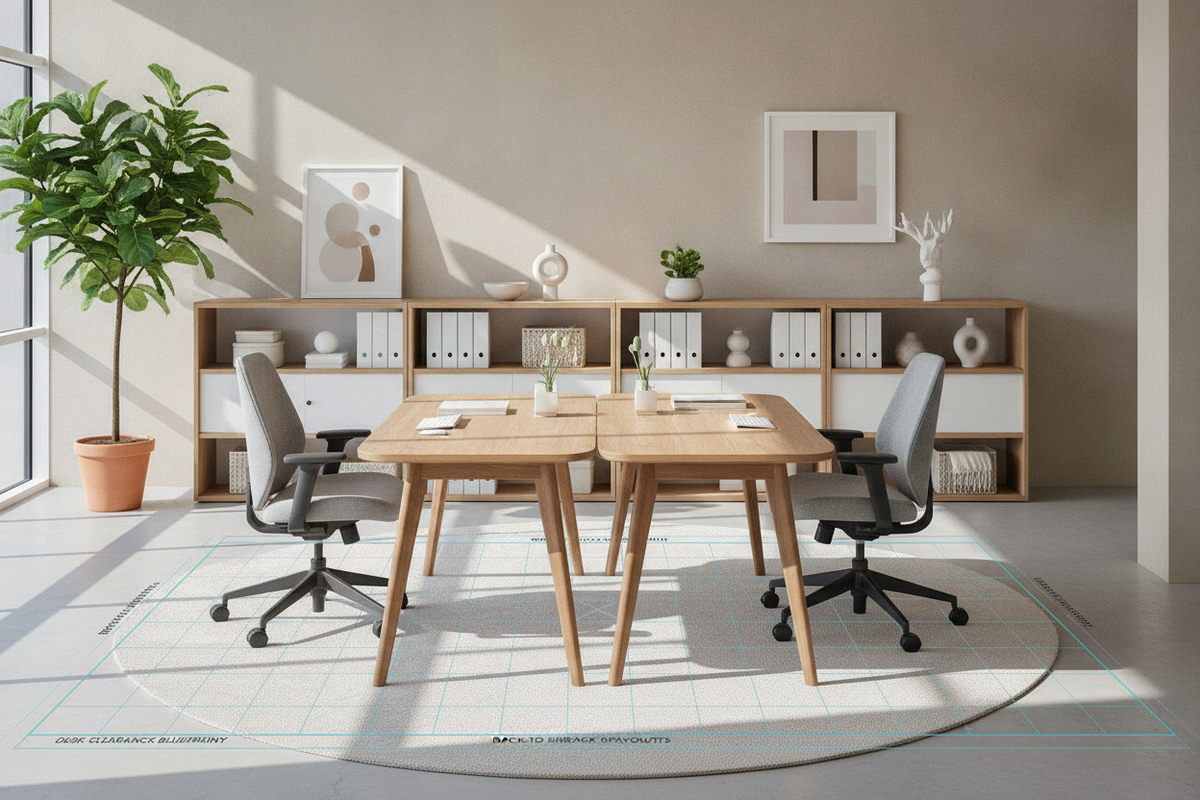
1. The Anatomy of Behind-Desk Clearance: Why Static Measurements Fail
Spatial planning in an office often begins with desktop dimensions, yet the usability of any workspace depends directly on the clearance envelope behind the work surface. Treating rear clearance as a static footprint overlooks the dynamic nature of desk work. When evaluating your layout alongside a desk wall behind guide, the space behind a desk must comfortably accommodate three distinct behavioral zones: the seated task zone, the egress pushback radius, and secondary circulation flow.
The seated task zone is the baseline depth occupied by the desk chair while an individual is actively typing or writing. The egress pushback radius represents the additional space required to roll the chair backward, tilt the backrest, and stand up without bumping against baseboards, credenzas, or adjacent colleagues. Finally, circulation clearance determines whether another person can walk behind a seated worker without causing disruption or requiring the chair to be pulled inward.
2. Behind-Desk Spatial Clearance Tiers: Compact, Standard, and Executive Walkways
To plan an efficient layout, interior designers categorize rear desk space into functional clearance tiers based on room dimensions and daily activity patterns:
- Compact Footprint Tier: Suitable for small bedrooms or study nooks where space is at a premium. This tier provides enough room for standard task seating and basic standing egress, though rear movement remains closely bounded by the nearest wall or panel.
- Standard Ergonomic Tier: The baseline for everyday productivity in dedicated home offices. This clearance allows full chair pushback, comfortable recline adjustments, and effortless entry and exit without scuffing baseboards or colliding with background furniture.
- Executive and Shared Pathway Tier: Designed for primary workspaces that double as secondary interior corridors. This generous zone allows a colleague or family member to walk behind the desk comfortably while the occupant remains fully seated and engaged in tasks.
Understanding these distinct tiers allows planners to balance furniture proportions against the room's total perimeter, as detailed in our desk office wall guide.
3. Chair Pushback Dynamics and Wall Protection Framework
Desk chair mechanics significantly impact behind-desk clearance requirements. Standard office seating utilizes a five-star caster base, which creates a wider rotational footprint than traditional stationary four-legged chairs. When an occupant leans back or swivels, the caster base sweeps an extended circular arc.
Failing to account for this dynamic arc often leads to scuffed drywall, damaged trim, or snagged power cables. To maintain a pristine wall finish and protect electrical connections, ensure your rear clearance accommodates both the physical chair frame and the recline travel of the backrest.
4. Back-to-Back Desk Layouts: Shared Buffer Geometry and Interaction Zones
When positioning multiple workstations in an open room or shared studio, placing desks back-to-back is a popular strategy to centralize power management and create clean sightlines. However, back-to-back configurations introduce overlapping clearance zones that require careful planning.
In a dual-occupant arrangement, the space between desk edges must support two concurrent chair pushback envelopes. If the shared gap is too narrow, users will experience frequent caster collisions, entangled cords, or restricted mobility whenever both individuals push back simultaneously. Selecting modular workstation formats, such as a versatile office desk product, helps define balanced personal boundaries while preserving harmonious central clearance.
5. Office Walkways and Secondary Circulation Flow
Circulation flow dictates how comfortably an office operates throughout a busy workday. Spatial pathways fall into two functional categories:
- Primary Corridors: High-traffic main thoroughfares that connect doorways, storage alcoves, and presentation zones. When a desk backs directly into a primary corridor, generous clearance is necessary so passing traffic never brushes against the seated worker's chair.
- Secondary Access Lanes: Low-traffic approach paths used exclusively by the desk occupant to access personal filing or nearby window latches. These lanes can operate effectively on moderate clearance tiers without impeding general room movement.
6. Coordinating Rear Storage, Filing Cabinets, and Lateral Clearance
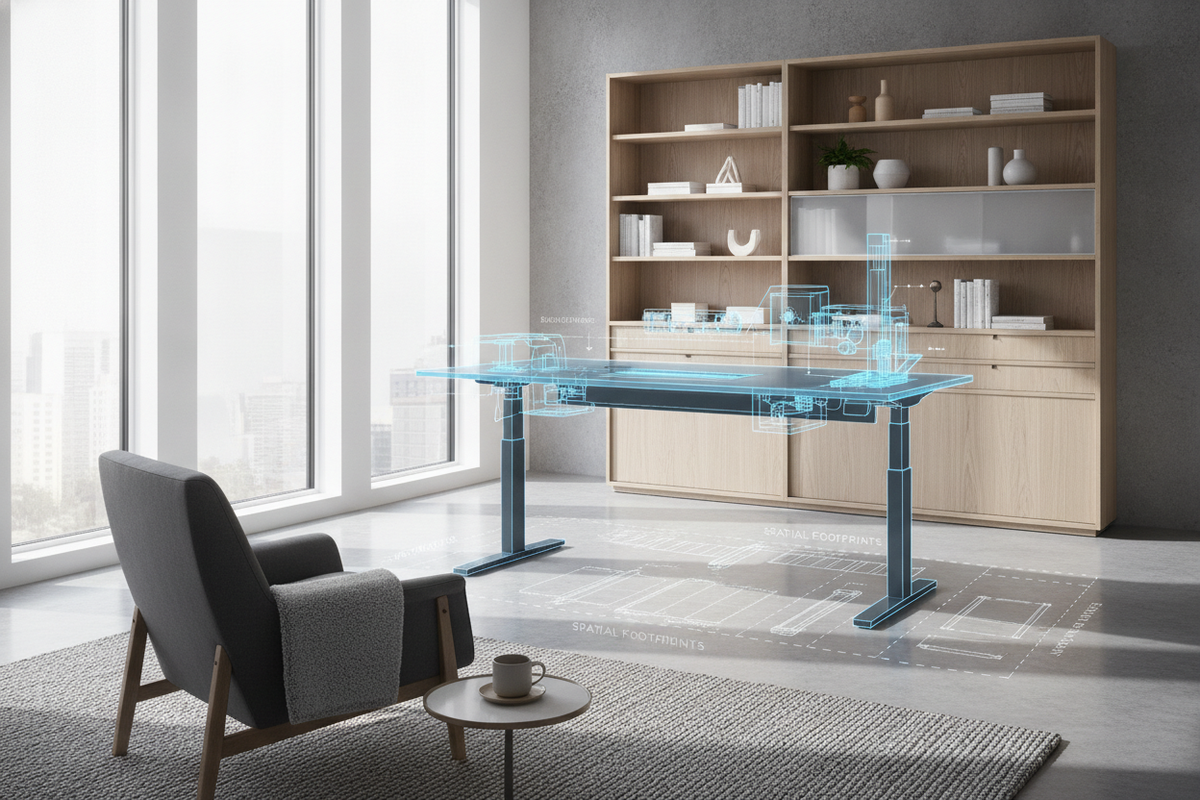
Placing credenzas, bookshelves, or lateral file units behind a desk provides exceptional organizational efficiency, but it complicates behind-desk spatial planning. When positioning storage along the rear perimeter, total clearance must account for the full extension depth of drawers and swing radius of cabinet doors, as explored in our office desk space guide.
For instance, an integrated credenza setup with an office desk product requires enough space for the seated chair zone, plus the full pull-out depth of filing drawers, plus an additional standing buffer for the person accessing files. Arranging lateral pathways to skirt around active drawer tracks ensures seamless access without demanding constant chair repositioning.
7. Room Archetypes: Mapping Clearances in Small Nooks, Open Offices, and Corner Setups
Every architectural layout presents distinct spatial boundaries. Applying clearance principles according to room archetype ensures balanced ergonomics across any environment:
- Alcoves and Closets: Prioritize vertical storage on side returns rather than directly behind the chair to maximize rear pushback depth.
- Corner and L-Shaped Configurations: Utilize the open diagonal corner to afford the chair an extended pushback trajectory while maintaining streamlined perimeter clearance along adjacent walls.
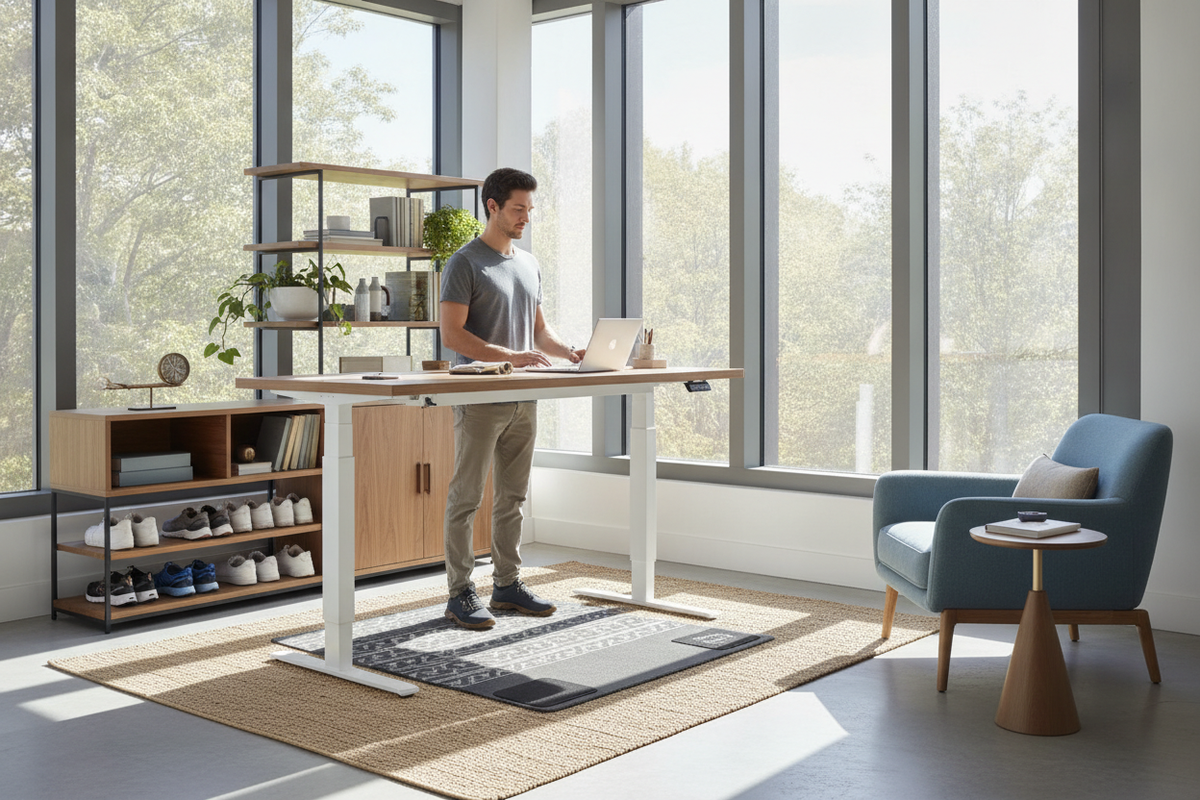
- Open-Plan Suites: Define natural walkway boundaries using area rugs or low storage credenzas, establishing dedicated personal clearance envelopes that keep pedestrian circulation clear of task seating.

Leave a comment
This site is protected by hCaptcha and the hCaptcha Privacy Policy and Terms of Service apply.