

















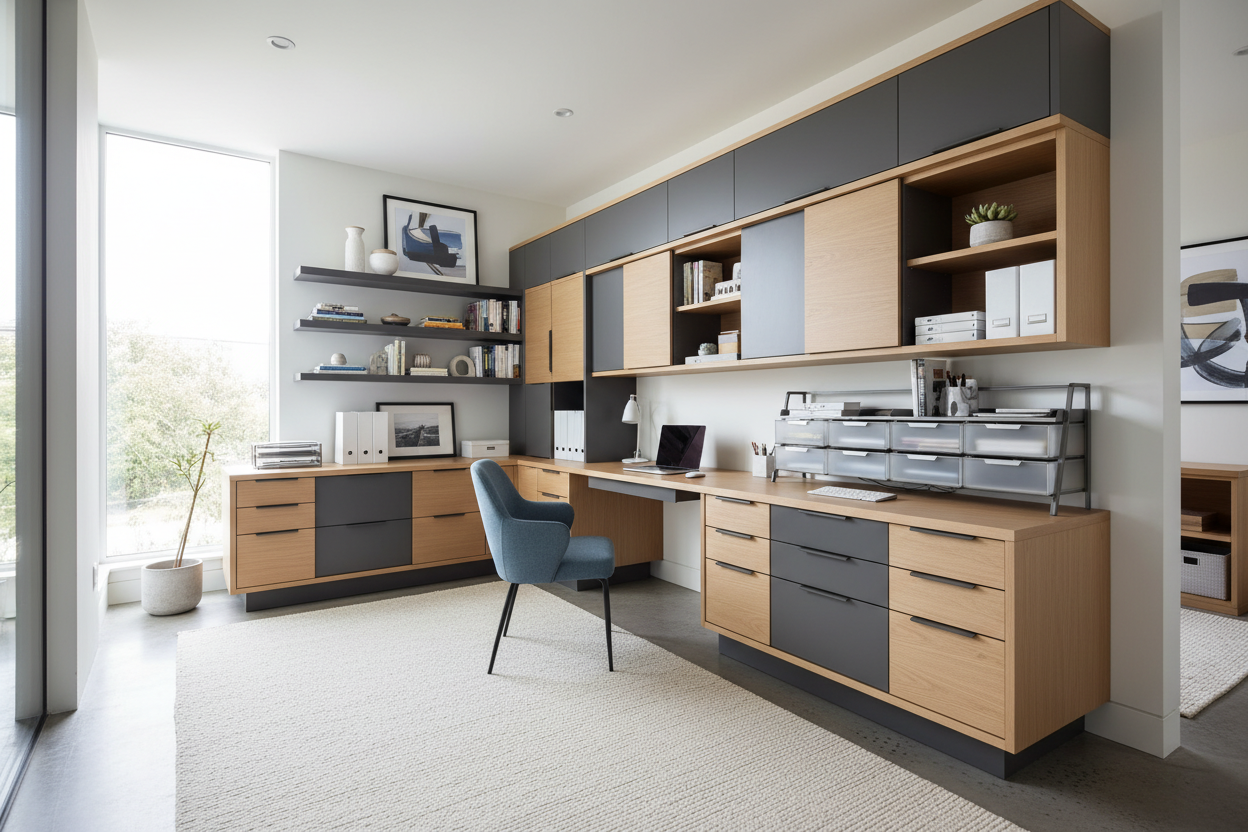
Most home offices start with the best intentions—a sleek desk, a great chair, and a minimalist aesthetic. But within a few months, that pristine surface inevitably becomes a dumping ground for mail, tech accessories, and loose paperwork. The reality is that a desk alone cannot handle the physical footprint of modern work. Integrating a dedicated cabinet organizer office system is the most effective way to maintain visual breathing room while keeping your daily essentials within arm's reach. Today, we are breaking down exactly how to choose, place, and style your workspace storage so it works as hard as you do.
Quick Decision Guide
- Prioritize internal depth: Ensure your cabinet has at least 15 inches of internal clearance if you plan to store standard binders or hanging file boxes.
- Mix open and closed storage: Hide the visually heavy items (cords, reams of paper) behind solid doors, and reserve open shelving for curated books or sculptural objects.
- Match your workflow: Place primary storage within a 48-inch radius of your desk chair to avoid constant standing and reaching.
- Anchor the room: Use taller cabinets to draw the eye up in rooms with low ceilings, creating the illusion of more volume.
Space Planning: Where to Place Your Storage
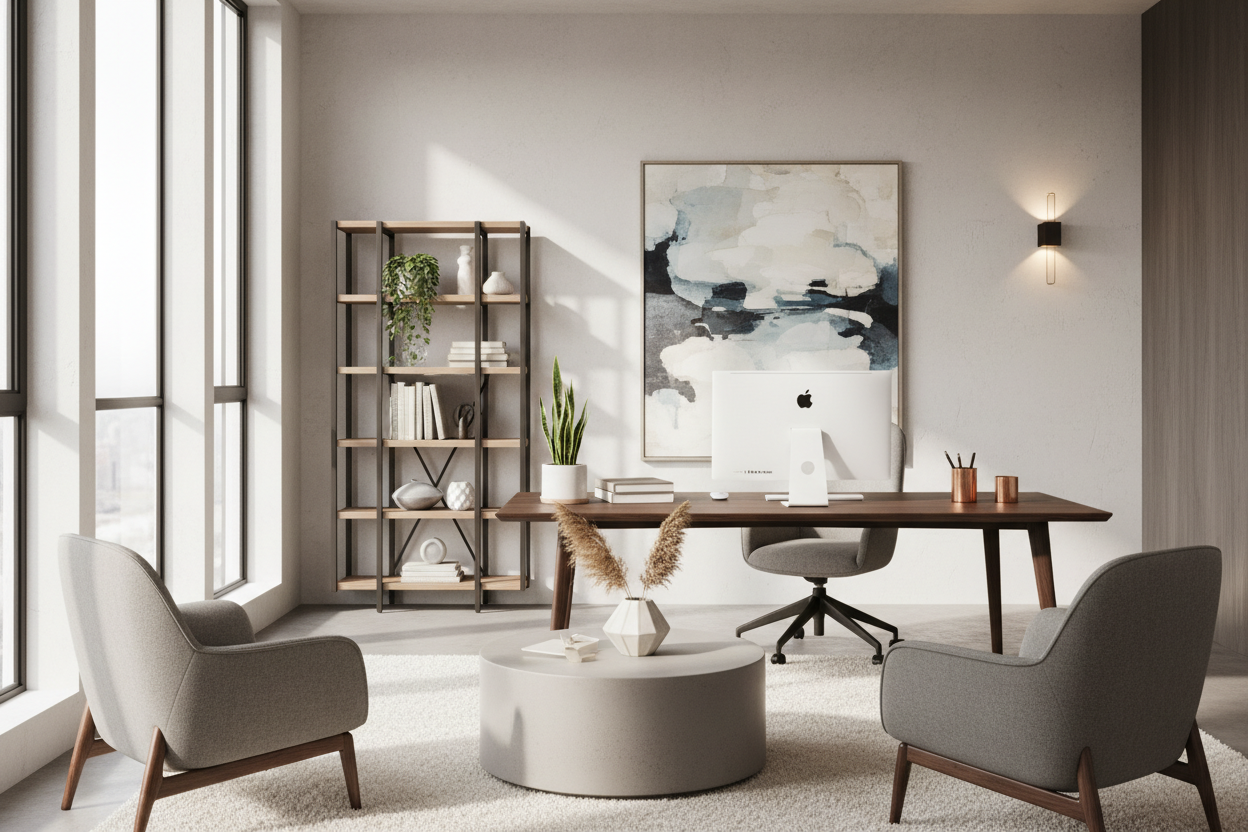
In typical North American home offices, floor space is often at a premium. When you are mapping out your layout, the relationship between your primary workspace and your secondary storage dictates how the room feels. If you place a heavy, dark cabinet immediately next to the door, the room will feel cramped the second you walk in. Instead, place taller storage pieces on the wall opposite the entrance to pull the eye through the space.
Integrating Desk Storage Units
If you are working with a smaller footprint, you need pieces that do double duty. Rather than buying a massive standalone credenza, look into modular desk storage units that can slide underneath your primary work surface or flank it on either side. Just remember to leave at least 30 inches of clearance behind your chair so you can roll back comfortably without hitting the drawer pulls.
Concealed vs. Open: Striking the Right Balance
One of the biggest mistakes I see clients make is buying entirely open shelving for their home office. While it looks fantastic in a staged catalog, it requires constant styling to prevent it from looking cluttered. Concealed storage is your best friend in a working environment.
Choosing an Office Cupboard Organizer
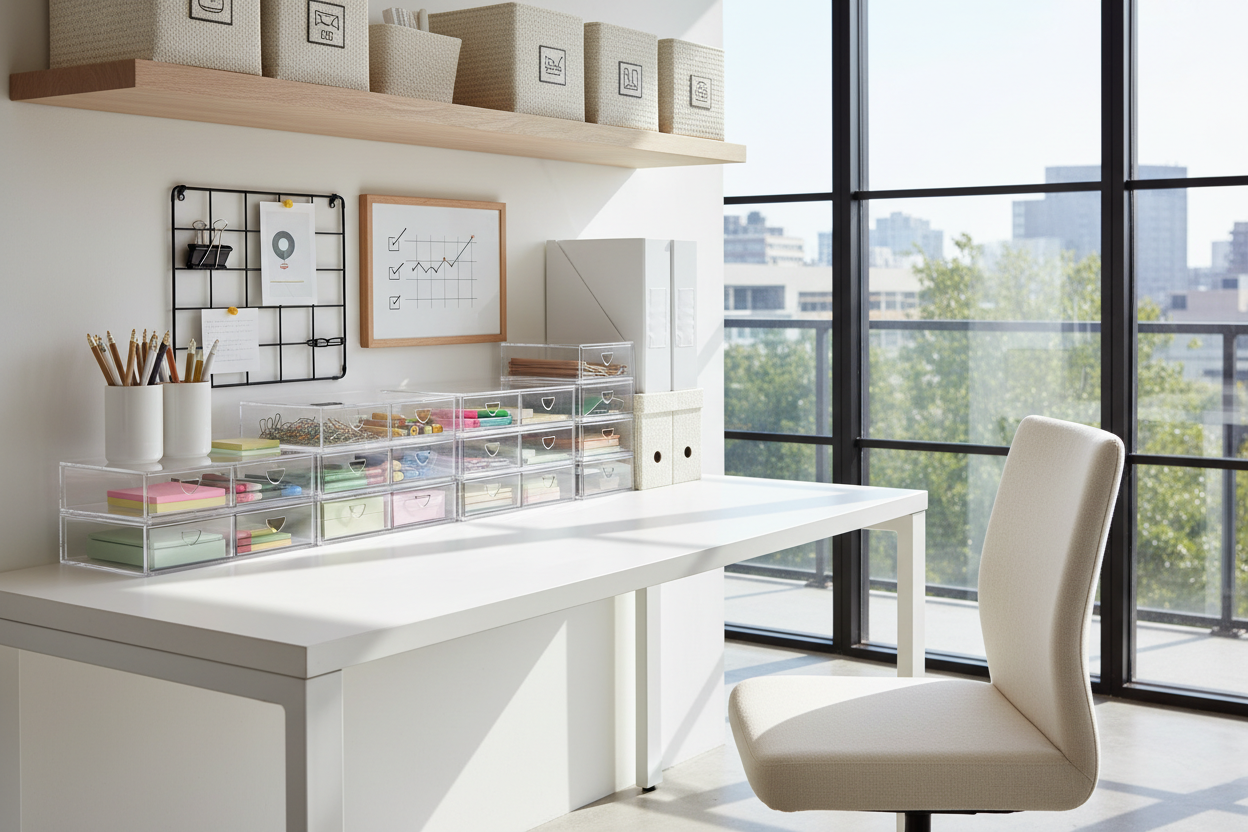
To maximize the utility of your concealed spaces, you need an internal strategy. Installing an office cupboard organizer—like tiered acrylic shelves for supplies or vertical dividers for laptops and tablets—prevents the interior from becoming a dark abyss. Treat the inside of your cabinets with the same spatial respect as the outside.
Evaluating Office Cabinet Storage Solutions
When assessing office cabinet storage solutions, material choice dictates both longevity and maintenance. Solid oak or walnut will withstand decades of use and anchor a room with beautiful natural texture, but they require climate control to prevent warping during humid summers. If you are on a tighter budget, high-quality engineered wood with a thermally fused laminate (TFL) finish offers incredible scratch resistance, making it ideal for high-traffic family homes where kids might use the office for homework.
Designer's Honest Take: Lessons from My Own Projects
Early in my career, I sourced a stunning mid-century modern credenza to act as an office cabinet storage organizer for a client's executive home office. The matte walnut finish was flawless, and the silhouette was exactly what the room needed. However, I learned the hard way that vintage furniture rarely accommodates modern office dimensions. The internal drawers were exactly a quarter-inch too shallow for standard letter-sized hanging file rails. Every time the client closed the drawer, the files scraped the wood above them. I had to hire a custom millworker to retrofit the entire internal track system. The lesson? Always physically measure the internal clearance of your storage against the specific items you plan to put inside. Never trust the exterior dimensions alone.
Frequently Asked Questions
What depth is best for a home office cabinet?
For general office supplies and standard binders, aim for an internal depth of 15 to 18 inches. If you are storing oversized architectural plans or a large printer, you will need a piece with at least 20 to 24 inches of depth.
How do I organize deep cabinet shelves?
Deep shelves easily become black holes for loose items. Use pull-out wire baskets or solid storage bins with labels to group smaller items. This allows you to slide the entire bin out rather than reaching blindly into the back of the cabinet.
Are metal or wood cabinets better for longevity?
Powder-coated metal cabinets are virtually indestructible and great for industrial or modern aesthetics, but they can sound loud and hollow in a small room. Solid wood or heavy-duty plywood offers superior acoustic dampening and a warmer aesthetic, though they require more care to prevent surface scratches.

Leave a comment
This site is protected by hCaptcha and the hCaptcha Privacy Policy and Terms of Service apply.