

















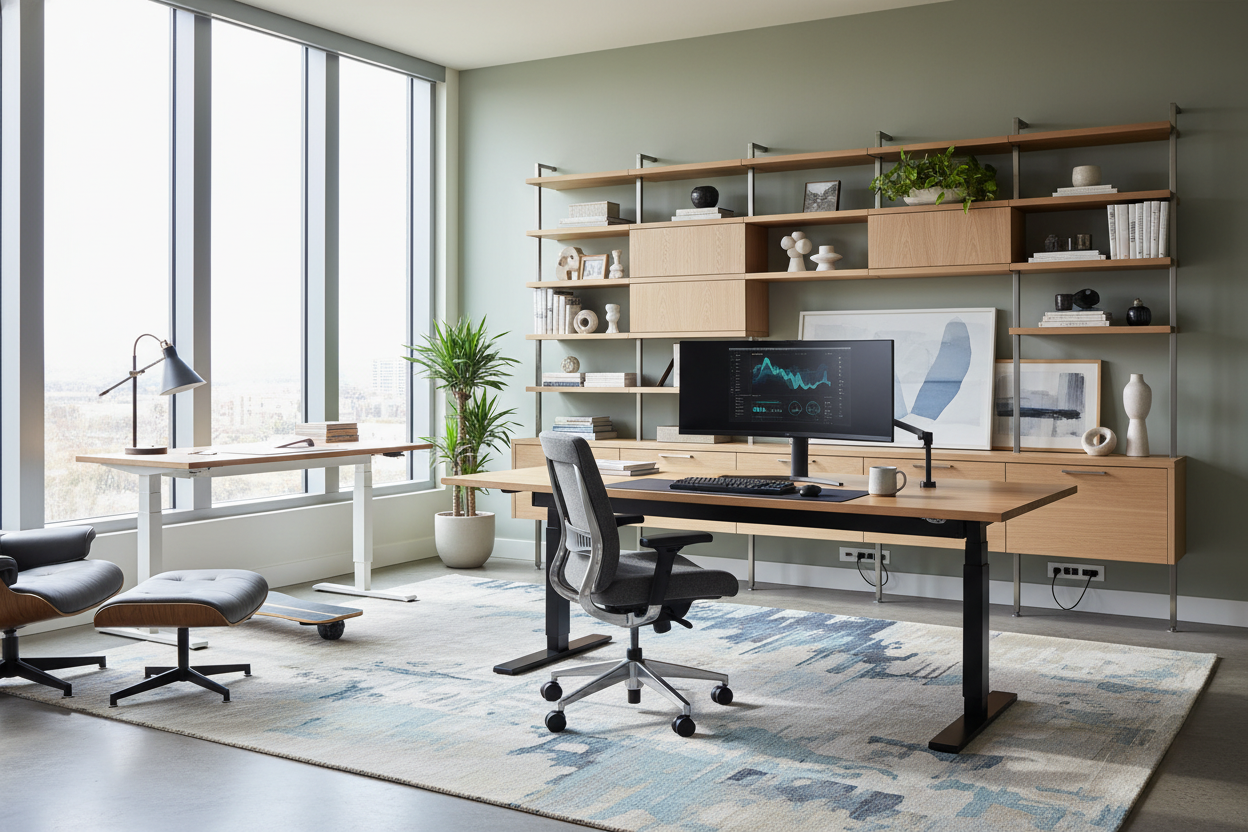
The distinction between our living sanctuaries and our professional environments has never been more porous. When clients approach me for home office ideas, the conversation rarely starts with a desk; it starts with a feeling. They are tired of the kitchen table, the back pain, and the visual clutter that disrupts their mental clarity. This article isn't just about buying furniture; it is about curating a professional ecosystem within your home that balances high-end aesthetics with rigorous functionality.
Key Pillars of a Productive Workspace
- Ergonomics First: Prioritize chairs with lumbar support and adjustable seat depth over purely decorative options.
- Lighting Layers: Combine ambient overhead lighting with focused task lighting to reduce eye strain.
- Material Integrity: Choose durable surfaces like solid wood or high-pressure laminate that withstand daily wear.
- Spatial Flow: distinct separation between 'work zones' and 'rest zones' to maintain work-life balance.
- Acoustics: Incorporate rugs, drapes, or acoustic panels to dampen noise and echo.
Mastering Layout and Space Planning
Before purchasing a single item, assess the architecture of your room. Effective home office design relies on flow. For a dedicated room, floating the desk in the center can command authority and allow you to face the door—a classic 'power position.' However, for smaller home office spaces ideas, placing the desk perpendicular to a window maximizes natural light without creating screen glare.
Zoning for Small Spaces
Not everyone has a spare room. If you are looking for office space ideas in home nooks, consider verticality. A ladder shelf with a built-in drop-leaf desk offers a simple home office design that disappears when not in use. The goal is to define the home office area through rugs or lighting, creating a psychological boundary between work and leisure.
Furniture Selection: Material and Form
Home office furniture ideas must bridge the gap between commercial durability and residential warmth. When selecting a desk, consider the tactile experience. A glass desk might look sleek for modern office designs home, but it is cold to the touch and amplifies sound.
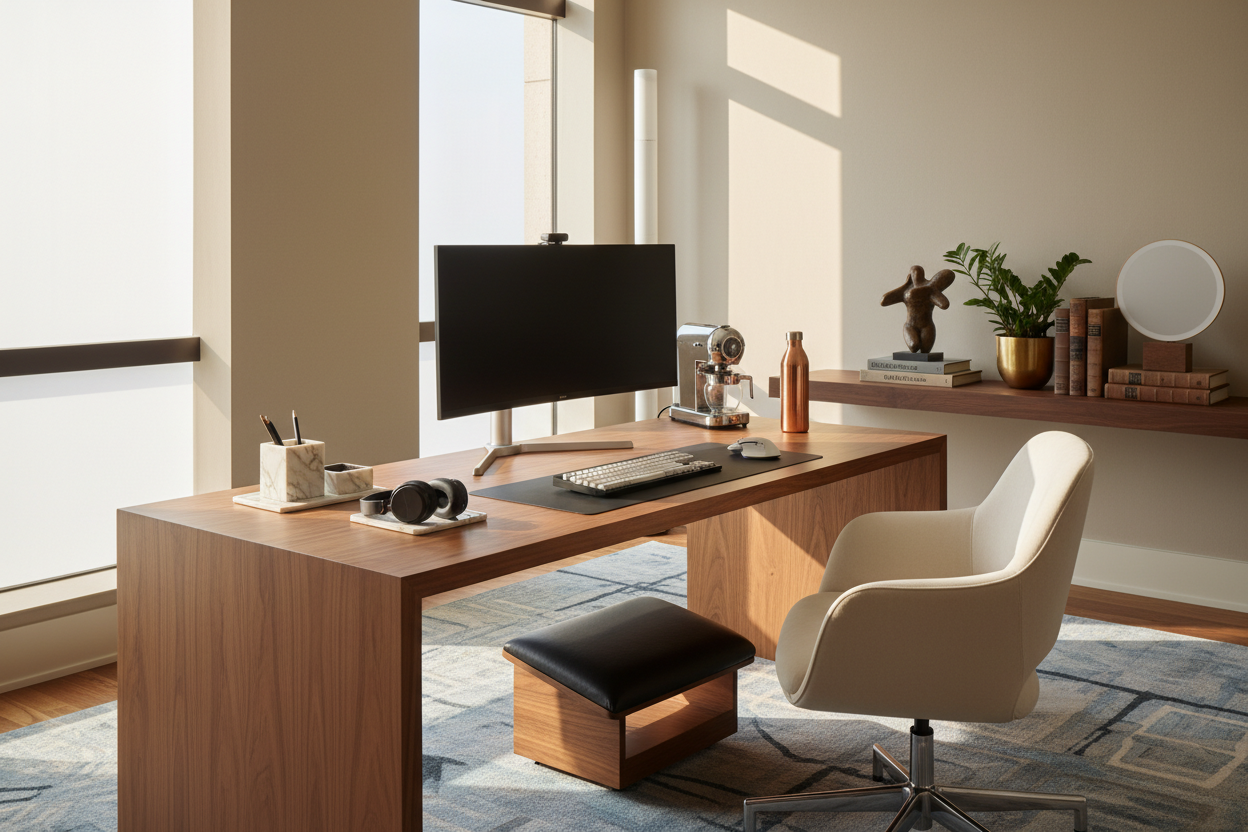
I often recommend solid wood or high-quality veneers (like walnut or white oak) for personal office designs. Wood adds warmth and absorbs sound. Pay attention to the 'modesty panel'—the back of the desk—if it will be visible. For home office work space seating, avoid the temptation of a dining chair. Look for a task chair with a breathable mesh back and a synchro-tilt mechanism, upholstered in a performance fabric that complements your room's palette.
Lighting and Ambiance
One of the most overlooked office room ideas at home is lighting temperature. Avoid cool, clinical LEDs (4000K+) which can feel sterile. Opt for 3000K bulbs that mimic soft daylight. Cool home office designs often utilize a statement floor lamp to provide ambient fill light, ensuring you don't look washed out on video calls. This approach transforms a sterile working room into an inviting personal office.
Styling: The 'Funky' vs. The Functional
Unique home office ideas emerge in the details. While a minimalist approach is safe, a funky home office with bold wallpaper or a gallery wall behind the desk provides visual interest and energy. However, keep the desk surface clear. Use cable management spines and under-mount trays to keep office setup at home ideas looking intentional, not chaotic. Your home office looks should reflect your personality but respect your need for focus.
Lessons from My Own Projects: The 'Glass Desk' Mistake
Years ago, I designed a home office workspace for a client who insisted on a minimalist, architectural glass desk. It looked stunning in the photos—a truly awesome home office idea on paper. However, two months later, we had to replace it.
Why? The reality of daily use. The glass was perpetually cold on her forearms, which became uncomfortable during long typing sessions. Furthermore, glass hides nothing. Every cable, every dust bunny, and every fingerprint was visible, creating visual noise that distracted her. I learned then that real home office ideas must prioritize the tactile experience over the visual snapshot. Now, I always steer clients toward materials that age well and feel good against the skin, like leather-topped desks or warm timber.
Conclusion
Whether you are planning a full home office renovation or just seeking home office arrangement ideas to optimize a corner, the secret lies in balance. Invest in things you touch (the chair, the desk surface) and control the light. Your environment dictates your output; design it wisely.
Frequently Asked Questions
How do I design a home office in a bedroom?
For in home office ideas within a bedroom, visual separation is key. Use a room divider or position the desk so you do not face the bed while working. Choose home office furniture design ideas that blend with your bedroom decor, such as a writing desk that doubles as a vanity.
What is the best color for a home office?
Great home office designs often utilize Blue or Green tones. These colors are biophilic and proven to reduce stress and improve focus. Avoid overly bright reds, which can induce anxiety, or stark whites, which can cause eye strain.
Is a standing desk worth the investment?
Absolutely. Modern home office concepts almost always include sit-stand capability. It improves circulation and energy levels. If a full standing desk doesn't fit your home office style ideas, look for a high-end converter that sits atop a traditional desk.

Leave a comment
This site is protected by hCaptcha and the hCaptcha Privacy Policy and Terms of Service apply.