

















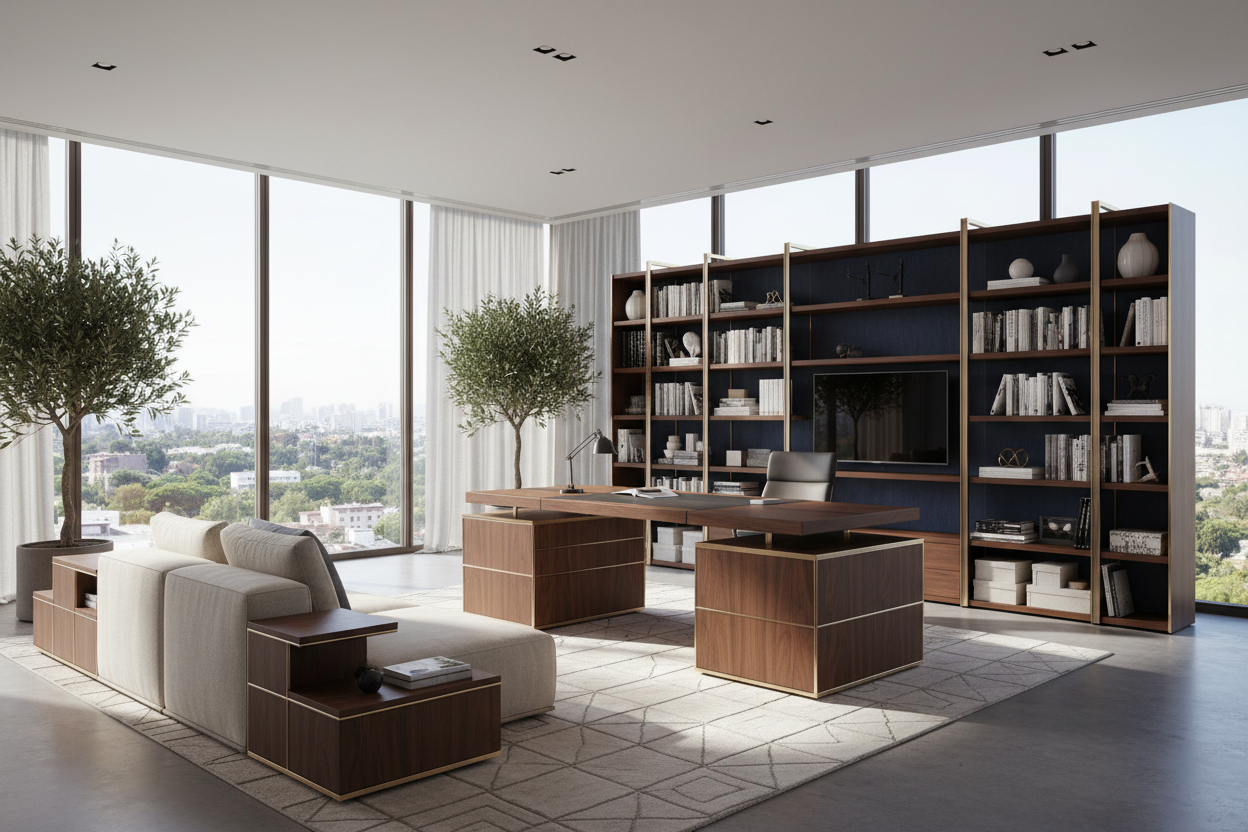
We have all faced the rigid workspace dilemma: you buy a desk that fits your current needs perfectly, but six months later, you need a printer stand, more shelving, or a layout change, and suddenly nothing matches. The result is a disjointed room that feels more like a storage unit than a place of inspiration. This is where home office modular furniture bridges the gap between custom millwork and retail convenience. It allows you to curate a workspace that evolves with your career while maintaining a cohesive, high-end aesthetic.
Key Features to Look For
Before committing to a system, use this checklist to ensure you are selecting pieces that offer longevity and genuine flexibility rather than just short-term convenience.
- Joinery Mechanics: Look for metal-on-metal connections (cam locks or bolts) rather than wood screws, which strip after disassembly.
- Material Core: High-density fiberboard (HDF) or plywood cores resist sagging better than standard particle board.
- Modularity Logic: Ensure the brand sells individual components (add-on shelves, corner units) separately, not just pre-bundled sets.
- Cable Management: Integrated channels are essential to keep the visual profile clean and free of wire clutter.
Selecting the Right Material and Finish
When selecting a modular home office system, the finish determines both the longevity and the perceived value of the space. In my design practice, I often steer clients toward high-pressure laminates (HPL) or architectural-grade veneers. While solid wood is beautiful, it can be heavy and prone to warping in modular systems that rely on precise alignment.
If you choose veneer, look for "book-matched" grains, where the wood pattern flows seamlessly from one cabinet door to the next. This creates the illusion of a single, custom-built unit rather than separate boxes bolted together. For a more modern, durable approach, matte Fenix laminates offer thermal healing properties against micro-scratches—perfect for high-traffic desk surfaces.
Space Planning and Layout Flow
The beauty of modular furniture for home office setups lies in the ability to manipulate "visual weight." In smaller rooms, avoid lining every wall with floor-to-ceiling units, as this creates a claustrophobic "canyon" effect.
Balancing Vertical and Horizontal Lines
Instead, use a stepped approach. Place taller storage towers in corners to anchor the room, and bridge them with lower credenzas or floating modular shelves. This preserves your sightlines and keeps the room feeling airy. Ensure you leave at least 36 to 48 inches of clearance behind your desk chair for comfortable movement; modular units often have deeper footprints than standard writing desks, so measuring your floor space is critical.
Ergonomics Hidden in Design
A common critique of modular systems is that they prioritize storage over sitting comfort. As a specialist, I advise looking for systems that offer "cantilevered" desk surfaces or recessed modesty panels. These design elements allow you to swivel freely without banging your knees against structural supports.
Furthermore, consider how the hardware interacts with your daily workflow. Push-to-open latches eliminate protruding handles, creating a sleek silhouette that prevents clothing snags in tighter layouts. It is these subtle ergonomic details that separate "flat-pack" furniture from professional-grade design systems.
Lessons from My Own Projects
I want to share a specific challenge I encountered while installing a modular system for a client in a pre-war apartment. On paper, the measurements were perfect. In reality, the floor had a significant slope—nearly an inch over a ten-foot span. This is the "unpolished" reality of modular furniture: it requires a level foundation to look built-in.
Because we didn't account for the floor variance initially, the cabinet doors wouldn't align, leaving unsightly, uneven gaps. I learned the hard way that adjustable leveling feet are non-negotiable. If you are buying a system that sits flush on the floor (without visible legs), make sure you have access to adjusters from the inside of the cabinet. Having to empty a bookshelf and tip it over just to fix a wobbling corner is a nightmare you want to avoid. Also, watch out for baseboards; unless you are willing to scribe (cut) the furniture or remove the trim, your modular unit will sit an inch off the wall, creating a gap where pens and papers inevitably fall.
Conclusion
Investing in the right system is about future-proofing your environment. By focusing on quality joinery, thoughtful materiality, and proper leveling, you can create a workspace that feels permanent yet adapts to your changing needs. Treat your furniture as a tool for productivity, not just decoration.
Frequently Asked Questions
Can I mix modular components from different brands?
Generally, no. Even if dimensions look similar, pre-drilled holes for connecting bolts and shelf pins rarely align across manufacturers. Stick to one ecosystem for structural integrity.
How do I make modular furniture look like custom built-ins?
The secret is using filler strips. These are pieces of matching material cut to fill the gaps between the furniture and your walls or ceiling, creating a seamless, flush appearance.
Is modular furniture durable enough for daily use?
Yes, provided you check the weight load ratings. Commercial-grade modular systems are designed to hold heavy files and equipment, whereas entry-level residential options may bow under weight over time.

Leave a comment
This site is protected by hCaptcha and the hCaptcha Privacy Policy and Terms of Service apply.