

















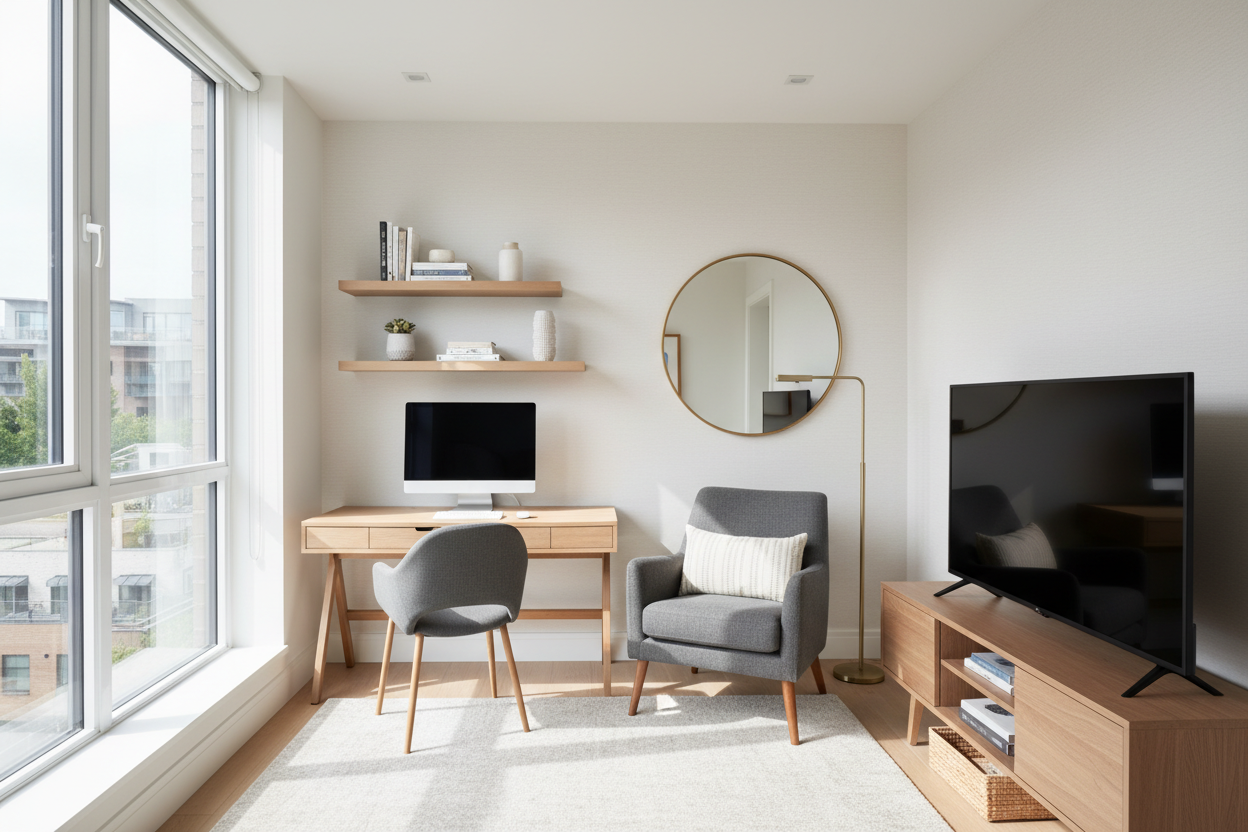
One of the most frequent challenges I encounter in urban residential projects is the need to carve out a workspace where square footage is already at a premium. You want a dedicated area for productivity, but you certainly don't want your relaxation zone to feel like a corporate cubicle. The secret lies in integration, not separation. Creating a successful home office in small living room layouts requires a delicate balance of spatial planning, material selection, and visual trickery to ensure the room serves two functions without feeling chaotic.
Quick Decision Guide: Key Elements for Dual-Purpose Spaces
- Visual Weight: Opt for legs over solid bases, or acrylic materials to keep sightlines open.
- Scale & Proportion: Choose a desk depth between 20-24 inches to save floor space while maintaining utility.
- Material Cohesion: Match the wood stain or metal finish of the desk to your existing coffee table or media unit.
- Vertical Utilization: Look for ladder desks or wall-mounted shelving to draw the eye up, not out.
- Cable Management: Ensure the piece has integrated grommets or hidden channels; wire clutter kills the aesthetic.
Mastering the Layout and Flow
In a small living room home office, placement is everything. The most common mistake is pushing a desk into a dark corner, which creates a "dead zone." Instead, consider floating a console-style desk behind your sofa. This creates a natural partition and allows you to watch the television or interact with family while working, without the desk dominating the room's focal point.
Alternatively, if you are dealing with alcoves beside a fireplace, custom millwork or a perfectly fitted floating shelf can turn wasted architectural space into a high-value asset. This approach creates a built-in look that feels intentional rather than added as an afterthought.
Selecting Materials: Texture and Durability
When selecting furniture for a dual-use space, the finish must bridge the gap between "office" and "home." Avoid standard melamine office finishes.
Solid Wood vs. Veneer
For a luxury aesthetic, solid wood (like walnut or white oak) offers longevity and creates a warm, tactile experience. However, high-quality wood veneers are often more stable in varying temperatures and lighter to move. If your living room leans modern, consider a glass top or a lacquer finish; these reflect light and reduce the perceived mass of the furniture, making the room feel larger.
The Ergonomic Compromise
The chair is often the hardest element to style. A bulky, high-back ergonomic executive chair will ruin the sophisticated silhouette of a curated living room. Look for "active seating" options or mid-century modern task chairs upholstered in performance velvet or leather. These provide lumbar support without the utilitarian plastic look. If you must have a full ergonomic setup, ensure the chair can tuck fully under the desk when not in use.
Lighting and Ambiance
Lighting defines the mood. Relying solely on overhead recessed lighting is a design error. Layer your lighting by adding a sculptural table lamp to the desk. It functions as task lighting during the day and contributes to the ambient glow of the living room in the evening, further integrating the workspace into the residential vibe.
My Personal Take on Home Office in Small Living Room
I learned a hard lesson about three years ago while styling a compact pied-à-terre in Chicago. I fell in love with a stunning, minimalist acrylic "ghost" desk for the client. Visually, it was perfect—it practically disappeared in the room. However, I completely overlooked the cable situation.
Once the client plugged in their monitor, laptop charger, and lamp, the "invisible" desk looked like a spiderweb of black wires. There was nowhere to hide them because the desk was transparent. It ruined the sleek look we were aiming for. Since then, I always prioritize desks with a modest back panel or a drawer deep enough to house a power strip. Real life involves cords, and in a small space, seeing that clutter every time you sit on the sofa is mentally exhausting.
Conclusion
Integrating a workspace into your main living area doesn't mean sacrificing style for function. By choosing furniture with the right scale, managing your visual clutter, and selecting materials that harmonize with your current decor, you can create a space that is productive by day and restorative by night.
Frequently Asked Questions
What is the minimum depth for a functional desk in a small living room?
For a laptop setup, you can get away with a depth of 18 to 20 inches. If you use an external monitor, aim for at least 24 inches to maintain proper focal distance and prevent eye strain.
How do I hide my computer when guests come over?
Consider a secretary desk (secretaire) or a drop-front cabinet. These pieces allow you to physically close up your workspace, hiding the laptop and papers, effectively turning the office back into a piece of beautiful cabinetry instantly.
Can I use a dining chair as a desk chair to save space?
You can, but be cautious with long-term use. If you work from home full-time, a standard dining chair lacks the lumbar support and adjustability required for 8-hour shifts. If space is tight, look for a dining chair silhouette that has hidden ergonomic features or add a discrete lumbar pillow.

Leave a comment
This site is protected by hCaptcha and the hCaptcha Privacy Policy and Terms of Service apply.