

















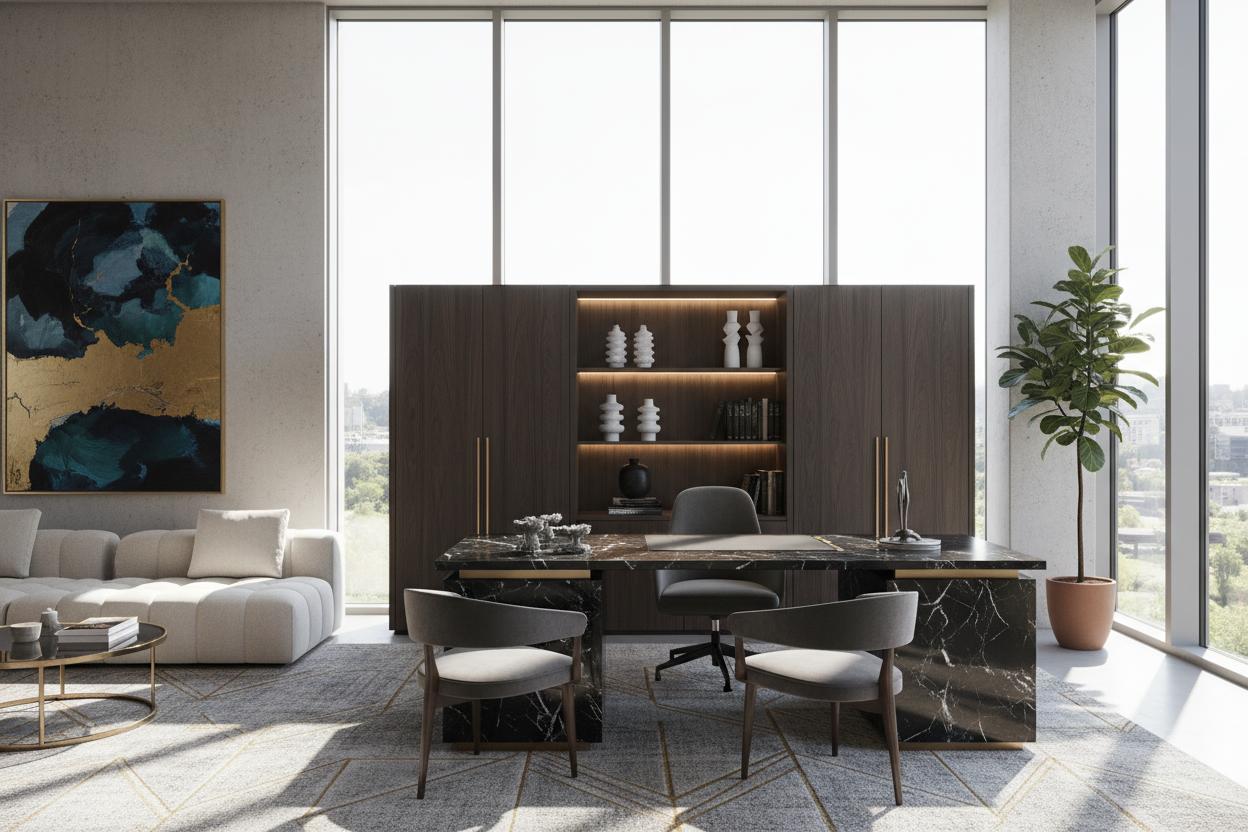
There is a distinct difference between a workspace that merely functions and one that inspires. As a designer, I see clients often overlook the centerpiece of their study, opting for utility over character. However, the right desk does more than hold your computer; it anchors the room and sets the tone for your entire professional life. If you are in the market for a fancy office table, you are not just looking for furniture; you are looking for executive presence.
Key Features to Look For
Before committing to a high-end investment, consider these four pillars of luxury design to ensure longevity and style:
- Material Authenticity: Look for solid hardwoods (walnut, mahogany), natural stone, or tempered glass. Avoid particle board disguised with cheap veneers.
- Joinery & Craftsmanship: Dovetail drawers and hand-finished edges indicate a piece that will age gracefully rather than deteriorate.
- Scale & Proportion: The desk must command the room without overcrowding it. Ensure at least 36 inches of clearance for your chair.
- Integrated Technology: True luxury today means hidden cable management. A messy wire situation ruins the aesthetic of even the most expensive table.
Choosing the Right Material Palette
When curating a high-end office, the material dictates the mood. An office desk fancy enough to serve as a focal point usually relies on rich textures.
Solid Wood vs. Exotic Veneers
Solid wood offers durability and the ability to refinish the surface decades later. However, do not dismiss high-quality veneers. In luxury furniture, veneers often allow for intricate marquetry or sunburst patterns that are impossible with solid planks. If you want warmth and tradition, look for oil-rubbed Walnut or Oak. For a more avant-garde look, Macassar Ebony offers dramatic grain patterns that scream sophistication.
Mixed Media and Modernity
For a lighter visual footprint, consider bases made of brass or polished nickel paired with glass or stone tops. These materials reflect light, making a smaller office feel more expansive. However, be wary of acoustic reflection; glass tops can make a room sound 'echoey' during conference calls if you don't have adequate rugs or drapery.
Sourcing and Selection Strategy
When browsing fancy desks for sale, it is easy to get seduced by a silhouette and forget the logistics. High-end desks are often heavier and larger than standard flat-pack furniture.
The Silhouette and Placement
Where will the desk live? A 'floating' desk—one placed in the center of the room—requires a finished back. Many lower-tier desks have unfinished backs meant to be pushed against a wall. A truly luxury table is beautiful from all 360 degrees. If you plan to face the door (the 'command position'), verify that the modesty panel or rear joinery is aesthetically pleasing.
Lessons from My Own Projects
My Personal Take on the Fancy Office Table
I once specified a stunning, high-gloss black lacquer desk for a client in Manhattan. It was visually breathtaking—sleek, reflective, and undeniably expensive. However, two weeks after installation, the client called me in frustration.
The issue wasn't the look; it was the usability. The high-gloss finish acted like a mirror for fingerprints, dust, and even the micro-scratches from sliding a coffee cup. Furthermore, optical mice struggle to track on highly reflective surfaces, forcing him to use a mousepad that ruined the clean lines we aimed for.
The lesson? If you choose a high-gloss or glass finish, you must be prepared for high maintenance. Now, I always recommend a leather-inlaid writing surface for my clients. It provides the tactile luxury of a fancy table while offering a practical, non-slip area that hides wear and creates the perfect friction for writing.
Conclusion
Investing in a luxury desk is about curating an environment where you do your best work. Whether you choose a heavy antique or a sleek modern sculpture, ensure the piece respects the ergonomics of your workflow while elevating the visual weight of the room. Your workspace is a tool; make it a beautiful one.
Frequently Asked Questions
How do I protect the finish of a luxury wood desk?
Always use a blotter or a custom-cut glass top if you are heavy-handed with writing instruments. For maintenance, avoid silicone-based sprays; stick to high-quality beeswax polishes that feed the wood rather than coating it.
What is the ideal size for an executive desk?
A standard executive size is 60 inches wide by 30 inches deep. However, for a truly grand statement, look for widths between 72 and 84 inches, provided your room dimensions allow for adequate flow around the perimeter.
Can I mix a vintage desk with a modern chair?
Absolutely. In fact, this creates a 'collected' look that is highly prized in interior design. A heavy Victorian wood table pairs beautifully with a sleek, low-profile leather Eames chair, creating a dynamic tension between the old and the new.

Leave a comment
This site is protected by hCaptcha and the hCaptcha Privacy Policy and Terms of Service apply.