

















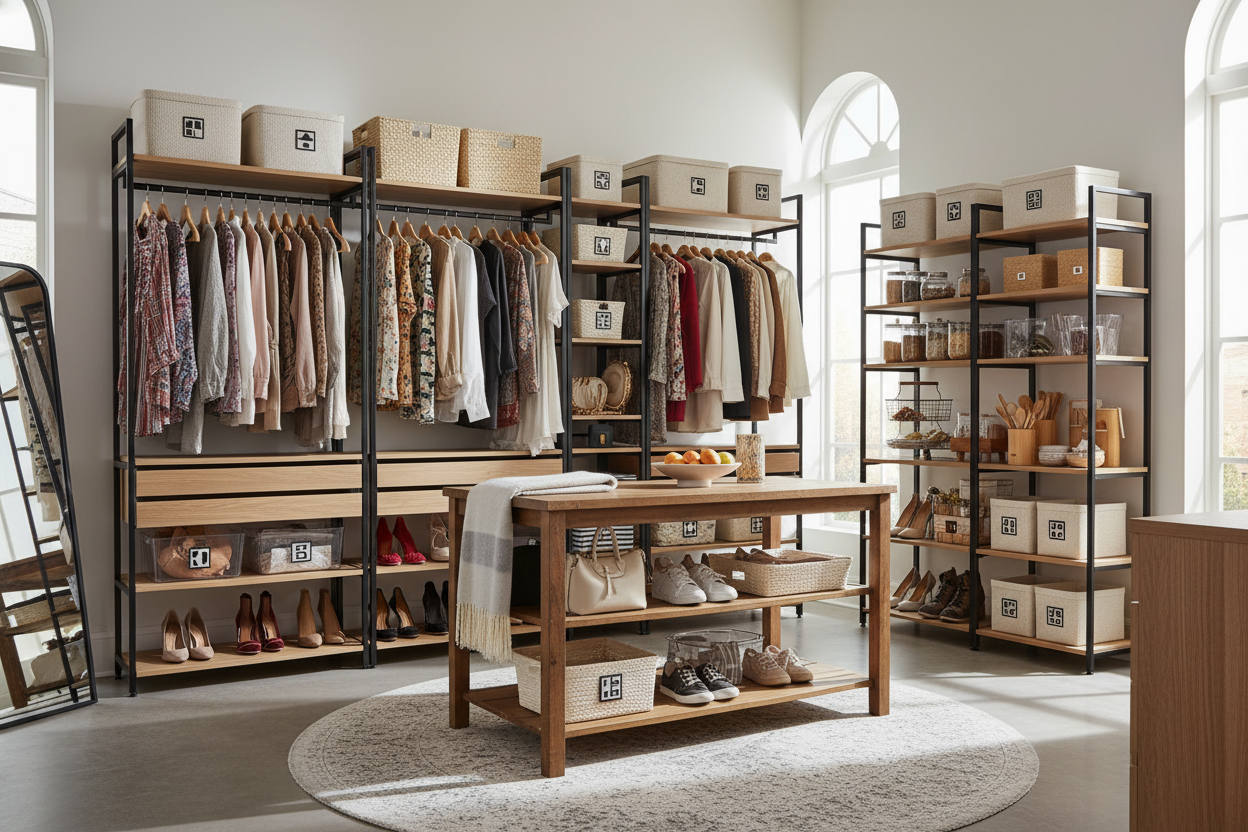
There is a distinct kind of visual fatigue that comes from opening a closet door and facing an avalanche of mismatched hangers and collapsing fabric bins. As a designer, I often tell clients that your closet sets the tone for your entire day. It shouldn't just be a storage unit; it should feel like a boutique where you shop your own wardrobe. While custom millwork is the gold standard, you can achieve a surprisingly high-end aesthetic using a well-chosen homegoods closet organizer system, provided you know how to curate rather than just accumulate.
Key Features to Look For
Before you head to the store, use this checklist to ensure you are buying pieces that offer both longevity and style. This approach helps you filter through the clutter on the shelves.
- Material Consistency: Stick to one primary material (e.g., velvet, acrylic, or woven hyacinth) to reduce visual noise.
- Structural Rigidity: Avoid fabric bins with weak sidewalls; look for reinforced inserts that hold their shape when empty.
- Vertical Modularity: Prioritize stackable units to maximize vertical real estate in tall shelf spaces.
- Hardware Quality: Check that drawer pulls or handles are securely attached and not merely glued on.
Choosing the Right Material for Visual Weight
The secret to a polished look lies in understanding visual weight. If you have a small, dimly lit reach-in closet, heavy opaque bins can make the space feel claustrophobic. In this scenario, a homegoods acrylic organizer is your best friend. Clear acrylic disappears visually, allowing the eye to travel to the back of the shelf, which creates an illusion of depth. It is particularly effective for clutches, belts, or jewelry.
Conversely, if you are dealing with open shelving that looks messy, you need texture to hide the chaos. Woven baskets or structured felt bins add warmth and hide the contents. When selecting these, ensure the weave is tight to prevent snagging delicate fabrics like silk or cashmere.
Zoning and Layout Strategy
Don't just buy organizers; buy a system. Start by measuring your shelving height. A common mistake is buying home goods storage shelves or risers that are too tall, leaving unusable dead space above them. Your goal is to create 'zones' based on frequency of use.
Place seasonal items in lidded bins on the highest shelves. Keep daily essentials at eye level in open-front bins. For the floor, sturdy rolling hampers or stackable shoe racks are essential. The goal is to lift everything off the floor to maintain clear sightlines, which makes the room feel larger.
Versatility: Beyond the Bedroom
The beauty of sourcing from HomeGoods is the cross-functionality of their inventory. The same principles you apply to the closet work elsewhere. For example, the clear turntable organizers often marketed for vanity counters are excellent for home goods kitchen organization, specifically for spices or oils.
Pantry and Kitchen Applications
When tackling home goods pantry storage, look for airtight canisters that mimic the closet's aesthetic. Uniformity is key here. If you use bamboo lids in the closet, carry that wood tone into the home goods kitchen storage solutions. This creates a cohesive design language throughout the home.
The Home Office
Many 'closet' drawer dividers fit perfectly into desk drawers for home goods office organization. Acrylic jewelry trays, for instance, are the perfect size for paperclips, sticky notes, and charging cables, keeping your workspace as serene as your wardrobe.
Lessons from My Own Projects
I want to share a bit of unpolished reality from a recent project where we utilized HomeGoods finds exclusively. We were styling a walk-in closet for a client who wanted a 'glam' look on a strict budget. We bought about twenty acrylic stackable drawers.
Here is the specific detail you won't read on the label: The adhesive stickers HomeGoods uses on their acrylic products are notoriously difficult to remove. On three of the bins, we actually scratched the surface trying to scrub the residue off with a rough sponge. My advice? Buy a bottle of Goo Gone or use a hairdryer to warm the adhesive before you peel it. Also, bring a tape measure to the store. We found that 'identical' woven baskets varied by up to half an inch in width, which ruined our plan to fit three perfectly across a shelf. Always measure the actual item, not just the shelf.
Elevate Your Everyday
Transforming your storage isn't just about tidying up; it's about respecting your belongings and your peace of mind. By selecting the right materials and planning your layout with a designer's eye, you can turn a standard closet into a functional sanctuary.
Frequently Asked Questions
How do I mix different organizer styles without it looking messy?
The rule of thumb is to keep the color palette monochromatic. You can mix textures (like acrylic and velvet) as long as they share a similar color tone or neutral base, which maintains visual harmony.
Are acrylic organizers durable enough for heavy items?
High-quality acrylic is quite durable, but it is brittle. It works best for static storage like shoes, bags, or jewelry. Avoid using it for heavy tools or items that are tossed in roughly, as it can crack under impact.
How do I ensure the organizers fit my specific shelf depth?
Always measure your shelf depth before shopping and subtract one inch. You want the organizer to sit slightly back from the edge to prevent overhang, which looks sloppy and can be a safety hazard.

Leave a comment
This site is protected by hCaptcha and the hCaptcha Privacy Policy and Terms of Service apply.