

















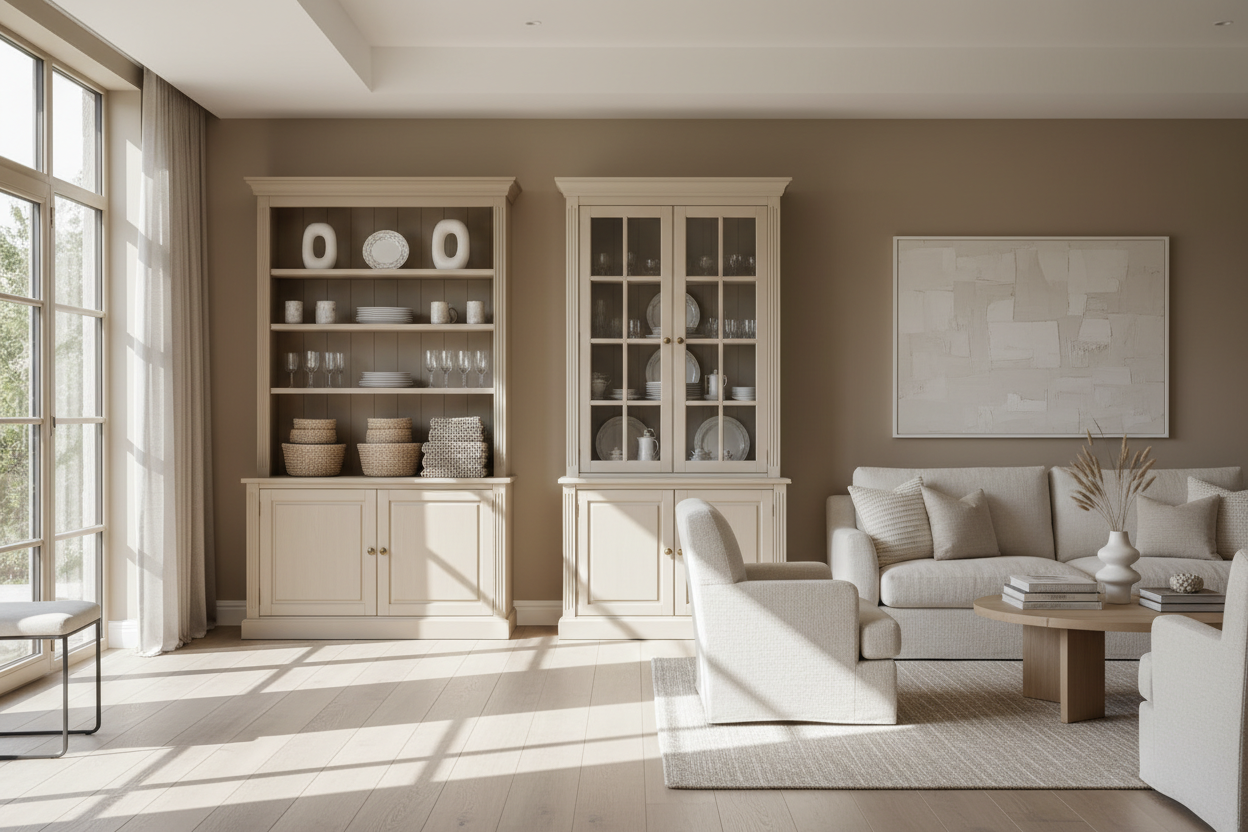
I remember walking into a client's dining room last year—they'd just moved into a 1920s Craftsman home and inherited a massive, dark wood china cabinet that dominated the space. It felt heavy, formal, and completely disconnected from their light-filled, casual lifestyle. We swapped it for a cream china cabinet with clean lines, and the transformation was instant. The room felt twice as large, warmer, and finally like theirs. If you're considering a warm neutral cabinet but worry it might look washed out or dated, you're in the right place. I've furnished over 200 homes, and a well-chosen cream or beige hutch is one of the most versatile pieces you can own.
Quick Takeaways
- Measure your space first: a standard china cabinet is about 18-24 inches deep and 72-84 inches tall. Leave at least 36 inches of walkway clearance in front.
- Cream tones range from bright ivory (close to white) to warm beige. North-facing rooms need warmer beiges; south-facing rooms can handle cooler ivories.
- Pair cream with deeper tones like navy, charcoal, or olive green to prevent a "washed out" look. Avoid pairing with stark white walls.
- For longevity, look for cabinets with a kiln-dried hardwood frame (like maple or oak) and a catalyzed lacquer finish, which resists yellowing better than oil-based paints.
Why Cream and Beige China Cabinets Are Having a Moment
After years of gray-dominated interiors, we're seeing a strong shift toward warmth. A cream china cabinet or beige hutch brings that cozy, inviting feel without the visual weight of dark wood or the starkness of pure white. Psychologically, cream tones are calming and welcoming—they reflect light softly, making rooms feel brighter but not sterile. I've used them in everything from modern farmhouse kitchens to traditional dining rooms and even eclectic living rooms. Their versatility is their superpower. Unlike a bold color statement piece, a cream cabinet acts as a beautiful neutral anchor. It can bridge different wood tones in your room, complement both warm and cool color palettes, and adapt as your style evolves. In a recent project for a young family in a 1,200-square-foot condo, we used a 78-inch tall beige curio cabinet in the living room to display books and family photos. It added storage without shrinking the space, something a darker piece would have struggled with.
Finding Your Perfect Cream Tone: From Ivory to Beige
Not all creams are created equal. The spectrum runs from bright, cool ivories (which can read almost white) to deep, warm beiges with yellow or pink undertones. Your existing lighting is the biggest factor. In a north-facing room with cool, indirect light, choose a cabinet with warm beige or "greige" undertones to counteract the chill. In a south-facing room flooded with warm sunlight, you can opt for a brighter ivory without it looking too stark. Bring home finish samples and look at them at different times of day. Also, consider your existing furniture. If you have medium-toned oak floors, a beige with golden undertones will harmonize. For gray floors, a cooler ivory might work better. For clients who want something very light but worry about maintenance, I sometimes recommend a white display case with glass doors as an alternative, as it can offer a similar airy feel.
Placement Strategies That Make Cream Cabinets Shine
Placement is everything with a light-colored piece. You want to maximize its light-reflecting qualities without making it disappear. The ideal spot is against a wall with some color contrast. A cream cabinet on a light gray or pale blue wall will stand out beautifully. Avoid placing it directly opposite a large window, as direct, strong sunlight can cause fading over time. Instead, position it on a perpendicular wall to benefit from indirect light. In terms of flow, ensure there's at least 36 inches of clearance in front for comfortable movement, especially in dining areas. In a smaller dining room (say, 10x12 feet), opt for a slimmer profile cabinet, around 18 inches deep, to avoid crowding.
Dining Room vs. Living Room: Where Your Cream Hutch Belongs
Both spaces work, but the function changes. In a dining room, a cream china cabinet is classic. It stores dishes and glassware within easy reach. Style it with a mix of your everyday dinnerware and a few special pieces—layer in some textured linens in the lower cabinets to soften the look. In a living room, a hutch becomes a display focal point. Use it for books, art objects, and curated collections. The open shelving of a hutch is great for this. One downside I've seen: in a busy family living room, the glass doors of a traditional cabinet can show fingerprints quickly. A solid-door lower section with open shelves above can be a practical compromise. For a deeper dive on form versus function, my hutch vs china cabinet guide breaks it down further.
Styling Your Cream China Cabinet: Beyond the Dishes
This is where personality shines. The key is to create depth and interest. Don't just line up identical plates. Mix textures: place smooth ceramic vases next to rough, natural woven baskets. Vary heights: use sturdy book stacks as risers for smaller objects. Incorporate lighting—a simple, battery-operated LED puck light inside the top section makes crystal and glassware sparkle at night. For a collected look, group items in odd numbers (threes or fives) and leave some breathing space. I often suggest clients dedicate one shelf to a single-color collection (like all blue-and-white porcelain) to create a strong visual moment. For more elegant treasure display ideas, that resource has some beautiful, detailed examples.
Color Pairings That Make Cream Pop
To keep your cream cabinet from looking bland, pair it with intentional color. Deep, moody hues are fantastic. Think navy blue accent walls, charcoal gray textiles, or olive green accessories. Metallic accents in brushed brass or antique gold add warmth and luxury. For a fresher look, pair with soft sage green or dusty blue. What to avoid? Stark, bright white on adjacent walls or furniture—it can make the cream look dirty or yellowed by comparison. Instead, use a warmer white with a slight cream undertone for trim and adjacent pieces.
Maintenance and Longevity: Keeping Your Cream Cabinet Beautiful
Lighter finishes require a bit more care, but it's straightforward. Dust regularly with a soft, microfiber cloth to prevent abrasive grit from scratching the surface. For cleaning, use a damp cloth with a mild soap (like dish soap diluted in water), and dry immediately. Never use harsh chemicals or abrasive cleaners. Sunlight is the biggest enemy; use UV-filtering window film if the cabinet gets direct sun. Over years, some yellowing of the clear topcoat can occur, especially with older oil-based finishes. Modern catalyzed lacquers are much more resistant. For larger pieces like a tall china cabinet options, check that the back panel is also finished, not raw wood, to prevent warping from humidity changes.
Frequently Asked Questions
Will a cream cabinet make my small room look bigger?
Yes, generally. Its light-reflecting quality can make walls feel farther away. Just ensure there's enough color contrast so it doesn't blend into a white wall and disappear.
Is cream too traditional for a modern space?
Not at all. Choose a cabinet with a simple, slab-style door, minimal ornamentation, and sleek hardware (like square black pulls). The color itself is neutral and adaptable.
How do I prevent my cream hutch from looking 'builder basic' or cheap?
Quality shows in the details. Look for solid wood construction (not just veneered particleboard), dovetail joints in the drawers, and substantial, well-fitted glass. The finish should feel smooth, not plasticky.
Can I mix a cream cabinet with other wood furniture?
Absolutely. It's a great bridge piece. If your other woods are warm (like cherry or oak), choose a warmer beige. If they're cooler (like ash or gray-washed pine), a cooler ivory will tie in nicely.

Leave a comment
This site is protected by hCaptcha and the hCaptcha Privacy Policy and Terms of Service apply.